The Palband Blog

Protecting High-Value Goods: Why Every Warehouse Needs Custom Covers and Liners

Warehouses handle a wide range of products, but when high-value goods are involved, the margin for error narrows significantly. Electronics, pharmaceutical products, precision components and premium retail items all carry higher financial and reputational risk if damaged, contaminated or lost. Yet, in spite of all of these factors, many warehouses still rely on generic, disposable packaging solutions that were never designed for repeated handling or long-term protection.

Protecting high value goods requires a more considered approach to transit and storage packaging. Custom covers and liners are increasingly recognised as a practical way to reduce damage, improve handling consistency and protect assets throughout the supply chain. Rather than being an optional extra, they are becoming a core part of modern warehouse risk management.

This article explains why custom covers and liners are essential for protecting high-value goods and how they support safer, more efficient warehouse operations.

Short Summary

High-value goods face greater risk from damage, contamination and handling errors. This article explains how custom covers and liners help warehouses protect valuable products, reduce losses and support consistent, repeatable protection across storage and distribution operations.

Why You Can Trust Us

Palband supplies reusable transit protection solutions to warehouses and distribution centres handling sensitive and high-value goods. With extensive experience across logistics, retail and manufacturing environments, Palband understands how custom covers and liners perform under real operational conditions. For tailored advice on custom covers and liners designed for your specific handling environment, click here to get in touch.

Why High-Value Goods Need Different Protection

Not all products face the same risks. High-value goods often combine financial value with fragility, sensitivity or strict compliance requirements. A single damaged pallet can represent thousands of pounds in losses, not to mention delays, returns and customer dissatisfaction.

Standard packaging solutions are designed for convenience and low upfront cost rather than long-term protection. Thin shrink wrap or disposable covers provide minimal resistance to impact, abrasion or moisture. Over multiple handling points, this leaves goods exposed.

Custom covers and liners address this gap by providing protection that is tailored to the product, the load configuration and the handling environment. This targeted approach significantly reduces risk throughout storage and transport.

Common Threats to High-Value Goods in Warehouses

Understanding the risks is the first step in protecting high value goods effectively.

Physical damage remains the most obvious threat. Forklift contact, pallet movement, stacking pressure and vibration during transport can all cause damage that is not immediately visible.

Environmental exposure is another major factor. Dust, moisture and temperature fluctuations can degrade sensitive goods or packaging, especially during longer storage periods.

There is also an increased risk of loss or interference. High-value goods are more attractive targets for theft or tampering, particularly when packaging does not clearly signal controlled handling.

Custom covers and liners help mitigate each of these risks by providing a consistent protective barrier.

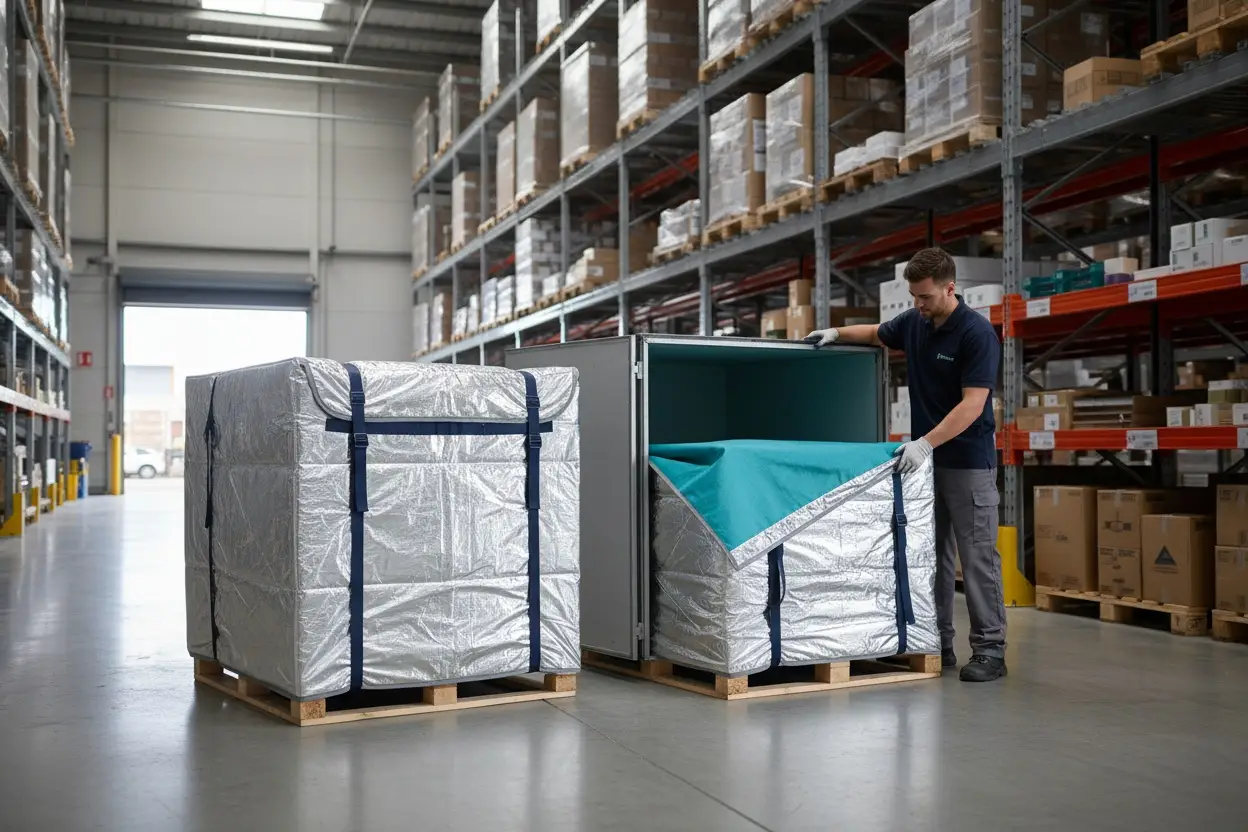
Custom covers are designed around the specific dimensions, weight and handling requirements of the load. Unlike generic solutions, they fit securely without excess material that can snag or tear.


A tailored fit improves load stability, reducing movement during handling. It also ensures that vulnerable edges and surfaces are properly protected rather than partially exposed.


Material choice is equally important. Custom covers can be specified for abrasion resistance, impact absorption, moisture protection or insulation depending on the application. This ensures protection matches the real risks faced by the goods.


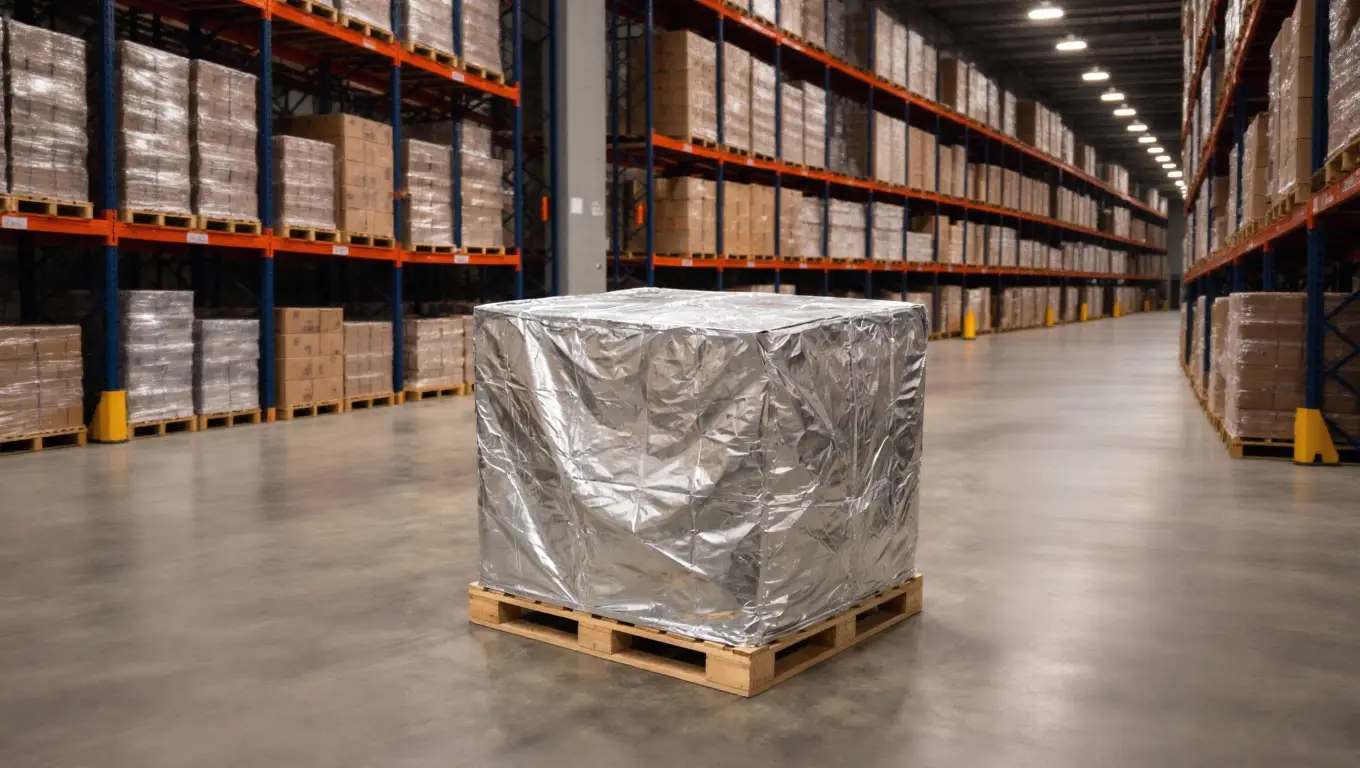
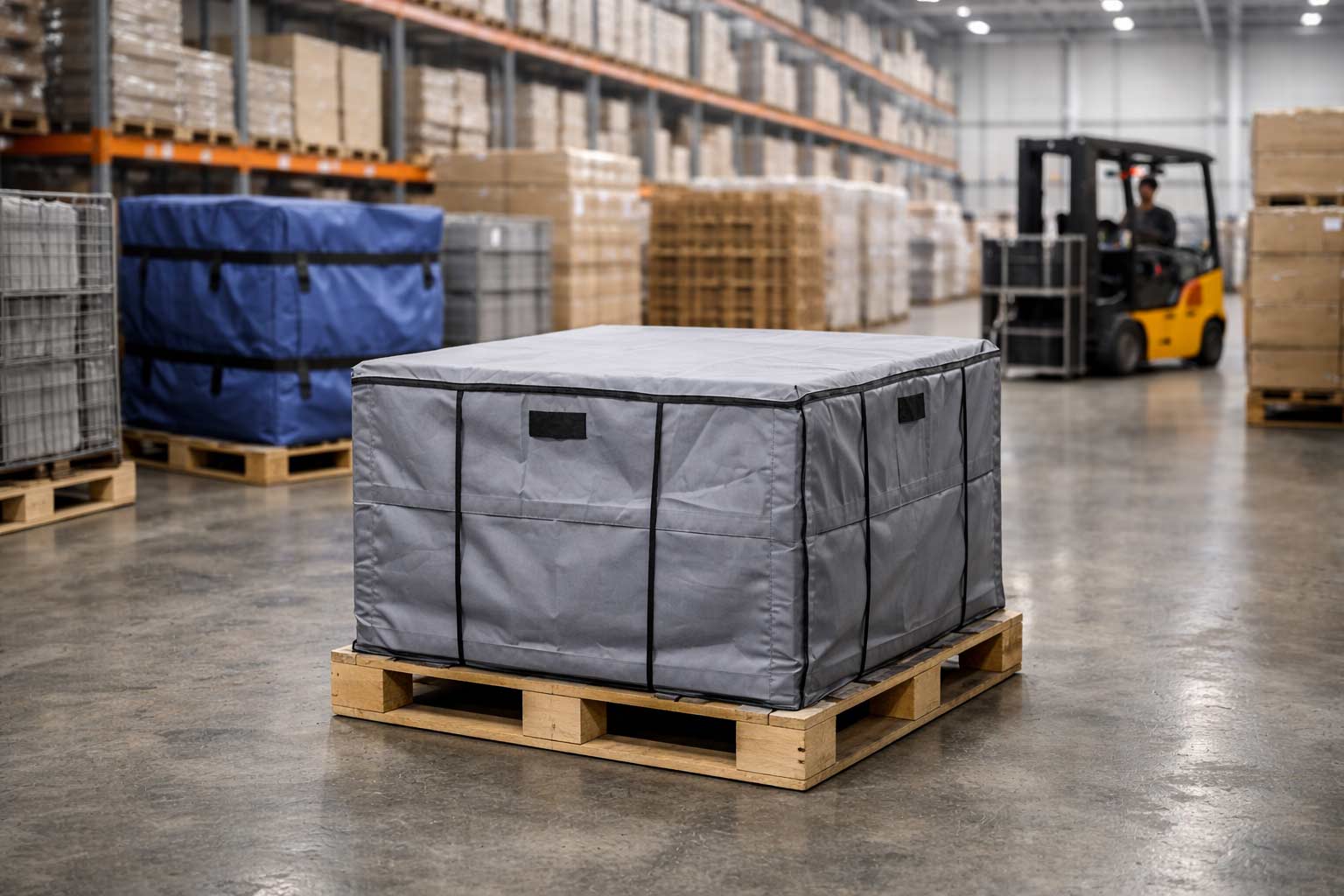
Palband’s reusable pallet covers are designed to be specified for different load types and operational environments, supporting consistent protection across warehouse and transport stages.

While covers protect the outside of the load, liners play a critical role inside containers, cages and pallet boxes. For high-value goods, internal damage can occur even when external packaging appears intact.


Reusable liners prevent product-to-product contact, reduce abrasion and contain loose items. They also protect against dust and debris within shared containers or returnable packaging.


Custom liners can be specified to match container dimensions precisely, ensuring full coverage without bunching or folding. This improves protection while maintaining efficient packing and unpacking.


In regulated sectors, liners also support hygiene and contamination control by providing a removable, cleanable barrier between goods and containers.

Damage to high-value goods has a direct financial impact, but it also affects insurance costs and claims history. Repeated claims can lead to higher premiums or stricter policy conditions.


By reducing damage incidents, custom covers and liners help lower overall risk exposure. Insurers increasingly recognise the value of robust protective measures, particularly in high-risk environments.


Guidance from organisations such as Health and Safety Executive highlights the importance of risk control measures that prevent damage and incidents rather than responding after the fact.


For warehouse operators, investing in better protection can deliver long-term savings beyond immediate damage reduction.

Custom covers and liners also influence behaviour. Clearly specified protective equipment signals that goods require careful handling. This helps reinforce correct processes among warehouse staff and transport partners.


Reusable protection is more likely to be inspected, maintained and valued than disposable packaging. This creates accountability and reduces casual misuse.


Standardising protection across high-value product lines also simplifies training and reduces variability in handling outcomes.

Many high-value goods are subject to strict quality and compliance requirements. Pharmaceutical, electronics and automotive components often have zero-tolerance thresholds for contamination or damage.


Custom covers and liners help warehouses demonstrate due diligence in protecting goods throughout storage and distribution. This is increasingly important during audits and customer assessments.


Standards bodies such as ISO emphasise controlled processes and risk mitigation within quality management systems. Reusable, specified protection supports these principles in a practical way.

While custom covers involve higher upfront investment than disposable alternatives, they deliver long-term operational efficiency.


Reusable protection reduces the ongoing cost of consumables, waste handling and replacement packaging. It also reduces downtime associated with repacking damaged goods or managing returns.


Custom solutions are designed to integrate into existing workflows without slowing operations. Once introduced, they often improve handling speed by reducing the need for excessive wrapping or secondary packaging.


Palband’s reusable pallet and stillage wraps are designed for repeated use in demanding warehouse environments, supporting both protection and efficiency

Enhancing Security for High-Value Loads

High-value goods often require additional security measures. Custom covers can be specified with features such as tamper-evident fastenings or distinctive markings that make interference more visible.

Reusable protection also reduces reliance on opaque shrink wrap, which can conceal damage or tampering until delivery. Clear inspection points improve visibility and accountability.

In combination with tracking and access controls, custom covers form part of a layered security approach within warehouses and distribution networks.

Where Custom Covers Deliver the Greatest Value

Custom covers and liners are particularly valuable where goods are handled multiple times, stored for extended periods or shipped across complex routes.

Warehouses serving retail distribution centres, spare parts networks and high-value manufacturing supply chains benefit from consistent protection across inbound and outbound flows.

They are also effective in shared-user environments where containers and handling equipment are reused across different customers.

Moving Beyond One-Size-Fits-All Protection

Protecting high value goods requires recognising that generic solutions rarely address specific risks. Custom covers and liners allow warehouses to move away from one-size-fits-all packaging towards targeted, risk-based protection.

This shift supports better outcomes across damage reduction, compliance, cost control and customer satisfaction.

Rather than reacting to losses, warehouses can take proactive steps to protect their most valuable assets.

Next Steps for Your Warehouse

If your operation handles high-value goods, reviewing your current packaging and protection strategy is a sensible starting point. Identify where damage, contamination or handling risk still exists and assess whether generic packaging is part of the problem.

Custom covers and liners offer a practical, proven way to reduce these risks without disrupting operations.

To discuss how Palband can support protecting high value goods in your warehouse, contact the team here

Current Category ID: 21

Related Articles to read...

Fill Out The Form Below And Find Out How Palband Can Help You Dramatically Reduce The Plastic Packaging Tax

Speak to the Team

Let us help you transition to a reusable solution that works harder for your business. Contact Palband today to explore standard sizes or request a bespoke quote. We’ll help you reduce waste, cut costs and protect your loads with confidence.

  • The Palband Blog

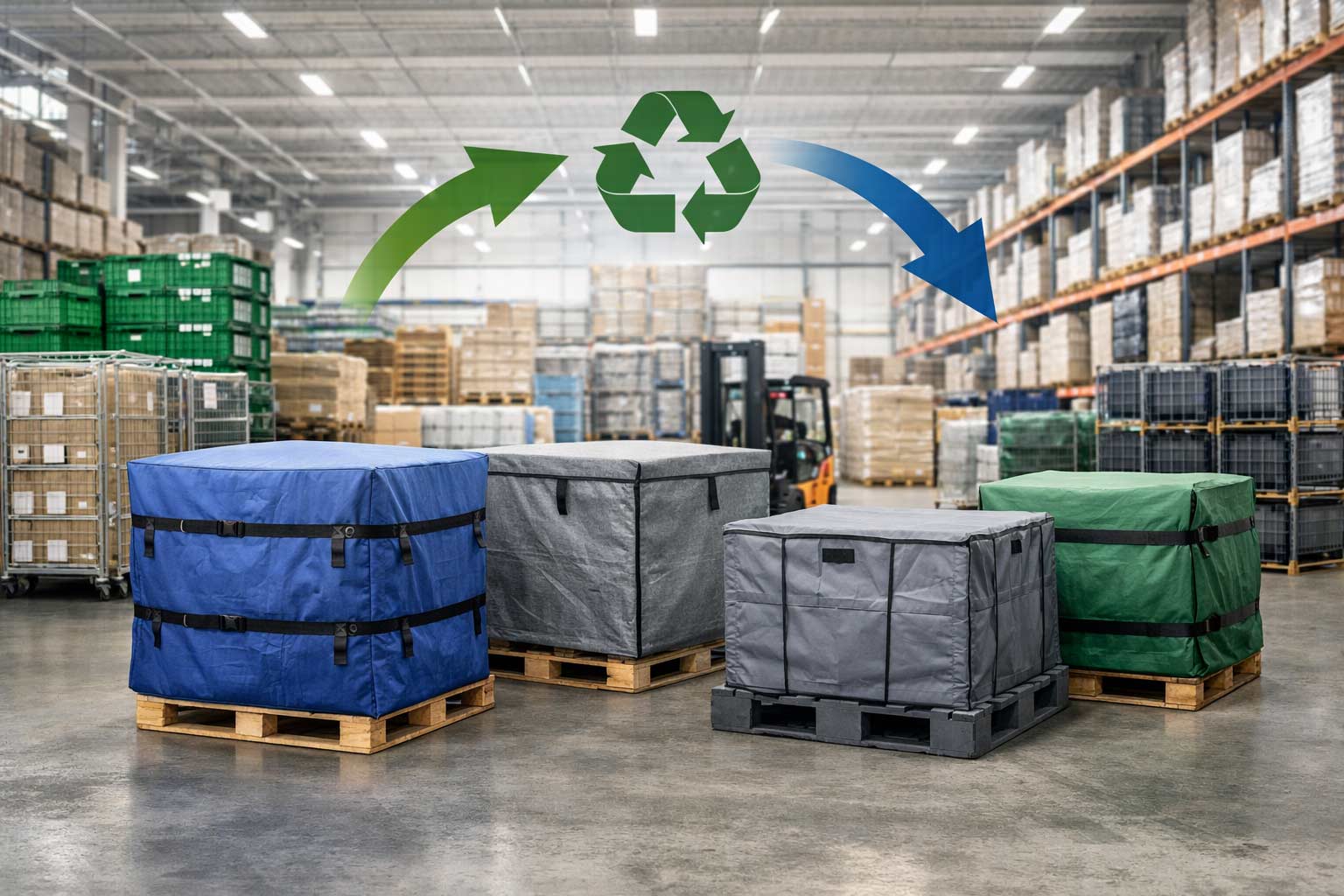
    The Role of Reusable Covers and Liners in Circular Supply Chains

    Circular supply chains are becoming a practical necessity rather than a long-term aspiration. Rising material costs, tightening environmental regulation and increasing customer scrutiny are pushing logistics operators to rethink how goods are protected, moved and returned. One of the most overlooked opportunities sits in an everyday operational detail: transit packaging.

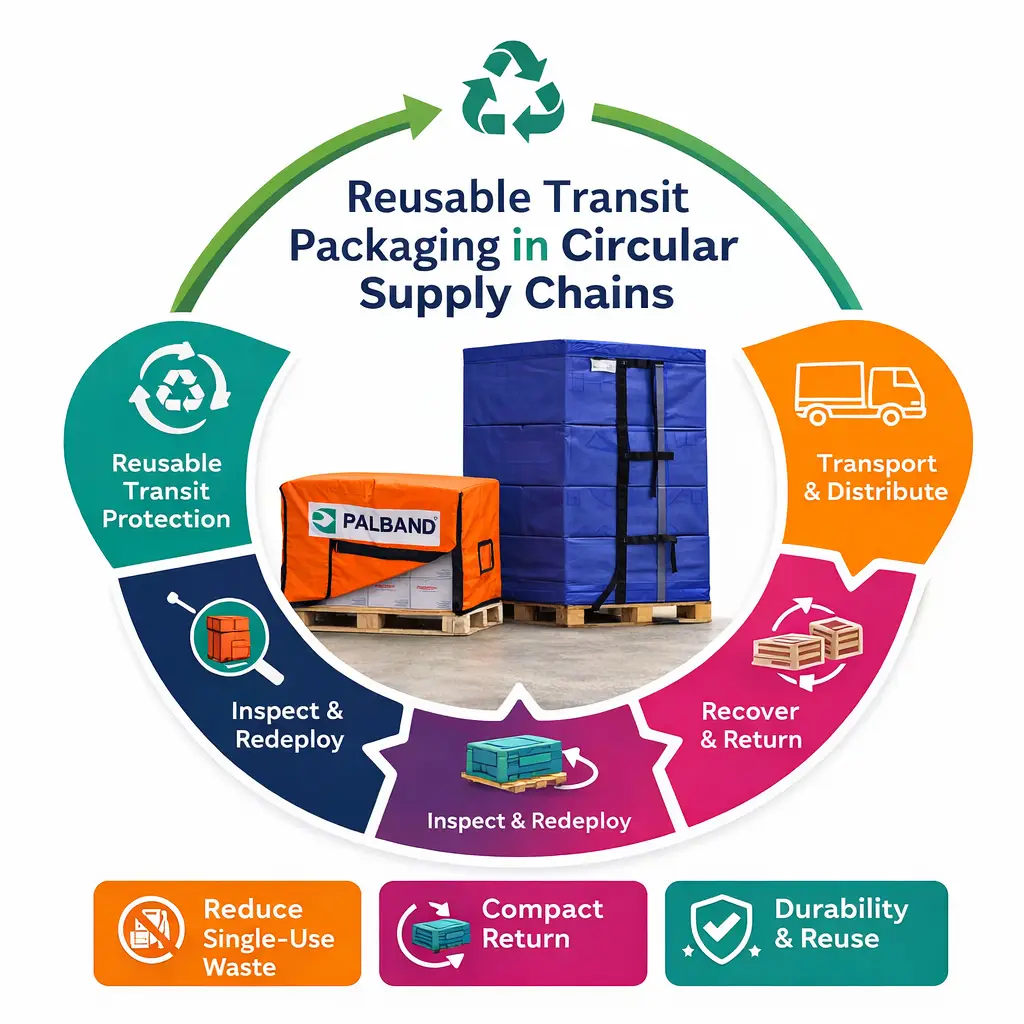
    Reusable covers and liners are playing an increasingly important role in reducing single-use waste, improving load security and supporting circular supply chain models. Rather than being consumed and discarded, these products are designed to stay in use, cycle after cycle, across distribution networks. When deployed correctly, reusable covers contribute directly to lower operating costs, improved sustainability reporting and more resilient logistics systems.

    This article explores how reusable covers and liners support circular supply chains, where they deliver the most value, and why they are becoming standard equipment for forward-thinking operators.

    Short Summary

    Reusable covers and liners help logistics operations move away from single-use packaging by protecting goods across multiple transport cycles. This article explains how they support circular supply chains, reduce waste, improve load security and help businesses meet sustainability and compliance objectives without compromising operational efficiency.

    Why You Can Trust Us

    Palband works closely with logistics, retail and manufacturing businesses across the UK and Europe to reduce packaging waste and improve load protection. With decades of hands-on experience supplying reusable transit solutions, Palband understands how circular principles translate into real-world warehouse and transport operations. For tailored advice on reducing packaging waste and improving load protection, click here to speak to us today.

    What Circular Supply Chains Really Mean in Practice

    A circular supply chain is designed to minimise waste and keep materials in use for as long as possible. Instead of relying on disposable packaging that flows one way from supplier to landfill, circular systems prioritise reuse, repair and recovery.

    In logistics environments, this means rethinking items that are traditionally treated as consumables. Stretch wrap, shrink film and disposable pallet covers are often used once and discarded, even though they represent a significant source of plastic waste. Reusable covers and liners challenge this model by offering long-life alternatives that can be integrated into closed-loop or semi-closed distribution networks.

    The shift is not theoretical. Many large retailers and manufacturers are now under pressure to report on packaging waste, plastic usage and carbon impact. Reusable covers provide a measurable and visible improvement in these areas.

    Packaging sits at the intersection of protection, efficiency and sustainability. While its primary role is to protect goods in transit, the type of packaging used can have a disproportionate environmental impact.


    Single-use plastics are lightweight and cheap upfront, but they generate ongoing costs through waste handling, purchasing repetition and regulatory exposure. By contrast, reusable covers are designed to deliver protection across hundreds of journeys.


    From a circular economy perspective, the goal is to maximise utilisation while minimising replacement. Reusable covers and liners achieve this by being durable, repairable and compatible with return logistics.


    High-authority organisations such as Ellen MacArthur Foundation consistently highlight packaging reuse as one of the fastest ways to reduce material consumption within supply chains.

    Reusable covers contribute to circular supply chains in several practical ways.


    First, they reduce material throughput. A single reusable cover can replace dozens or even hundreds of single-use alternatives over its lifespan. This immediately reduces plastic consumption and waste generation.


    Second, they extend asset life. By protecting palletised goods from impact, abrasion and contamination, reusable covers help reduce product damage and associated returns. Fewer damaged goods means fewer replacement shipments and less wasted inventory.


    Third, they enable closed-loop systems. Many distribution networks already involve return journeys for pallets, roll cages or stillages. Adding reusable covers to these loops requires minimal operational change while delivering measurable sustainability gains.


    For a deeper look at reusable transit protection options, Palband’s reusable pallet covers are designed specifically for repeated use in demanding logistics environments.

    While covers protect goods externally, liners play an equally important role inside containers, cages and pallet boxes. Reusable liners prevent abrasion, dust ingress and moisture damage, especially for boxed or loose items.


    In circular supply chains, liners are particularly valuable because they can be removed, cleaned and redeployed without compromising hygiene or protection standards. This makes them suitable for sectors such as food distribution, pharmaceuticals and automotive components.


    Reusable liners also reduce the need for disposable inner packaging such as plastic bags or cardboard inserts. Over time, this significantly lowers material use and waste handling costs.


    When combined with rigid or collapsible containers, liners support modular systems that can be adapted to different product types without introducing new single-use materials.

    One of the common misconceptions around circular packaging is that it is more expensive. While reusable covers have a higher upfront cost than disposable film, their total cost of ownership is typically far lower.


    Costs associated with single-use packaging include repeated purchasing, storage, waste disposal and labour time for application and removal. Reusable covers reduce or eliminate many of these recurring expenses.


    In addition, damage reduction has a direct financial impact. Fewer damaged loads mean fewer customer complaints, fewer rejected deliveries and less rework in the warehouse. Over time, this improves customer relationships and operational reliability.


    Reusable covers also offer predictability. Unlike consumables that fluctuate in price and availability, reusable assets provide stable long-term cost planning.

    Regulatory pressure around packaging waste is increasing across the UK and EU. Extended Producer Responsibility schemes and plastic taxes are forcing businesses to account for the environmental impact of packaging choices.


    Reusable covers and liners help organisations demonstrate proactive waste reduction and compliance. Because they are used repeatedly, they contribute positively to sustainability metrics and reporting frameworks.


    Guidance from the UK Government on packaging waste reduction increasingly emphasises reuse over recycling, recognising that preventing waste in the first place delivers the greatest environmental benefit.


    For businesses with ESG targets or sustainability reporting obligations, reusable covers provide tangible evidence of progress rather than aspirational commitments.

    Introducing reusable covers into a supply chain requires some planning, but the barriers are often lower than expected.


    Key considerations include selecting the correct size and specification, training staff on correct use, and establishing inspection and cleaning routines. In most cases, reusable covers integrate seamlessly into existing workflows.


    Return logistics are often already in place for pallets or containers, making it straightforward to bring covers back into circulation. Even in open-loop systems, loss rates are typically low when covers are clearly identifiable and valued as assets.


    Palband’s reusable pallet and stillage wraps are designed with durability and ease of handling in mind, supporting long-term use across multiple handling environments. 

    Supporting Resilience in Supply Chains

    Circular supply chains are not only about sustainability. They also improve resilience. Reusable covers reduce reliance on external supply of consumables, which can be disrupted by price volatility or shortages.

    During periods of supply chain disruption, businesses with reusable transit packaging are less exposed to delays caused by lack of materials. This operational independence can be a competitive advantage.

    Reusable covers also standardise protection levels across shipments, reducing variability and improving predictability in transport outcomes.

    Where Reusable Covers Deliver the Most Impact

    Reusable covers are particularly effective in sectors with high shipment volumes and regular return flows. Retail distribution, manufacturing, automotive supply chains and food logistics all benefit from consistent load protection and reuse.

    They are also valuable in environments where damage risk is high, such as multi-drop delivery routes or long-distance transport. By maintaining protection throughout the journey, reusable covers reduce the cumulative risk of handling damage.

    In cold chain or temperature-sensitive operations, insulated variants can further enhance performance without introducing disposable materials.

    Moving From Linear to Circular Thinking

    Transitioning to a circular supply chain does not require a complete operational overhaul. In many cases, meaningful progress starts with small, targeted changes. Replacing single-use packaging with reusable covers and liners is one of the most accessible steps businesses can take.

    These products deliver immediate environmental benefits while also supporting cost reduction, compliance and customer satisfaction. Over time, they help build systems that are less wasteful, more efficient and more resilient.

    Circularity is not about doing more work. It is about doing the same work with fewer resources.

    Next Steps for Your Operation

    If your organisation is reviewing packaging waste, load protection or sustainability performance, reusable covers and liners are a logical place to start. Assess where single-use materials are still being consumed and consider where reuse could be introduced without disrupting operations.

    Palband works with logistics teams to identify practical opportunities for reuse and specify solutions that fit real-world handling conditions.

    To discuss how reusable covers could support your circular supply chain goals, contact the Palband team here: https://palband.com/contact

    Current Category ID: 21

    Related Articles to read...

    Fill Out The Form Below And Find Out How Palband Can Help You Dramatically Reduce The Plastic Packaging Tax

    Speak to the Team

    Let us help you transition to a reusable solution that works harder for your business. Contact Palband today to explore standard sizes or request a bespoke quote. We’ll help you reduce waste, cut costs and protect your loads with confidence.

  • The Palband Blog

    Understanding Fire Suppression Granules: A Safer Way to Manage Battery Risks

    Lithium-ion battery fires have become one of the most difficult risks for warehouses, fulfilment centres, and logistics operators to control. As storage volumes rise and transporting batteries becomes routine, many businesses are now looking for safer, faster and more predictable ways to contain thermal runaway incidents. One of the most effective tools available today is the use of fire suppression granules, which provide an immediate barrier against heat, flame and re-ignition.

    Summary

    Fire suppression granules smother heat, restrict oxygen and help contain lithium-ion battery fires before they escalate. They are designed for warehouses, logistics teams and any operators storing or transporting batteries. Their lightweight, fast-acting nature makes them a practical addition to modern fire response plans.

    Why You Can Trust Us

    Palband works closely with logistics teams managing high-risk storage and movement of battery-powered goods. Our advice draws from real operational challenges, HSE guidance and practical product knowledge. We provide solutions designed to improve fire readiness without slowing warehouse workflows.

    What Are Fire Suppression Granules?

    Many operators ask the same question: what are fire suppression granules? At their simplest, they are specially engineered mineral granules that rapidly cool, smother and isolate a lithium-ion battery fire. Unlike water or traditional extinguishers, granules remain stable under extreme heat and can be poured directly over burning or overheating batteries without creating additional hazards.

    Granules are used to contain thermal runaway, a chain reaction that occurs when a cell overheats and releases flammable vapours. The granules absorb heat, restrict oxygen and prevent the spread of flames to neighbouring cells. 

    This makes them invaluable for facilities storing mixed consumer electronics, mobility batteries, power tool packs or equipment awaiting recycling.

    For warehouse teams managing diverse inventory and rapid turnaround times, granules offer a reliable way to isolate battery failures before the fire spreads to racking, packaging or surrounding stock.

    Discover how fire suppression granules can support a safer response strategy for your team.

    Lithium-ion battery fires do not behave like standard combustibles. Once thermal runaway begins, the battery creates its own oxygen and releases toxic vapours, which makes the fire extremely difficult to extinguish with traditional methods.


    Key characteristics include:


    • Rapid temperature escalation

    • Repeated re-ignition

    • Explosive ejection of burning material

    • Release of flammable gases

    • The potential for nearby cells to ignite in sequence

    This is why regulatory bodies such as the Health and Safety Executive emphasise the importance of understanding fire behaviour and implementing suitable control measures. Operators can review the HSE’s guidance on workplace fire safety at the official HSE resource, which outlines the responsibilities of those managing hazardous materials.


    Fire suppression granules are engineered specifically to tackle this unique fire profile by cooling the battery rapidly and insulating surrounding items from heat transfer.

    Fire suppression granules are poured over the overheating or burning battery to create a protective thermal barrier. Their performance comes from three main effects:


    1. Heat Absorption


    Granules draw heat away from the failing cell, slowing the thermal reaction.


    2. Oxygen Restriction


    By coating the battery, they reduce the oxygen available to feed the fire.


    3. Physical Isolation


    The granules contain debris, sparks and ejected material that might otherwise ignite nearby goods.

    This combination makes granules particularly effective in enclosed or high-density storage environments where sparks or debris can travel quickly.

    Because they do not conduct electricity, granules can be applied safely even when the battery remains energised. This is an advantage over metal powders or water extinguishers, which may create secondary risks.

    UK workplaces managing lithium-ion batteries must follow a clear regulatory framework. Those responsible for storage, handling and transporting batteries must ensure fire precautions are suitable, tested and proportionate to the risks.

    To support compliance, operators should also familiarise themselves with official guidance on fire safety duties from the UK Government’s collection of fire safety legislation resources available here.

    As guidance evolves, one trend is clear: businesses must maintain tools and procedures that allow immediate, safe containment of battery incidents. Fire suppression granules help fulfil this requirement by offering a practical first-response option.

    Warehouses remain one of the highest-risk environments for battery fires because failures often occur unnoticed until heat, vapour or smoke is detected. Fire suppression granules support multiple stages of warehouse operation:

    • Emergency response in picking and packing areas

    • Isolation of overheating returns

    • Safer handling at cross-docking points

    • Protection in high-density racking

    • Support for overnight storage when staff presence is minimal

    For sites handling large volumes of battery-powered goods, granules also reduce the risk of an entire aisle or pallet run becoming compromised.

    Safer Use During Transport and Mobile Operations

    Transporting batteries introduces a different set of challenges. Vehicles cannot rely on fixed fire systems, and drivers often cannot evacuate large loads quickly. Fire suppression granules offer several advantages during transit:

    • They are lightweight and easy to store in cabs or containers
    • They require no special activation or equipment
    • They can be applied instantly on the roadside
    • They help prevent a vehicle fire from escalating
    • They are safe for mixed freight environments

    They are already used by last-mile couriers, pallet networks, mobile engineering teams and recycling contractors.

    Choosing the Right Fire Suppression Granules

    Granules vary in composition and performance, and operators should review:

    • Heat tolerance
    • Expansion behaviour
    • Suitability for live electrical environments
    • Containment performance
    • Ease of deployment

    Palband’s solution is designed specifically for lithium-ion battery risks, offering rapid smothering and cooling performance suitable for warehouses, transport and storage. More information is available on the Fyashield homepage.

    Building Fire Suppression Granules Into Your Emergency Plan

    A strong emergency response plan combines equipment, training and clear decision-making. When including granules in your plan, consider:

    • Where they will be stored
    • Who is trained to use them
    • How to identify early-stage battery failure
    • Communication steps during an incident
    • Safe containment and post-incident procedures

    Fire suppression granules should be accessible at key points such as loading bays, marshalling areas, vehicle fleets and return-goods inspection stations.

    Common Misconceptions About Battery Fire Suppression

    Because lithium-ion fires behave differently, some common misconceptions still circulate:

    Water is the best first response

    Water cools but does not reliably smother a lithium-ion fire. Re-ignition is common.

    Small batteries pose minimal risk

    Even small consumer devices can release high temperatures and ignite surrounding packaging.

    Thermal runaway stops when the flames reduce

    Cells can reignite minutes or hours later if they remain unstable.

    Fire suppression granules help break this cycle by isolating the failed cell entirely.

    Strengthen Your Battery Fire Preparedness

    If you want to improve your readiness for lithium-ion battery incidents, explore Palband’s advanced fire suppression solutions. Our fire suppression granules provide rapid containment and thermal control, making them ideal for warehouses, transport fleets and high-risk storage environments.

    Got a question? Click here to drop us a line.

    Current Category ID: 21

    Related Articles to read...

    Fill Out The Form Below And Find Out How Palband Can Help You Dramatically Reduce The Plastic Packaging Tax

    Speak to the Team

    Let us help you transition to a reusable solution that works harder for your business. Contact Palband today to explore standard sizes or request a bespoke quote. We’ll help you reduce waste, cut costs and protect your loads with confidence.

  • The Palband Blog

    Reducing Single-Use Plastic Waste in Logistics: Practical Steps for 2026

    Logistics teams are under growing pressure to cut costs, meet sustainability expectations and reduce their reliance on single use plastics. The challenge is especially visible in plastic waste logistics, where stretch wrap, pallet covers and disposable films continue to drive significant waste across the supply chain. As environmental targets tighten, more operators are turning to reusable systems that support greener working practices and reduce long term spend. These efforts connect directly with broader green logistics ambitions, where efficiency and sustainability work together rather than compete. For operators looking for practical alternatives to single use materials, exploring reusable systems at Palband offers a clear place to begin.

    Summary

    This article explains how plastic waste logistics generates unnecessary cost and environmental impact, how green logistics principles help reduce waste, and which reusable products offer practical improvements for pallets, cages and warehouse operations.

    Why You Can Trust Us

    Palband has years of experience supplying reusable pallet wraps, covers, mesh guards and load protection systems used daily in warehouses, transport fleets and manufacturing sites. These products are proven in real world conditions and are designed to replace single use plastics with reliable, repeatable solutions that fit directly into existing logistics workflows.

    The scale of the problem in plastic waste logistics

    Many warehouses still depend heavily on single use plastics. Stretch wrap, pallet wrap, disposable pallet covers and shrink bags are used on outbound loads, internal transfers and mixed cage movements. As a result, plastic waste logistics creates large volumes of discarded film that is difficult to segregate and costly to process. In some sites, contamination from labels, tape and mixed materials prevents recycling altogether. Over packaging is also common, where teams add extra plastic layers to prevent product shift or abrasion during handling.

    Regulation is increasing too. Cross border rules on waste movements are tightening, with the European Commission applying greater scrutiny to how waste is shipped and treated. This makes uncontrolled plastic waste logistics unsustainable for operators who need predictable, compliant processes. As organisations begin adopting wider green logistics strategies, the priority is shifting from short term convenience to long term reusable systems that reduce waste at its source.

    How green logistics principles apply to plastic reduction

    For transport and warehouse managers, green logistics is not an abstract concept. It means reducing unnecessary materials, reusing protective assets and improving control of products as they move through the supply chain. Applying these principles to plastic reduction starts with understanding where single use films appear, from pallet wrapping to roll cage security and mixed load stabilisation. The aim is to replace disposable layers with reusable forms of protection that last for hundreds of cycles.

    Across the UK, analysis highlights the growing risks associated with plastics and microplastics in the environment. This reinforces why sites need to consider the footprint of routine packaging choices. Green logistics offers a practical framework for doing this, helping teams connect daily operational decisions with longer term sustainability outcomes. By tightening load control and improving process design, operators can reduce waste while maintaining or improving handling performance.

    Stretch wrap remains one of the largest contributors to plastic waste logistics because it is used on almost every outbound pallet and many internal movements. Even well trained teams often overapply film to compensate for unstable loads or mixed packaging formats. This drives up plastic use and creates recurring costs in materials, disposal and labour.


    Replacing film with reusable pallet covers offers a direct and measurable reduction in waste. These covers provide consistent tension, impact resistance and surface protection without relying on single use materials. For sites dealing with cages, stillages or variable product sizes, reusable pallet and stillage wraps allow teams to secure loads quickly while maintaining visibility and airflow. Both options reduce consumption, lower long term spend and support broader green logistics objectives by shifting protective packaging from a disposable model to a controlled asset base. They also improve operational efficiency because teams apply them faster and more consistently than stretch wrap.

    Internal warehouse movements contribute significantly to plastic waste logistics, largely due to shrink wrap and plastic film applied to rollcages. Teams often add wrap simply to stop loose items falling through cage sides or to prevent surface scuffing during fast pick cycles. While these films offer short term convenience, they generate a constant stream of unnecessary waste and slow down operations because they must be cut and reapplied repeatedly.


    A more efficient approach is to equip cages with reusable rollcage trolley covers. These covers protect goods from abrasion, contain small or awkward items and eliminate the routine use of disposable film. They also support better housekeeping because they remain with the equipment rather than being discarded after each pick. For internal logistics teams under pressure to cut waste without compromising productivity, this simple switch delivers immediate operational and environmental benefits.

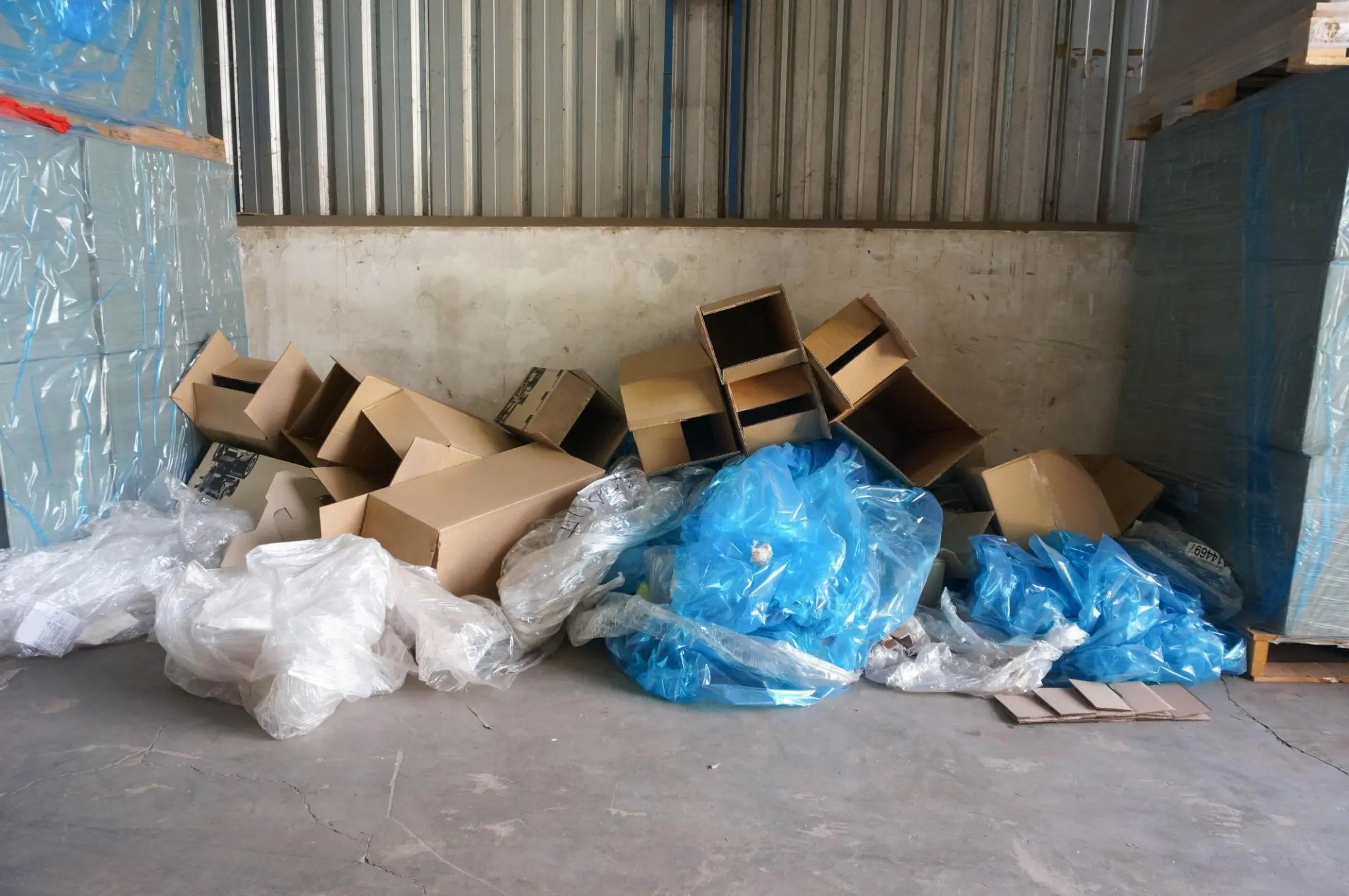
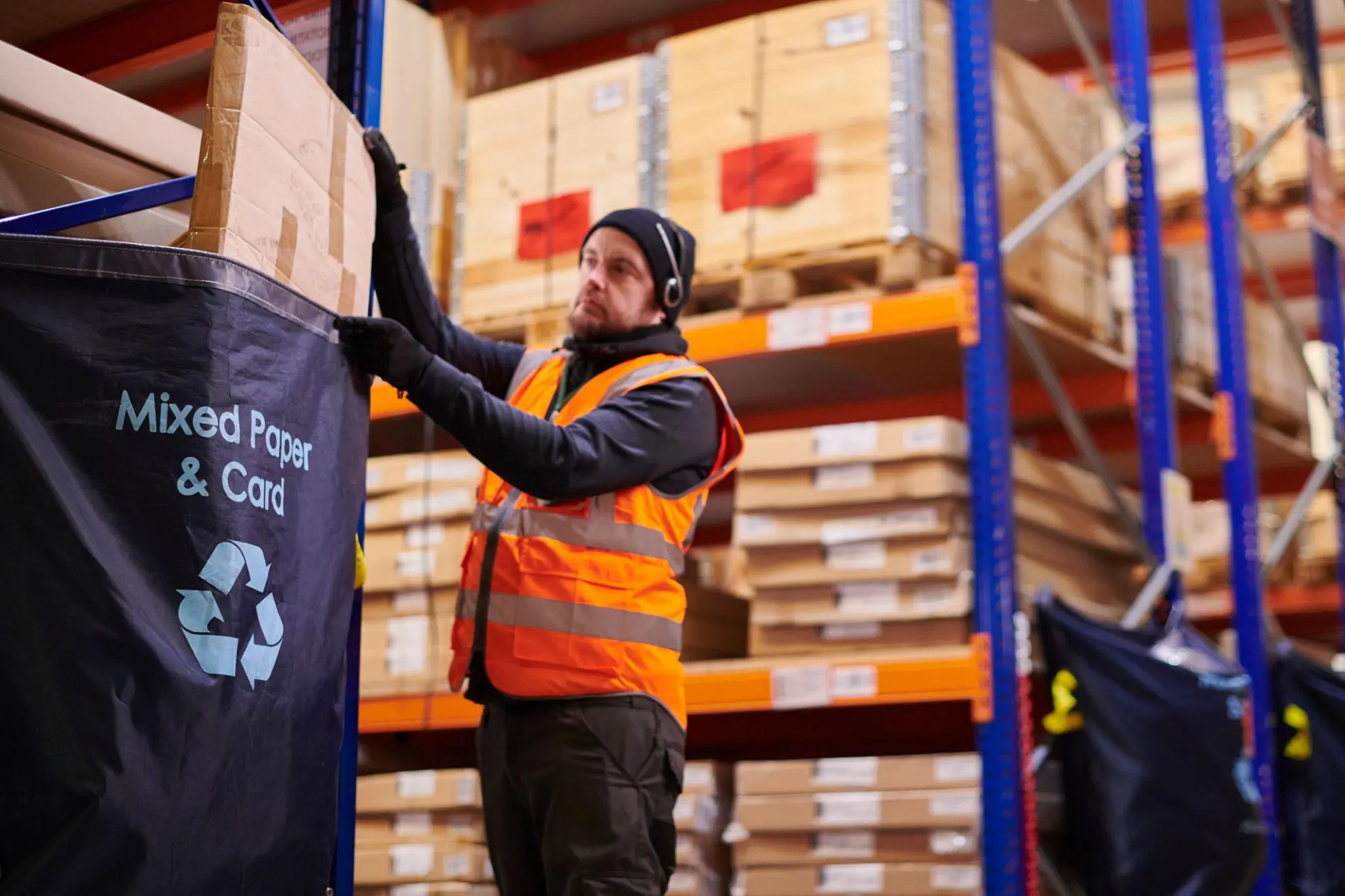
    A large proportion of preventable waste arises not from packaging decisions alone but from poor segregation on the warehouse floor. When cardboard, plastic film and general waste mix together, none of them can be processed efficiently. Better separation supports greener operations and forms a core part of any practical green logistics strategy.


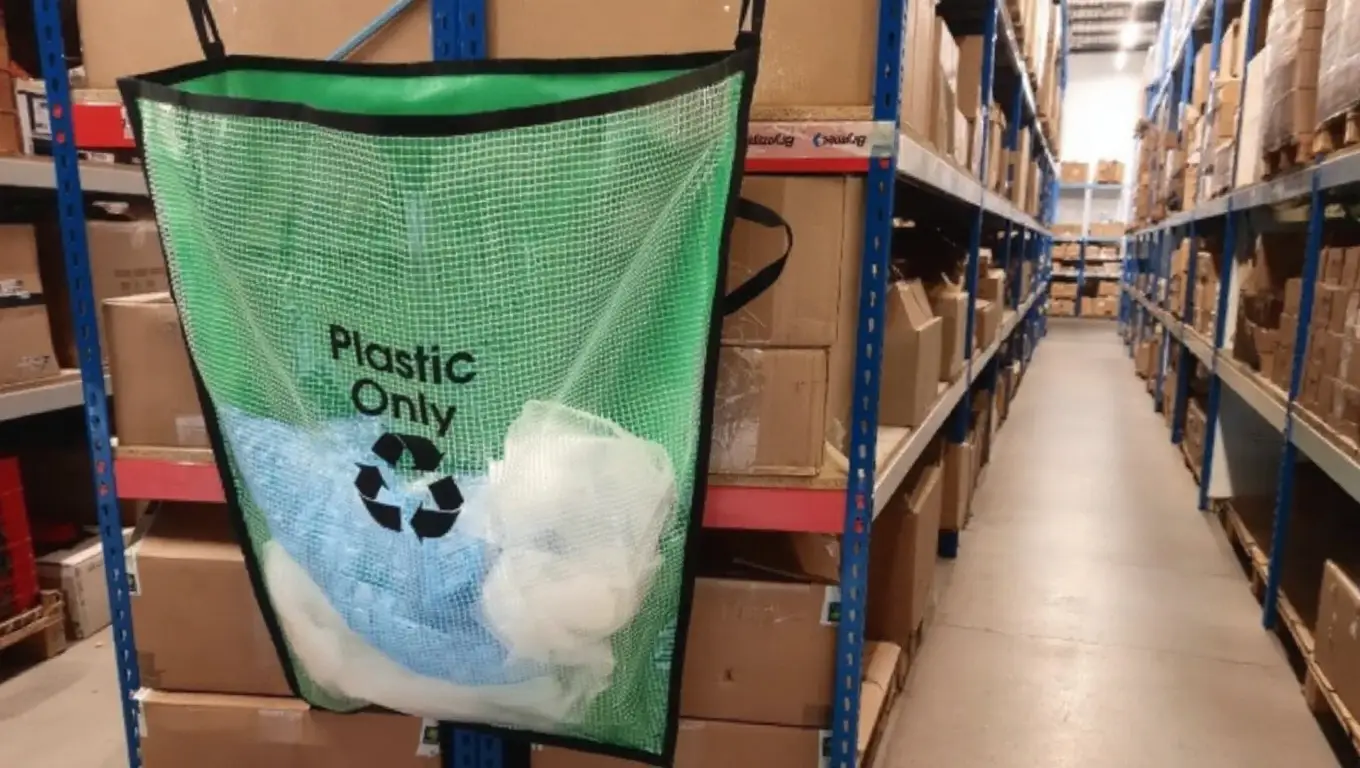
    Visible collection points help teams maintain discipline throughout the shift. Reusable rack end waste sacks keep materials organised at the point of disposal and make it easier to monitor the volume and type of waste generated. This encourages more accurate reporting, highlights unnecessary packaging use and supports targeted waste reduction initiatives. When waste flows are controlled rather than reactive, operations become cleaner, more efficient and more aligned with the expectations of modern green logistics.

    Many teams use additional layers of plastic wrap because they are concerned about load shift or collapse during handling. This creates a cycle where plastic becomes a default form of reassurance, even when simpler and more durable alternatives exist. Reducing plastic waste logistics requires giving operators tools that stabilise loads effectively without relying on disposable materials.


    Reusable mesh guards prevent items from protruding or overhanging pallets, removing one of the most common reasons for adding extra wrap. For heavier or irregular goods, reusable straps and accessories provide controlled tension and secure the load without adding waste. Both options maintain stability through lifts, transfers and staging, helping teams eliminate unnecessary plastic layers while improving overall load quality. When operators feel confident in the equipment supporting them, they naturally move away from over wrapping and towards cleaner, more efficient handling processes.

    Data, planning and automation that support green logistics

    Accurate data is one of the most effective tools for reducing unnecessary plastic use in logistics. When inventory levels are reliable, teams avoid emergency repacking, duplicated orders and last minute rewrapping caused by stock discrepancies. Improved demand planning also means pallets can be built more consistently, reducing the need for protective plastic layers added purely to stabilise unpredictable loads.

    Automation further strengthens this approach. Automated guided vehicles, pick routing software and warehouse management systems reduce touch points, which in turn lowers the opportunities for damage that typically prompt over wrapping. When these systems work together, measurable improvements in green logistics performance emerge because processes become more predictable, controlled and less reliant on single use materials.

    Reverse logistics and closed loop reuse

    A major opportunity to cut waste lies in treating protective materials as reusable assets rather than disposable consumables. Closed loop systems ensure items such as covers, wraps and guards move through the supply chain repeatedly, returning to their point of origin for the next cycle. This dramatically reduces dependence on single use plastics and gives operators far better cost visibility over time.

    Pallet recovery schemes and returnable packaging loops also strengthen operational discipline. When teams know that equipment will be reused, it is handled more carefully and tracked more consistently. These reverse flows align naturally with green logistics principles because they keep materials in circulation, support circular economy goals and encourage long term thinking about asset management.

    Practical checklist for lowering plastic in logistics operations

    To begin reducing plastic waste logistics, teams can adopt a simple, repeatable checklist:

    • Audit current plastic use by function
    • Replace stretch wrap on stable routes with reusable covers
    • Introduce rollcage covers for internal moves
    • Improve segregation with visible rack end sacks
    • Train teams on when wrap is genuinely needed

    This creates immediate clarity and supports consistent behaviour across all shifts.

    Building a Greener, Lower Waste Logistics Operation in 2026

    Lowering plastic in logistics is not only achievable but commercially sensible. Cleaner processes, fewer consumables and stronger equipment reuse all contribute to a more resilient operation. As businesses prepare for 2026, many are choosing to embed green logistics principles into everyday decision making to reduce waste and improve material control.

    Teams ready to reduce single use plastic can explore solutions such as reusable pallet covers and reusable pallet and stillage wraps to build a more efficient, sustainable workflow. These options provide immediate improvements while supporting long term reductions in environmental impact.

    Current Category ID: 21

    Related Articles to read...

    Fill Out The Form Below And Find Out How Palband Can Help You Dramatically Reduce The Plastic Packaging Tax

    Speak to the Team

    Let us help you transition to a reusable solution that works harder for your business. Contact Palband today to explore standard sizes or request a bespoke quote. We’ll help you reduce waste, cut costs and protect your loads with confidence.

  • The Palband Blog

    How Padded Covers Prevent Damage During Goods Handling and Storage

    Introduction

    Damage during handling continues to create unnecessary cost in warehouses, especially when goods move through multiple touchpoints before dispatch. Even well-packed items can weaken under vibration, abrasion or sudden impact, making it harder to prevent damage during transport and maintain consistent quality for customers. As supply chains come under increasing strain, recent analysis of worldwide freight systems shows how even small disruptions can escalate into wider operational issues.

    To reduce avoidable losses, many operators now rely on padded protective covers to stabilise goods, limit surface damage and maintain load integrity across every stage of handling. These padded covers for transport create a controlled protective layer that supports safer, more predictable warehouse operations.

    Short Summary

    This guide explains where handling damage originates, how protective padding absorbs impact and vibration, and the practical ways padded solutions help prevent damage during transport across warehouses, staging areas and mixed-load environments.

    Why You Can Trust Us

    Palband supplies protective systems used daily across UK warehouses, fulfilment centres and transport networks. Our experience comes from working directly with operators who need reliable, reusable solutions to reduce damage rates and improve load handling. The insights in this article reflect proven processes, real-world product performance and long-term operational results.

    Where Damage Occurs in Warehouse Handling

    Damage often begins long before goods reach a vehicle, and understanding these early failure points is essential when aiming to prevent damage during transport. Abrasion is one of the most common causes, especially inside rollcages where cartons rub against exposed metal during even short internal movements. Vibration from pallet trucks can weaken packaging, loosen fittings and cause products to shift out of alignment.

    Forklift operations introduce further risk: small knocks, sudden turns or uneven descents can create impact forces that compromise boxed or delicate items. Compression during pallet stacking can deform outer packaging or transfer pressure to sensitive areas, especially when loads are inconsistently built.

    Environmental changes also play a role. Goods held in staging areas may be exposed to fluctuating temperatures or humidity, which softens packaging, making items more vulnerable to abrasion or collapse.

    With multiple risks occurring before items even leave the warehouse, padded covers for transport become a logical next step in controlling the environment around the product and minimising preventable damage.

    How Padded Covers Reduce Shock, Vibration and Surface Damage

    Padded protection works by controlling the physical forces that damage goods during handling. One of the greatest advantages of padded covers for transport is their ability to absorb micro-vibration, preventing the constant background movement of trucks, conveyors and lift equipment from transferring directly into the product. This stabilising layer keeps items secure and reduces fatigue on internal components.

    The cushioned interior also prevents friction and scuffing. When cartons or equipment move inside cages or against other goods, surfaces can quickly wear down. Using padded protective covers reduces this contact by creating a smooth, impact-absorbing barrier.

    Edge and corner protection is equally important. Many high-value items are damaged not by catastrophic impacts but by repeated small knocks during loading. Padded solutions distribute pressure evenly, lowering the risk of dents or deformation. For irregular shapes or sensitive components, operators often choose padded bags, which wrap closely around the item for even greater stability.

    Together, these mechanisms make padded systems one of the most effective ways to prevent damage during transport while maintaining predictable, repeatable protection across shifts.

    Reusable systems remain consistent across hundreds of cycles, giving teams repeatable protection that single-use films simply cannot offer. Instead of relying on plastic tensioning or improvised wrapping, reusable solutions create a controlled environment around the load, helping operators prevent damage during transport in everyday handling.


    Because the fit is more stable, goods shift less during forklift turns, cage movements or pallet transfers. This stability also reduces cascading damage, where one weakened item compromises the rest of the load.


    Durability is central to their performance. Reusable materials resist tearing, deformation and moisture, meaning they continue to protect goods effectively even under heavy use. For palletised items, Reusable Pallet Covers provide a structured top-to-bottom shield, while Reusable Pallet and Stillage Wraps help maintain load integrity during internal transfers and transport preparation.


    For operations managing varied product lines, reusable protection offers a simple, reliable way to cut damage rates without introducing complexity, a practical improvement that compounds over time.

    Certain products require enhanced protection because even minor scuffs or vibrations can compromise their function or appearance. Electronics, for example, are highly susceptible to micro-movement during handling, which makes padded covers for transport an essential layer of stability. Painted surfaces and high gloss retail packaging are also vulnerable to abrasion inside rollcages or stillages, where repeated contact can leave visible marks.

    Fragile assemblies such as lighting components, fixtures or precision parts require controlled cushioning to prevent shock travelling through the item. Using padded protective covers creates a consistent barrier that reduces both impact and friction during multi-step handling.

    For items stored in stillages, operators often add stillage liners to prevent surfaces from contacting metal frames or other materials. This approach isolates the product from vibration and reduces local pressure points, supporting higher quality control throughout the warehouse.


    By ensuring each vulnerable item is adequately shielded, teams maintain product integrity and reduce rework, returns and time lost to unnecessary investigation.

    A significant proportion of damage occurs not in transit but during the short movements that happen constantly across a warehouse. Picking, sortation, cage movement, temporary holding stages and the first steps of vehicle loading all expose goods to friction, vibration and incidental impact. These movements often happen quickly and repetitively, increasing the risk of small but cumulative failures.


    To better prevent damage during transport, operators must first protect items before they reach the pallet or vehicle. One of the most effective ways to do this is by shielding goods during internal cage movements using rollcage trolley covers. These covers prevent cartons from rubbing against metal bars, stop items protruding from cages and reduce the chance of surface marking during busy shifts.


    With controlled protection applied earlier in the workflow, fewer goods are compromised before dispatch, resulting in more predictable outbound quality and reduced loss rates.

    Many damage events originate from unstable pallet loads rather than external force. When cartons shift, lean or collapse inward, pressure points form and even well-packaged items can deform. Operators often respond by adding more plastic wrap, yet this does little to improve structural stability and increases waste without solving the underlying issue.


    To genuinely improve stability and prevent damage during transport, alternative reinforcement methods are needed. Using mesh guards helps maintain load shape by controlling lateral movement and preventing cartons from bowing outward. These guards are reusable and provide consistent containment without the environmental burden of single-use film.


    Where downward or directional pressure is required, straps and accessories offer firmer control and can be tensioned appropriately for each type of product. Together, these solutions create a more predictable load structure, strengthening pallets and ensuring goods remain stable throughout handling and transit.

    Reducing Returns, Rework and Customer Dissatisfaction

    Damage has a direct operational and financial cost. When items arrive marked, crushed or weakened, teams lose hours on repacking, investigation and paperwork before replacement goods can even leave the warehouse. Rework disrupts planned workflows, increases labour spend and adds avoidable strain to already busy operations.

    Customer penalties for damaged deliveries are becoming more common, especially in retail and manufacturing networks where late or impaired stock affects wider production schedules. Each incident risks future orders, reduces confidence and increases the likelihood of customers sourcing alternative suppliers.

    By controlling everyday handling risks, operators reduce the volume of breakages and improve the consistency of outbound quality. This leads to fewer return requests, stronger service performance and more stable commercial relationships. Effective protection throughout the handling chain prevents issues long before they reach the customer.

    Checklist: How to Use Padded Covers Effectively

    To get the best performance from padded covers for transport, teams should follow a simple repeatable process:

    • Select padding thickness appropriate to the fragility of the item
    • Apply covers with a smooth, tight fit to prevent internal movement
    • Inspect covers between uses to identify wear or compression
    • Use padded protection across all high friction routes such as picking, cage movement and palletisation
    • Combine padded covers with mesh guards or reusable wraps for improved stability on mixed or high stacked loads

    Conclusion: Stronger Protection, Lower Damage Rates

    Padded protection offers a practical way to prevent damage during transport, reducing financial losses and improving customer satisfaction. When teams apply consistent shielding throughout picking, movement and loading, fewer items are compromised and outbound quality becomes more reliable.


    Operators looking to upgrade their internal handling standards can introduce reusable solutions that strengthen stability and reduce waste. Using reusable pallet covers alongside reusable pallet and stillage wraps creates a controlled environment that keeps goods secure from the first touch to the final delivery.

    Current Category ID: 21

    Related Articles to read...

    Fill Out The Form Below And Find Out How Palband Can Help You Dramatically Reduce The Plastic Packaging Tax

    Speak to the Team

    Let us help you transition to a reusable solution that works harder for your business. Contact Palband today to explore standard sizes or request a bespoke quote. We’ll help you reduce waste, cut costs and protect your loads with confidence.

  • The Palband Blog

    Why Reusable Pallet Wraps Are Replacing Plastic Stretch Film in UK Warehouses

    Why UK Warehouses Are Moving Beyond Plastic Stretch Film  

    Plastic stretch film has been a long standing choice for securing palletised goods, yet many UK warehouses are now moving toward reusable pallet wraps as part of wider efforts to reduce waste and improve efficiency. Sustainability reporting, higher material costs and the Plastic Packaging Tax are all influencing teams to reconsider traditional wrapping methods and explore an alternative pallet wrap that performs better over time.

    Reusability delivers a clear advantage. Removing single use film from daily pallet handling reduces waste volumes, lowers long term operating costs and supports safer working conditions by eliminating the repetitive strain and trip hazards associated with loose plastic.

    Many supply chain partners are also placing greater emphasis on sustainable operations, further accelerating the shift toward reusable solutions.

    Within this transition, the move toward products such as the range of reusable pallet covers from Palband reflects a practical and durable approach to securing loads without relying on plastic stretch film. The trend is being driven by a combination of cost control, sustainability goals and day to day operational improvements.

    The Limitations of Plastic Stretch Film in Modern Warehousing

    Although widely used, plastic stretch film presents clear limitations. Disposal costs, inconsistent load stability and the physical strain of hand wrapping make it less suitable for modern warehouse environments. Repetitive wrapping increases the risk of strain injuries, and loose film on the floor can create slip hazards. As businesses evaluate the most effective pallet wrap UK solutions, these drawbacks have become more prominent.

    Environmental and regulatory pressures add further complexity. Lightweight stretch film often becomes contaminated, making recycling difficult, and large volumes of it must be disposed of daily. 


    Industry discussions continue to highlight uncertainty around the future of plastic film use, including recent commentary on European policy positions.

    A relevant example is the report on plastic film sector responses in Europe featured by Recycling Today. While exemptions may be discussed at policy level, the wider direction of travel for UK warehouses continues to prioritise reducing single use materials rather than increasing reliance on them.

    Combined, these limitations reinforce why reusable pallet wraps are becoming a more practical option for warehouses seeking consistent performance and lower waste.

    Why Reusable Pallet Wraps Are Becoming the Preferred Choice

    Reusable pallet wraps offer durability, speed and reliability that plastic film cannot match. They provide consistent tension, reduce wrapping time and remove the need for knives or cutters. This contributes to a safer working environment and more efficient pallet handling. As an alternative pallet wrap, reusable systems support long term waste reduction without compromising load security.

    In day to day operations, reusable wraps deliver reliable performance across internal transfers, multi drop routes and warehouse storage. They do not tear or loosen in the way film can, even when used on mixed or uneven loads.

    High grade materials within Palband’s product range, including PVC mesh, PE200 and PVC580, provide long service life and dependable performance under demanding conditions.

    Warehouses are also pairing reusable wraps with complementary load stabilisation equipment, such as reusable pallet wraps for full height containment and reusable load restraint straps for securing specific areas of the load. Together, these solutions reduce the need for single use film and support consistent, repeatable load stability across the entire operation.

    The Environmental Case: Cutting Plastic Waste and Supporting Sustainability

    Reusable pallet wraps play a significant role in reducing warehouse waste by replacing large volumes of plastic stretch film. Each reuse removes another layer of single use plastic from daily operations, helping teams meet sustainability commitments while controlling disposal costs. Many warehouses now include reusability within their environmental reporting because it delivers measurable reductions in material consumption across the year.

    This shift aligns with wider industry efforts to decrease plastic dependency. Packaging and logistics firms across the UK are actively exploring greener operational models, with many highlighting reusable systems as a key contributor to progress.

    with many highlighting reusable systems as a key contributor to progress.Evidence of this can be seen in industry articles such as the recent feature in the Grocery Trader, which highlights how eco friendly packaging solutions are becoming an important part of modern supply chains.

    Reducing plastic also improves warehouse safety and housekeeping by lowering the amount of loose film that needs to be collected and baled. Reusable solutions support cleaner work areas and require no segregation for recycling. To support broader waste reduction strategies, Palband provides additional products such as rack end waste sacks, which help facilities manage segregated disposal more efficiently. For teams focusing on regulatory alignment, the guidance within Palband’s technical and compliance information offers further clarity on how reusable systems support long term sustainability targets.

    Reusable pallet wraps do more than reduce waste. They also streamline day to day warehouse operations by providing faster, more predictable load handling. Applying a wrap takes significantly less time than hand wrapping with stretch film, particularly when operators need to secure multiple pallets during busy shifts. The wraps maintain consistent tension and avoid the snagging or uneven application that often occurs with film.


    Safety is another factor driving adoption. Reusable pallet wraps eliminate the need for knives and cutters, reducing the risk of injury. They also remove trip hazards created by discarded film, improving the overall working environment. For many teams managing heavy throughput, these changes provide measurable safety benefits and more reliable pallet stability in routine transfers.


    Reusable systems also support better load security. They do not tear or loosen during handling and remain effective even when the pallet height changes as goods are removed. For additional support, warehouse teams often combine wraps with products such as Loadmaster mesh guards or stillage wraps and covers to maintain stability in more demanding applications. These combinations create a controlled environment where load containment is consistent throughout storage, picking and transport, helping operators maintain predictable workflows.


    Operational benefits of this kind align well with the safety content outlined in Palband’s technical and compliance information, where efficient working practices and safe manual handling are emphasised as core warehouse considerations.

    Cost control is one of the strongest reasons warehouses are exploring an alternative pallet wrap approach. Plastic stretch film appears inexpensive at first, but the costs accumulate through material usage, labour time, waste handling and the ongoing impact of the Plastic Packaging Tax. When assessed over a year, these factors create a significant operating cost for any high volume warehouse.


    Reusable pallet wraps offer a different cost profile. Each wrap can be used repeatedly, often for hundreds of cycles, allowing the initial investment to be spread across a long working life. Their durability prevents the frequent replenishment required with single use film, and the reduced handling time saves labour throughout the week. These savings can be substantial when applied across an entire fleet of pallets.


    For loads that need extra containment, warehouse teams often pair wraps with reusable pallet straps to secure heavier or more complex configurations. This avoids the need for excessive layers of film and supports consistent load stability without increasing consumable costs. Over time, reusable systems help organisations achieve predictable cost management while reducing their environmental impact.

    Compliance requirements around packaging waste, reporting and material use continue to evolve, and many organisations are now expected to demonstrate clear progress in reducing single use plastics. Reusable pallet wraps align naturally with these expectations by reducing the amount of material entering waste streams and providing a more predictable approach to consumption.


    For many operations, the switch supports internal Environmental, Social and Governance strategies by lowering overall plastic usage and demonstrating responsible procurement. Reusability also supports the objectives of the Plastic Packaging Tax and upcoming changes relating to Extended Producer Responsibility, where material reduction and accurate reporting carry increasing weight.


    Warehouse managers looking for clarity on how reusable systems support compliance can refer to Palband’s technical and compliance guidance, which outlines their suitability within regulated environments. This makes reusable pallet wraps a practical choice for businesses seeking stronger environmental performance without compromising day to day operations.

    Reusable pallet wraps offer measurable benefits across a wide range of applications. They are particularly effective in closed loop logistics where wraps can be returned to a central hub, allowing repeated use without loss of control. Many warehouses also rely on them for internal pallet transfers where speed and safety are priorities.


    The wraps provide stable containment during multi drop routes, reducing the risk of load movement over repeated stops. They are also suitable for long term storage, where they help maintain consistent tension without degrading. In temperature sensitive environments, they can be paired with complementary protective equipment for greater control.


    For operations requiring thermal protection, Palband offers products such as insulated pallet covers and liners, which support regulated storage conditions. These combinations allow businesses to tailor their load management approach to suit the needs of different product lines while maintaining a reduced reliance on single use film.

    Choosing the Right Reusable Wrap for Your Operation

    Selecting the correct reusable pallet wrap depends on load type, frequency of use and handling environment. Light duty applications often benefit from PE130 materials, which offer practical containment for smaller or lighter goods. Medium duty requirements may be better suited to PE200, while heavier warehouse environments typically rely on 600D polyester or PVC580 for maximum durability.

    Different heights and configurations can also influence the best choice. Full height wraps provide complete coverage for mixed or tall loads, while half height options offer flexibility when managing part stacked pallets. Consistency of fit and the ability to reuse the same wrap repeatedly make these systems reliable options for busy warehouse operations.

    A full overview of available materials and configurations can be found within Palband’s range of reusable pallet covers, helping teams select a wrap that aligns with their specific operational needs.

    Conclusion: A Practical Shift That Delivers Results

    Reusable pallet wraps offer a clear pathway for warehouses aiming to reduce single use plastic and improve operational efficiency without disrupting existing processes. They provide consistent load security, faster application, safer handling and a strong alignment with long term environmental goals. With growing interest in sustainable packaging solutions across the UK, these wraps represent a practical step that improves day to day performance while helping organisations meet wider strategic commitments.

    Businesses exploring a transition away from plastic film can review the full range of options at Palband, including wrap solutions, covers, straps and accessories. For teams wanting to compare reusable wraps with other protective options, the product collection pages provide clear material specifications and compatibility guidance.

    Reusable pallet wraps are not only an alternative to plastic wrap. They are becoming a standard part of modern logistics, supporting safer, faster and more sustainable warehouse operations.

    Current Category ID: 21

    Related Articles to read...

    Fill Out The Form Below And Find Out How Palband Can Help You Dramatically Reduce The Plastic Packaging Tax

    Speak to the Team

    Let us help you transition to a reusable solution that works harder for your business. Contact Palband today to explore standard sizes or request a bespoke quote. We’ll help you reduce waste, cut costs and protect your loads with confidence.

  • The Palband Blog

    How to Improve Load Security Without Plastic Shrink Wrap

    Why load security matters more than ever

    Load security is a core safety requirement rather than a nice to have. When a pallet or stillage is not properly contained, the risk extends far beyond damaged goods. Unstable loads can injure warehouse staff, put drivers at risk and create serious hazards for other road users. For operators, a single incident can lead to downtime, insurance claims and reputational damage that is difficult to repair.

    At the same time, many organisations are reviewing how they secure loads because of rising material costs and sustainability targets.

    Plastic shrink wrap has often been used as the default solution, yet it does not always deliver consistent, repeatable results. Modern load security needs to combine robust containment with safer manual handling and reduced environmental impact.

    Businesses across logistics, retail and manufacturing are therefore looking at more engineered solutions, such as the reusable load restraint and protective equipment available from Palband. The goal is a load security approach that protects people, assets and brand reputation while reducing reliance on single use plastics.

    The UK rules that define safe load security

    In the UK, load security is not just good practice. It is a legal requirement backed by specific guidance and enforcement activity. Operators, consignors and drivers all share responsibility for ensuring that goods are loaded, secured and unloaded in a way that protects staff and the public. Poor load security can lead to prohibitions, fixed penalties or prosecution if a vehicle is found to present a risk on the road. The Driver and Vehicle Standards Agency sets out clear expectations in its official guide on securing loads on HGVs and goods vehicles.

    The code of practice explains how to choose an appropriate load securing system, what checks to carry out before loading and how to respond if a load shifts during a journey. It also highlights the need for effective risk assessments and suitable equipment for different vehicle types and cargo.

    Recent updates are a reminder that the regulatory environment continues to evolve. A DVSA feature on the importance of load security links the guidance to real incidents, underlining how unsecured loads can have tragic consequences. For operators, this reinforces the need

    Why plastic shrink wrap is not enough for safe loads

    Plastic shrink wrap has been used for many years to bind pallets and help prevent movement in transit. It is familiar, relatively low cost per roll and easy to apply with minimal training. However, relying on shrink wrap alone for load security can create problems in both safety and performance. Film can tear, loosen or be applied inconsistently, particularly when operators are working under time pressure. Once the outer layer is cut, the stability of the entire load can be compromised.

    From a compliance perspective, regulators focus on whether a load is secure, not on how much plastic has been used. A wrapped pallet that cannot withstand braking, cornering or partial unloading still falls short of the standards set out in official guidance.

    Legal commentators have highlighted how the updated DVSA code of practice places greater emphasis on risk assessment and the suitability of chosen restraints, as summarised in recent legal updates on DVSA load security guidance.

    There is also a sustainability impact. High volumes of plastic shrink wrap increase waste handling requirements and contribute to wider environmental concerns. As organisations seek to cut single use materials, they are reviewing whether shrink wrap should be a last resort rather than a default choice. In many cases, better results can be achieved by combining structured stacking with engineered equipment such as reusable wraps, covers and containment systems from the Palband product range, which deliver more consistent load security while reducing plastic consumption.

    The fundamentals of a good load securing system without plastic

    A reliable load securing system does far more than hold goods in place. It must keep the load stable during acceleration, braking and cornering, and maintain that stability as items are removed during multi drop routes. Good load security relies on choosing equipment that can withstand the forces defined in the DVSA code of practice, combined with clear risk assessments that reflect the weight, shape and behaviour of the cargo.

    The DVSA explains that a safe system should prevent forward movement equal to the full weight of the load and limit sideways and rearward movement to half of that weight.

    This guidance applies regardless of whether a business uses reusable wraps, nets, straps or pallet boxes. The focus is always on the effectiveness of the restraint rather than the type of material used. For operators looking for detailed technical clarification, the core reference point remains the DVSA code of practice on load securing.

    Keeping these fundamentals in mind helps ensure that load containment choices support warehouse routines, transport routes and cargo safety requirements rather than depending on layers of plastic shrink wrap.

    Legal commentators have highlighted how the updated DVSA code of practice places greater emphasis on risk assessment and the suitability of chosen restraints, as summarised in recent legal updates on DVSA load security guidance.


    There is also a sustainability impact. High volumes of plastic shrink wrap increase waste handling requirements and contribute to wider environmental concerns. As organisations seek to cut single use materials, they are reviewing whether shrink wrap should be a last resort rather than a default choice. In many cases, better results can be achieved by combining structured stacking with engineered equipment such as reusable wraps, covers and containment systems from the Palband product range, which deliver more consistent load security while reducing plastic consumption.

    Load security within the warehouse is only one part of a wider chain of responsibility. Once goods leave the site, they become part of a broader cargo safety system that spans road transport, ports, storage hubs and in some cases international shipping. A stable pallet in a warehouse helps prevent incidents further along the supply chain, improving consistency and reducing the likelihood of cargo becoming damaged or hazardous in transit.


    Industry bodies regularly highlight how improper securing or incorrect packing can contribute to serious incidents. International codes of practice such as the guidance on cargo securing and packing stress the importance of choosing suitable equipment, understanding load characteristics and preventing internal movement. These principles apply to pallets, containers and roll cages alike.


    Teams handling temperature sensitive items or regulated products can also strengthen safety by referring to Palband’s guidance on lithium ion battery safety. Aligning warehouse routines with these standards helps maintain stronger cargo safety throughout the journey and reduces the risk of incidents caused by unstable or poorly contained loads.

    Fire services across the country are reporting a growing number of incidents involving lithium ion products, many linked to charging faults, damaged returns and incorrect storage. The National Fire Chiefs Council has warned that battery use is increasing faster than the safety standards designed to protect staff, property and first responders.


    Its position statement highlights rapid flame spread, toxic vapour release and the potential for reignition even after initial suppression. Warehouses that manage large volumes of consumer electronics, power tools or mobility products are particularly exposed. By using guidance from the NFCC and implementing protective measures such as lithium battery fire blankets, fireproof covers and dedicated containment solutions from the Palband lithium battery safety range, operators can build a more resilient fire protection strategy.

    A practical checklist to improve load security without plastic shrink wrap

    This checklist gives operators a clear sequence to follow when preparing, securing and moving palletised goods. It is designed for busy sites where different team members may handle the same load throughout the day and helps maintain consistent load security without relying on plastic shrink wrap.

    Before loading

    • Inspect the pallet to confirm it is intact with no broken or weakened boards.
    • Check that the pallet surface is level and free from debris.
    • Review the load plan to confirm weight distribution and pallet type suitability.

    While building the load

    • Stack items evenly with no overhang.
    • Place cartons or containers to create a positive fit, reducing gaps that can cause internal movement.
    • Use dividers or containers where needed to stabilise irregular shapes.
    • Confirm that the load height is suitable for the equipment chosen.

    Choosing a load securing system

    • Select reusable pallet covers for mixed, boxed or lightweight goods.
    • Use straps for firm pressure based restraint where additional tension is required.


    • Choose pallet boxes for goods that need solid side support.
    • Check the condition of all equipment before use.

    Before dispatch

    • Confirm that the load remains stable after securing equipment is fitted.
    • Record checks in your site system to maintain traceability.
    • Reassess the load if any items were removed during staging or rework.

    During multi drop routes

    • After partial unloading, inspect the remaining items for movement.
    • Reapply covers or straps if gaps have formed.
    • Ensure that any equipment used is placed back on the load correctly before continuing.

    Further guidance for operators
    Warehouse managers can review common handling considerations through the Palband FAQs, which provide guidance on equipment selection and operational requirements. Embedding this checklist into daily routines helps maintain reliable load security and supports a stronger cargo safety culture across the site.

    Conclusion and next steps for safer, plastic free load security

    Improving load security without relying on plastic shrink wrap is both achievable and practical. By combining stronger warehouse discipline with engineered containment systems such as reusable wraps, covers and straps, operators can reduce movement, improve safety and cut their use of single use plastics. These changes support compliance with recognised guidance and contribute to smoother, more predictable handling across the supply chain.

    Organisations reviewing their current approach can explore the full range of reusable options through the Palband product collection.


    • For tailored support, operators can also contact Palband to review their current restraints, identify risks and select solutions that provide consistent protection throughout the handling and transport process.

      Load security is an essential part of safe and efficient operations, and choosing plastic free methods allows businesses to improve performance while supporting long term sustainability goals.

    Current Category ID: 21

    Related Articles to read...

    Fill Out The Form Below And Find Out How Palband Can Help You Dramatically Reduce The Plastic Packaging Tax

    Speak to the Team

    Let us help you transition to a reusable solution that works harder for your business. Contact Palband today to explore standard sizes or request a bespoke quote. We’ll help you reduce waste, cut costs and protect your loads with confidence.

  • The Palband Blog

    A Guide to Fire Protection for Lithium-ion Battery Storage in Warehouses

    The rise of lithium ion battery storage in UK warehouses

    Warehouses now handle more lithium ion powered goods than at any point in recent years. Consumer electronics, cordless tools, automated picking equipment and electric warehouse vehicles continue to increase, and this shift has led to a sharp rise in the volume of batteries held on site. This growth means that lithium ion battery storage in warehouses is now a core safety consideration for many operators.

    As more products rely on rechargeable power, the fire risks associated with damaged or overheating batteries must be taken seriously. Thermal runaway can start with a single internal fault and escalate quickly if the surrounding. Many warehouse teams are now stock adds additional fuel.

    reviewing their processes, upgrading storage zones and improving staff awareness of early warning signs.

    This change has encouraged businesses to look at fire protection and prevention measures in more detail. Many operators now use guidance from industry bodies and supplement it with their own internal procedures. Warehouses that have not yet reviewed their lithium ion storage arrangements may be exposed to risks that can be reduced with clear segregation, improved monitoring and better handling of damaged returns. Palband supports this approach through practical resources such as the dedicated page on lithium ion battery safety.

    Why lithium ion battery fires are fundamentally different

    Lithium ion battery fires behave very differently from fires involving traditional materials. When a cell fails internally, heat can build rapidly and trigger thermal runaway. This process produces flammable vapours that can ignite without an external flame, and the reaction may continue even when the battery appears extinguished. These characteristics make battery fire protection a challenge for many warehouse environments.

    A further complication is the oxygen released during thermal runaway. This increases the intensity of the fire and makes suppression more difficult for staff and fire crews. The risk of re-ignition also remains high unless the battery is cooled and isolated effectively.

    Warehouses that handle large numbers of battery-powered goods must therefore adapt their fire safety planning to reflect these differences.

    Traditional covers and basic barriers are rarely designed for this type of heat release. Many operators now consider specialist containment solutions that can slow heat transfer and reduce the spread of vapour. One option includes the use of fire resistant materials designed for battery incidents, such as those used in Palband’s range of fireproof pallet covers, which provide an additional layer of protection when storing or isolating suspect batteries.

    Real risks faced in warehousing environments

    The risks associated with lithium ion batteries often begin long before goods are placed into storage. Products can be damaged during transport, returned in poor condition or handled in ways that weaken internal cell structure. These issues are not always visible at first glance, making early inspection and clear isolation procedures essential for preventing fire.

    Within the warehouse itself, charging stations can also introduce hazards. Poor ventilation, incompatible charging equipment or blocked airflow around battery powered vehicles can lead to overheating.

    Stacked goods placed too close to charging areas reduce the ability of heat to dissipate and may increase the likelihood of a fire starting unnoticed.

    Another factor is the handling of damaged or suspect batteries. These items should never be stored with healthy stock or left on open racking. Specialist containment materials offer a safer alternative. Palband provides products that support these situations, including fire suppression granules that can help isolate heat and reduce the spread of a potential battery incident until the battery can be removed from site.

    Key fire protection challenges in mixed storage warehouses

    Mixed storage environments create higher risks because lithium ion batteries often sit beside cardboard, plastics, fabrics and other combustible items. If a single battery enters thermal runaway, nearby goods can quickly accelerate the fire. This risk increases when pallets are stacked tightly or when airflow is limited, leaving heat with nowhere to escape.

    Warehouses that handle varied stock often rely on standard pallet wrapping, which is not designed to contain heat or vapour during a battery incident. Teams working in these environments need clear zoning, wider aisles and stricter checks on battery powered returns. When batteries arrive damaged or without packaging, they should be isolated immediately and placed into a designated containment area.

    Many operators now use enhanced protection methods such as reinforced covers or sealed containers to limit fire spread and improve response times. Within the Palband Fyashield range, products such as lithium fire blankets, fireproof covers and fireproof stillage liners give warehouse teams stronger control when storing damaged, ageing or high risk battery powered items. These options create fire resistant boundaries around unstable loads and help slow heat transfer between cells, which is essential in preventing thermal escalation.

    Understanding thermal runaway in a warehouse setting

    Thermal runaway is the central reason lithium ion battery storage requires specific planning. In a warehouse where multiple units are stored together, a single cell failure can quickly influence neighbouring batteries. Once temperatures rise above a critical threshold, flammable vapours are released, pressure increases and the reaction can continue without an external heat source.

    The danger is magnified when batteries are stacked or when airflow is restricted by tight packaging. Even small consumer devices can create enough heat to compromise surrounding stock if not handled correctly. Faulty returns, crushed packaging or partially damaged devices also increase risk because early warning signs may not be visible to staff.

    Warehouse managers can reduce these risks by maintaining clear inspection routines and isolating any battery that shows signs of swelling, overheating or physical damage. Additional safeguards can be added through fire resistant barriers such as Palband’s fireproof containers which provide secure, reinforced housings to help control the effects of thermal runaway during initial containment.

    Good layout design is essential for reducing the impact of a lithium ion battery incident. Batteries should be stored away from general stock and kept in small, separated quantities. Warehouses that store both new and returned goods should maintain separate zones so that suspect items never mix with undamaged inventory. Clear floor markings and signage help teams identify the correct locations quickly during busy shifts.


    Charging areas should be kept clear of packaging materials, flammable products and high traffic walkways. Ventilation is important because heat generated during charging can accumulate and increase the risk of cell failure. Warehouse teams should regularly check that devices are unplugged once fully charged and that chargers remain compatible with the equipment being used.


    Segregation is equally important for damaged or untested batteries. These items should be placed in fire resistant containers or held in isolation using specialist protective materials that prevent heat spread. Palband supports this approach through the Fyashield range, offering lithium battery storage containers, fireproof stillage liners and fireproof covers that help create controlled zones for higher risk items. These solutions reduce the chance of conductive contact, limit heat transfer and provide an added layer of protection during inspection, handling and short term storage.

    Warehouses handling lithium ion powered equipment now face increasing regulatory attention. There is still no single UK framework that fully addresses the fire risks associated with battery storage, but guidance is evolving as incidents rise. Recent analysis from the UK Parliament Research Library notes that battery technologies are expanding faster than current safety standards can adapt, particularly regarding thermal runaway and large scale fire behaviour.


    For warehouse operators, this reinforces the need for structured risk assessments, enhanced temperature control and early stage containment measures that reduce the likelihood of ignition during storage or transport. These regulatory insights help shape internal procedures and support discussions with insurers and local fire authorities.

    Fire services across the country are reporting a growing number of incidents involving lithium ion products, many linked to charging faults, damaged returns and incorrect storage. The National Fire Chiefs Council has warned that battery use is increasing faster than the safety standards designed to protect staff, property and first responders.


    Its position statement highlights rapid flame spread, toxic vapour release and the potential for reignition even after initial suppression. Warehouses that manage large volumes of consumer electronics, power tools or mobility products are particularly exposed. By using guidance from the NFCC and implementing protective measures such as lithium battery fire blankets, fireproof covers and dedicated containment solutions from the Palband lithium battery safety range, operators can build a more resilient fire protection strategy.

    Warehouses storing, charging or handling battery powered goods need simple and repeatable controls. Many operators begin by assessing goods in areas, returns processing and any zones where damaged batteries may appear. Segregating these areas and using specialist fire resistant containers prevents unstable batteries from being mixed with general stock.


    Temperature monitoring, staged inspections and controlled charging zones all help reduce ignition risk. Reusable fireproof covers, insulated pallet liners and lithium battery storage containers available on the Fyashield product range support compliance by providing heat resistant barriers around sensitive goods. Documented charging protocols and regular staff training further strengthen insurer confidence and provide a clear audit trail.

    Engineering Controls That Reduce
    Ignition Risk

    Engineering controls form the foundation of safe lithium ion battery storage and are often the first line of defence in large sites. Warehouses increasingly rely on environmental monitoring systems that track temperature changes across charging zones and bulk storage areas. Any unexpected rise in heat is an early warning sign that a battery may be entering stress or damage.

    Physical containment is equally important. Fire resistant storage cabinets, pallet covers and insulated liners from the Palband lithium battery safety range create additional barriers that prevent flames spreading from a single cell to nearby stock. These solutions are built for everyday warehouse use, supporting safe handling and helping staff manage battery powered goods without relying solely on shrink wrap or ad hoc measures.

    Operational Practices That Support Safer Battery Handling

    Even with robust engineering controls, simple operational practices make a significant difference. Many warehouses standardise how damaged, swollen or overheated batteries are identified during routine goods in checks. Items that show signs of impact damage or that arrive unboxed can be placed immediately into fireproof containers or isolation bins to prevent escalation.

    Charging routines also matter. Operators often schedule charging in supervised rooms and avoid leaving batteries connected overnight, especially when handling returned goods. Palband provides practical tools such as fireproof covers, suppression granules and padded protective liners displayed across the full product range, helping teams manage day to day risk without slowing down operations or creating unnecessary handling steps.

    Separation Between Batteries and General Inventory

    Segregation is one of the simplest ways to prevent a warehouse incident from escalating. Lithium ion batteries should never be stored beside flammable materials or high value inventory. Even a small ignition can create heat, smoke and vapour that spreads rapidly through tightly packed aisles.

    Warehouses often designate specific battery zones, separate from standard racking and handled only by trained staff. Using heat resistant pallet boxes and internal liners from the Fyashield product range ensures that any unexpected reaction remains confined to a controlled area. This separation also supports insurance requirements and helps operators demonstrate that battery risks are being managed proactively.

    Regulatory Expectations and Policy Gaps

    Warehouses that store lithium ion batteries must work within a fragmented regulatory environment, where battery safety guidance is drawn from fire safety law, health and safety rules and hazardous goods requirements. 


    National commentary has highlighted that grid scale and warehouse level storage still sit within a broad regulatory framework rather than one unified standard.

    The UK Parliament Research Briefing on battery energy storage systems notes that concerns around thermal runaway, fire spread and emergency response capability have prompted calls for clearer national guidance and stronger consultation with fire and rescue services. This mirrors the challenges seen in warehouse environments, where operators must translate high level requirements into practical on site controls.

    Industry bodies have also warned that consumer demand for lithium powered devices is outpacing the standards needed to manage the associated risk. The NFCC’s position statement on lithium ion battery fire risks reports increasing incident numbers and calls for stronger product standards, improved public awareness and better support for fire and rescue services responding to battery related fires. These issues influence how warehouses prepare, train staff and select protective equipment.

    A Practical Checklist to Support Warehouse Teams

    Warehouses that store lithium ion batteries must work within a fragmented regulatory environment, where battery safety guidance is drawn from fire safety law, health and safety rules and hazardous goods requirements. 

    • Inspect incoming goods for damage, swelling or heat.
    • Separate any suspect batteries and move them into a fire resistant container or isolation area.
    • Confirm storage temperatures remain within safe ranges.
    • Check charging points for cable damage, obstructed ventilation or signs of overheating.
    • Verify that lithium ion stock remains segregated from flammable goods.
    • Record temperature readings and storage checks at scheduled intervals.
    • Ensure fire protection materials such as suppression granules, fireproof pallet covers and battery isolation liners from the Palband battery safety range are stocked and accessible.
    • Review any alarms, heat monitoring alerts or unusual odours immediately.
      Embedding this checklist into staff routines helps create a consistent safety culture and ensures that signs of battery stress or thermal activity are acted on early.

    Conclusion

    Lithium ion battery storage requires a balance of engineering controls, trained staff, consistent routines and well designed protective materials. Warehouses managing power tools, consumer electronics, commercial lighting, mobility products or returned goods face a higher concentration of battery powered items than ever before, which increases their exposure to thermal runaway and ignition risks.

    By combining controlled storage zones, fire resistant materials from the Palband product range, staff awareness and clear processes, operators can reduce the likelihood of a fire and limit its impact if one occurs. Continued developments in national policy and guidance will shape future standards, but warehouses can take meaningful action today through strong internal controls and well chosen protective equipment.

    Current Category ID: 21

    Related Articles to read...

    Fill Out The Form Below And Find Out How Palband Can Help You Dramatically Reduce The Plastic Packaging Tax

    Speak to the Team

    Let us help you transition to a reusable solution that works harder for your business. Contact Palband today to explore standard sizes or request a bespoke quote. We’ll help you reduce waste, cut costs and protect your loads with confidence.

  • The Palband Blog

    HOW much do reusable pallet wraps cost?

    When making the change from using single use plastic shrink wrap to a reusable product, it’s vitally important to understand what the return on investment will be, and how long it will take for you to start saving money year on year. 

    On average, reusable alternatives to single use plastic shrink wrap will cost anywhere between £50 and £150 depending on a variety of options.

    Bespoke products manufactured in the UK will always appear initially to be more expensive than an imported product from India or China, but in reality, due to recent changes in the markets, that is no longer the case. Besides the actual price tag, there’s major advantages in buying from the UK because every application is different so to get the perfect product to fit your exact shape and size imported is nigh on impossible. 

    Considerations to take into account when looking to reduce your carbon footprint and your plastic waste by using a reusable pallet wrap or cover instead of single use plastic pallet wrap include the size, shape and weight of the pallet or roll cage trolley, the frequency of its use, how far they will need to travel and your return-on-investment requirements. Also, will you be needing any branding on the reusable pallet covers and any colour preferences?.

    Added extras for bespoke reusable pallet covers

    When it comes to pricing your bespoke reusable pallet covers or wraps, we start with a base product which will cost anywhere between £50 and £80 depending on the size and quantity required, we’ll then ascertain whether this will be used internally or externally and decide how many straps will be needed to attach the wrap to the pallet, and to close the wrap around the load. This will depend on the weight, height and shape of the load and increasing the number of straps can add anything from £10 and upwards to the base price.

    There’s other considerations to take into account including extra webbing along the base of the wrap to decrease wear and tear if it’s going to be used on long journeys which could add around £5-10, document windows to hold paperwork and to keep it dry, heavier duty buckles if the load is particularly heavy and even a lid which can be used to cover over the top of the pallet and attach to the pallet cover. All these extra items will add further cost but can still be well within the return on investment figure in comparison to the issues with single use plastic.  

    Higher quantity = less cost

    Quantity also makes a significant difference in the cost per item, once the initial design specification is finalised, this will be set up on a computerised cutting table and each PalBand will be cut exactly the same, and this is where savings can be made as the material can be nested so there is minimal waste, and the more that can be produced in a production run the better cost wise. The straps and buckles and any other parts will then be assembled as per your specific design, then branded if required. The difference in piece cost can vary considerably from a one-off sample at approx. £120 to the same item being produced in bulk at around £85. These prices will obviously vary when your specific design is considered.

    What is the ROI for reusable pallet wraps?

    The return on investment is an important part of the change from using single use plastic to using a reusable pallet or trolley cover, and this depends largely on the frequency of use and the amount of time it will take to return the PalBands back to your despatch area. It also depends very much on how well the pallet wraps are looked after, as any damage done during transit or when packing or unpacking the pallets will result in a reduction of the usage of the product. Also, storage of the product correctly is important, and we would suggest using a pallet box or similar to make sure they are all kept in one place and free from damage by machinery or other means.

    “Is a product that is designed to be suitable for use, whether alone or in combination with other products, in the containment, protection, handling, delivery or presentation of goods at any stage in the supply chain of the goods, from the producer of the goods to the consumer or user.”

    Example Cost of PalBand – £100

    Cost to wrap an equivalent sized pallet with pallet wrap – £0.70

    If the PalBand is used every day, then this will pay for itself compared to pallet wrap within 142 days, or just over 28 working weeks. Considering the PalBands are designed to last for up to 3 years under normal conditions, this means you will save £425 of pallet wrap for one pallet over that time. If you had 200 pallets using PalBands over 3 years, this would save £85,000 of pallet wrap costs. But just as importantly, the cost to the environment is also particularly notable, as this would save an incredible 12 tons of waste plastic over 3 years.


    Of course, the above calculation can be adjusted to suit your specific application, as there will be situations where the PalBands could be used several times per day in an internal situation where you may have product being moved between buildings or in the other extreme you may have product being shipped to other locations in the UK or abroad, and the return loop may take several days. In every instance, there’s always savings to be made in actual costs and to the environment. Repairs to PalBands are also possible, so if there is damage over time, there’s no reason to throw them away, but small repairs can be made where the fabric may have become snagged or torn. This further enhances the longevity of the reusable pallet wrap.

    The responsibility for paying the Plastic Packaging Tax falls predominantly with importers of filled or unfilled plastic packaging and UK manufacturers of plastic packaging.


    The tax only applies if the business places more than 10 tonnes of plastic packaging onto the UK market.


    The business that completes the ‘last substantial modification’ to the plastic packaging or component is liable for the tax. If the last substantial modification is made at the point where empty packaging is filled with goods/products, then it is the substantial modification point prior to this. Care and due diligence is applied to the tax point. If you believe the Plastic Packaging Tax should have been paid before the packaging reaches your business, and it is not clearly stated on invoices, you may face secondary liability. 

    HMRC defines the plastic components as liable for the tax when ‘finished’. This is when the last substantial modification is made.


    For plastic packaging that is imported into the UK and already contains goods or products, the tax applies to the packaging when they are imported, with no additional substantial modifications made.


    The last substantial modification is the last manufacturing process that makes a significant change to the nature of the packaging component, as it alters one of the following characteristics of the packaging component:
    Shape, Structure, Thickness, Weight.


    For other packaging it is the last substantial modification before the packaging is filled with products. This includes extrusion, moulding, layering, and laminating, forming, and printing. Not all manufacturing processes that change the shape or structure are considered as substantial modification. For example: blowing or otherwise forming a packaging component from a preform, cutting film to size or cutting formed trays out of a sheet, gluing labels to a tub or heating a shrink film label onto a bottle, sealing such as attaching a film lid onto a tub.

    If your business has placed more than 10 tonnes of plastic packaging onto the UK market in the past 12 months, you will need to register with HMRC.
    If you have placed under 10 tonnes of plastic packaging onto the UK market in the past 12 months, then you will not need to register.
    HMRC advises that even if you do not meet the liability to register and report your plastic packaging for the tax, you should keep records to demonstrate this.

    • Total amount in weight and a breakdown by weight of the materials used to manufacture plastic packaging, excluding packaging which is used to transport imported goods.
    • Data and calculations used to determine if a packaging component is, for the most part plastic, and how much recycled plastic it contains.
    • Weight of exempted plastic packaging and the reason for the exemption.
    • Amount in weight of plastic packaging exported, and therefore the allowed relief from the tax.

    Items that may be used for the evidence of recycled content in plastic packaging could be product specifications, contracts, audits, production certificates, accreditations, and international standards.
    Reporting requirements and supply chain governance will become more important for those businesses affected by the Plastic Packaging Tax and Extended Producer Responsibility, and will require additional time for data gathering.

    Current Category ID: 21

    Related Articles to read...

    Fill Out The Form Below And Find Out How Palband Can Help You Dramatically Reduce The Plastic Packaging Tax

    Speak to the Team

    Let us help you transition to a reusable solution that works harder for your business. Contact Palband today to explore standard sizes or request a bespoke quote. We’ll help you reduce waste, cut costs and protect your loads with confidence.

  • The Palband Blog

    the plastic packaging tax

    The Plastic Packaging Tax is a new tax that was introduced on 1st April 2022. The tax is designed to encourage the use of more recycled plastic and will apply to plastic packaging produced in, or imported into, the UK and that does not contain at least 30% recycled plastic.

    The rate of the Plastic Packaging Tax is currently set at £217.85 per tonne of plastic packaging placed onto the UK market. The Plastic Packaging Tax applies to businesses that manufacture or import plastic packaging components or import packaged goods into the UK. The UK government has estimated that it affects around 20,000 packaging producers and importers.

    Small operators who import or manufacture less than 10 tonnes of plastic packaging per year are exempt from paying the tax. Once a business meets the 10 tonnes de minimis, it must register with HMRC. All businesses will be required to report plastic packaging data and pay for the tax quarterly. 

    Records to Keep

    1Total amount in weight and a breakdown by weight of the materials used to manufacture plastic packaging, excluding packaging which is used to transport imported goods.

    2Data and calculations used to determine if a packaging component is, for the most part plastic, and how much recycled plastic it contains.

    3Weight of exempted plastic packaging and the reason for the exemption.

    4Amount in weight of plastic packaging exported, and therefore the allowed relief from the tax.

    key plastic packaging tax points

    • Companies are not taxed if they are selling under 10 tons of plastic packaging per year.

    • But, they still have to register even if selling less than 10 tons.
    • The business who completes the ‘last substantial modification’ is liable to pay the tax.
    • Companies may face secondary liability if the tax is not paid before the plastic reaches them.

    Overview

    The tax applies to plastic packaging on a per component basis. Multi-material components are classed as plastic packaging if they are predominantly plastic by weight.
    A component must meet the following definition of ‘packaging’ to be liable for the tax:

    “Is a product that is designed to be suitable for use, whether alone or in combination with other products, in the containment, protection, handling, delivery or presentation of goods at any stage in the supply chain of the goods, from the producer of the goods to the consumer or user.”

    This definition captures consumer goods, such as cling film, bin bags and party cups, in addition to plastic packaging components to contain food, goods and transport of multiple items. Plastic includes bioplastics, including biodegradable, compostable and oxo-degradable plastics. Recycled plastic is plastic that has been reprocessed from recovered material, by using a chemical or manufacturing process, so that it can be used either for its original purpose or for other purposes. This does not include organic recycling.

    This is part of a raft of environmental legislation that will be affecting businesses and are aimed at encouraging decisions that will positively impact the environment. The government hopes the Plastic Packaging Tax will stimulate the market for recycled material and encourage the inclusion of recycled content in packaging designs.

    The responsibility for paying the Plastic Packaging Tax falls predominantly with importers of filled or unfilled plastic packaging and UK manufacturers of plastic packaging.


    The tax only applies if the business places more than 10 tonnes of plastic packaging onto the UK market.


    The business that completes the ‘last substantial modification’ to the plastic packaging or component is liable for the tax. If the last substantial modification is made at the point where empty packaging is filled with goods/products, then it is the substantial modification point prior to this. Care and due diligence is applied to the tax point. If you believe the Plastic Packaging Tax should have been paid before the packaging reaches your business, and it is not clearly stated on invoices, you may face secondary liability. 

    HMRC defines the plastic components as liable for the tax when ‘finished’. This is when the last substantial modification is made.


    For plastic packaging that is imported into the UK and already contains goods or products, the tax applies to the packaging when they are imported, with no additional substantial modifications made.


    The last substantial modification is the last manufacturing process that makes a significant change to the nature of the packaging component, as it alters one of the following characteristics of the packaging component:
    Shape, Structure, Thickness, Weight.


    For other packaging it is the last substantial modification before the packaging is filled with products. This includes extrusion, moulding, layering, and laminating, forming, and printing. Not all manufacturing processes that change the shape or structure are considered as substantial modification. For example: blowing or otherwise forming a packaging component from a preform, cutting film to size or cutting formed trays out of a sheet, gluing labels to a tub or heating a shrink film label onto a bottle, sealing such as attaching a film lid onto a tub.

    If your business has placed more than 10 tonnes of plastic packaging onto the UK market in the past 12 months, you will need to register with HMRC.
    If you have placed under 10 tonnes of plastic packaging onto the UK market in the past 12 months, then you will not need to register.
    HMRC advises that even if you do not meet the liability to register and report your plastic packaging for the tax, you should keep records to demonstrate this.

    • Total amount in weight and a breakdown by weight of the materials used to manufacture plastic packaging, excluding packaging which is used to transport imported goods.
    • Data and calculations used to determine if a packaging component is, for the most part plastic, and how much recycled plastic it contains.
    • Weight of exempted plastic packaging and the reason for the exemption.
    • Amount in weight of plastic packaging exported, and therefore the allowed relief from the tax.

    Items that may be used for the evidence of recycled content in plastic packaging could be product specifications, contracts, audits, production certificates, accreditations, and international standards.
    Reporting requirements and supply chain governance will become more important for those businesses affected by the Plastic Packaging Tax and Extended Producer Responsibility, and will require additional time for data gathering.

    Current Category ID: 21

    Related Articles to read...

    Fill Out The Form Below And Find Out How Palband Can Help You Dramatically Reduce The Plastic Packaging Tax

    Speak to the Team

    Let us help you transition to a reusable solution that works harder for your business. Contact Palband today to explore standard sizes or request a bespoke quote. We’ll help you reduce waste, cut costs and protect your loads with confidence.