The Palband Blog
Why Custom Protective Covers Are Essential for Valuable Goods
High value goods are rarely damaged by one major incident. More often, losses come from repeated handling, small impacts, load shift, contamination, condensation, or a corner snag during a tight turn. For warehousing and distribution teams, that creates a familiar tension. You need protective transport packaging that stands up to day-to-day pressure without slowing pick, pack, or despatch.
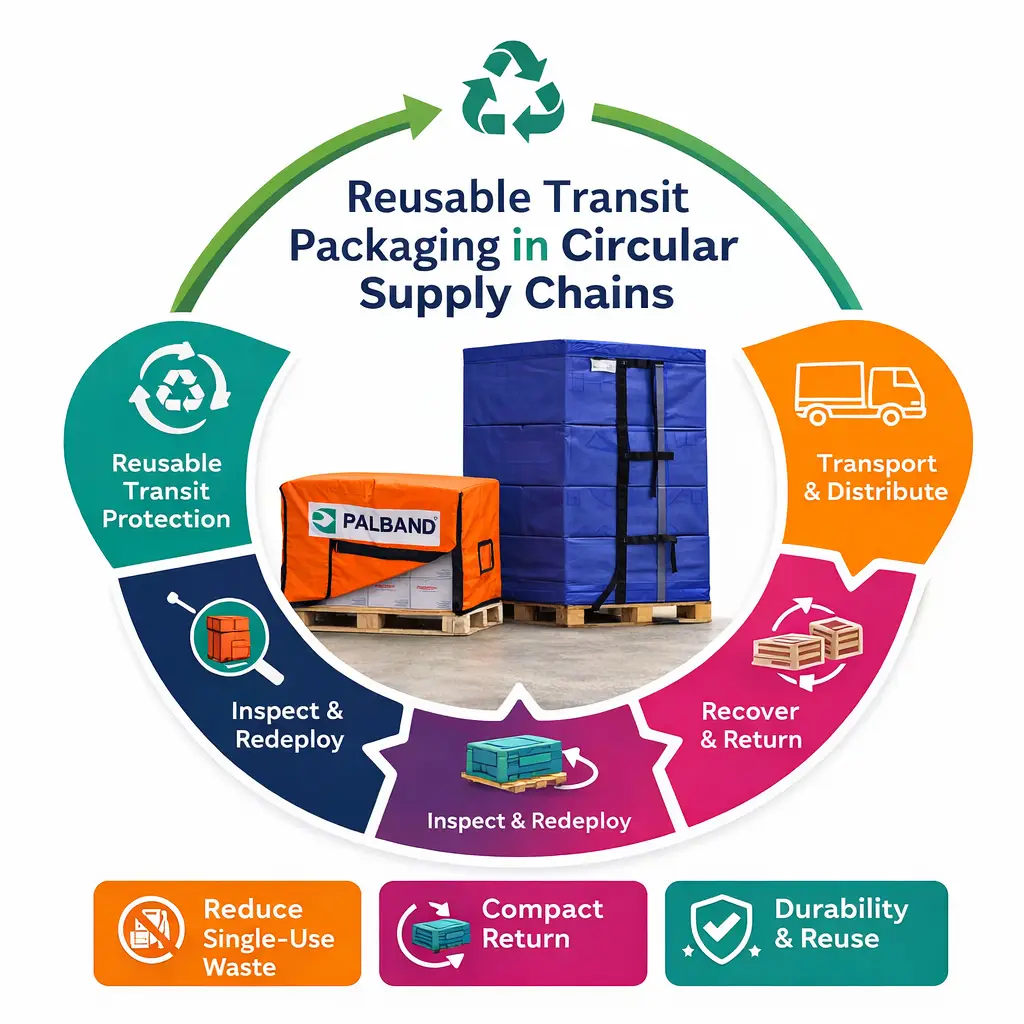
Generic packaging can look acceptable at the start of a journey, then fail under real warehouse conditions. It might be too loose for the load, too tight in the wrong places, or impractical for fast repeat use. That is why more operations are moving towards reusable covers, liners, and restraint systems that are designed around the goods, the handling method, and the route.
In practice, protection starts before anything leaves the facility. The goal is to reduce movement in transit, protect exposed faces and corners, and make the protection repeatable shift after shift. Covers and liners that fit the load properly help standardise outcomes, especially when multiple teams handle the same stock across different sites.
Short Summary
Protecting high value goods in warehouse and distribution environments requires more than generic packaging. This article explains how protective transport packaging, including custom covers, liners, mesh guards and reusable restraints, helps reduce damage, improve consistency, and protect valuable products through handling, storage and transit.
What “high value” means in a warehouse
High value is not only about price. It can also mean goods that are costly to replace, hard to source quickly, or damaging to lose from a service and reputation perspective.
Common high value categories include:
- electronics and components sensitive to impact and moisture
- white goods and finished products prone to scuffs, dents, and corner damage
- medical and pharmaceutical products requiring stability and temperature control
- specialist materials, prototypes, or client-specific builds where rework is expensive
- branded retail goods where presentation matters as much as the item itself
When these move through busy cross-dock lanes, mixed loads, or multi-drop routes, protection is a control measure, not a nice to have.
Why You Can Trust Us
Palband designs and supplies reusable protective solutions for warehouses, logistics operators and manufacturers across the UK. Our experience comes from working directly with operational teams to reduce damage, improve load security, and replace single-use packaging with durable systems that perform reliably in real-world handling environments.
Why standard packaging often fails high value loads
Protective transport packaging needs to cope with changing pressures such as e-commerce handling intensity, higher sustainability expectations, and a growing need for standardisation. Smithers highlights industry pressures that shape the protective and transit packaging market, including e-commerce growth, environmental impact, and automation demands, which all influence how packaging is selected and used in modern supply chains: three key issues facing the protective and transit packaging market.
In warehouses, the usual failure points look like this:
- inconsistent application of stretch wrap and one-way materials
- limited protection on vulnerable corners and faces
- moisture and condensation affecting surfaces or cartons
- contamination risk in open handling areas or mixed storage
- poor fit where packaging is not designed for the load footprint
- load shift when restraint is not repeatable or measurable
With high value goods, the cost is not only write-offs. It is investigation time, claims handling, returns, rework, and erosion of customer trust.
The practical upgrade: custom covers and liners
Custom covers and liners solve a simple problem. If protection fits the load and the workflow, it gets used properly every time. That consistency is what reduces damage risk.
Customisation makes the biggest difference when:
- pallet footprints or product dimensions are non-standard
- outer finishes mark easily and presentation matters
- mixed loads include protrusions that snag or rub
- repeat routes support a reuse loop
- loads need access points for checks, scans, or documentation
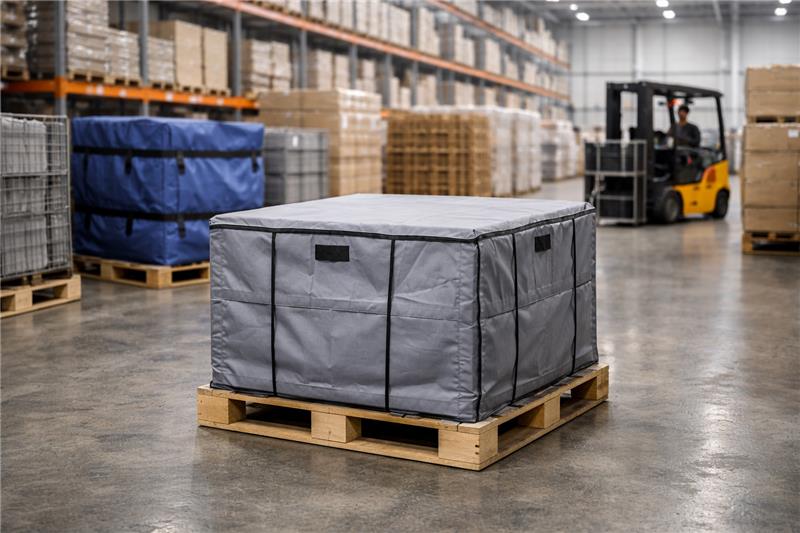
For impact and abrasion protection, padded protective covers provide a reusable barrier that helps prevent scuffs, dents, and handling marks without relying on disposable bubble wrap or film.
For temperature-sensitive or contamination-sensitive products, insulated covers and liners add a controlled layer designed to reduce heat gain or loss, manage moisture exposure, and protect goods through storage and transport.
Build a protection system around the journey, not the one-off trip
A warehouse-friendly protection system should work across multiple stages of handling.
Internal handling and staging
Damage often happens before despatch. Short moves still include congestion, tight turns, and contact with racking, cages, or adjacent pallets.
Where palletised goods are staged, moved internally, or held in marshalling lanes, reusable pallet covers help protect finished loads from dust, splashes, snagging, and surface contact.
To reduce variation in how loads are secured, straps and accessories offer a repeatable restraint method that does not depend on how tightly someone pulls film on the day.
Vehicle loading and transit
This is where load shift, vibration, and mixed-load interference typically show up. In these conditions, a physical barrier can help reduce product-to-product contact and support safer handling, which is where Loadmaster mesh guards are commonly used as pallet load protectors.
Mesh guards work particularly well alongside straps, creating a more controlled and consistent load profile on pallets that travel frequently.
Why reusable protection improves operations, not just sustainability
Reusable protection is often adopted for waste reduction, but operational benefits usually drive long-term use.
Lower damage costs and fewer claims
High value loads do not tolerate “good enough”. Better fit and stronger surfaces reduce scuffing, impact damage, and compression losses.
Faster packing and despatch
Reusable covers and straps reduce time spent applying, cutting, removing, and disposing of single-use materials.
Cleaner sites and safer handling
Reducing loose film and discarded packaging improves housekeeping, limits clutter, and supports safer movement in tight warehouse spaces.
Better standardisation for modern workflows
As warehouse processes become more standardised, consistent protection supports smoother flows through scanning points, storage, and loading.
How to choose the right protective transport packaging for high value goods
Start with a simple risk map
- where impact occurs most often
- where load shift happens
- where moisture or contamination is a risk
- where corners and edges are exposed
- what one damage event costs in time, money, and trust
Match product type to risk
If the goal is to reduce surface marks and impact damage, padded protective covers support repeatable protection for high-touch goods.
If the goal is to maintain more stable temperature and reduce moisture exposure, insulated covers and liners are designed for cold chain and temperature-sensitive environments.
If the goal is fast pallet-level coverage during storage and despatch, reusable pallet covers provide straightforward protection without changing pallets or racking.
If the goal is to reduce interference and improve pallet stability on vehicles, Loadmaster mesh guards help protect loads in transit.
If the goal is repeatable restraint without ongoing consumable waste, straps and accessories provide controlled load securing across short moves and long hauls.
Decide what needs customisation
Custom sizing and fastening options matter most when the load is non-standard, access points are needed, or the same goods move on repeat routes.
A rollout plan that does not disrupt the warehouse
- choose one high-frequency route or one high-damage SKU group
- trial one protection setup for a defined period
- set a simple inspection and reissue routine
- track damage rates and handling time before and after
- expand to the next route based on results
If you need a practical starting point, begin with a product group where damage is visible and costly. Results are easier to measure, and staff adoption is usually faster.
Frequently Asked Questions
Start by identifying where damage happens most often, then introduce protective transport packaging on one repeat route or one high-risk product group. Reusable covers and straps can improve protection quickly without changing pallets or racking.
For high value goods, custom covers are often worth it because the fit is consistent. Consistent fit reduces handling variation, improves repeat use, and lowers damage risk compared to loosely matched one-size packaging.
Protective transport packaging refers to packaging and load protection used to prevent damage during storage, handling, and transit. In warehouses this can include reusable pallet covers, padded covers, insulated liners, mesh guards, and load restraint straps.
Yes, if it is easy to apply and remove, fits the workflow, and has a clear reuse loop. Products like reusable pallet covers and straps and accessories are designed to support repeatable use in busy warehouse environments.
What is the best way to start protecting high value goods in a warehouse?
Start by identifying where damage happens most often, then introduce protective transport packaging on one repeat route or one high-risk product group. Reusable covers and straps can improve protection quickly without changing pallets or racking.
Are custom covers worth it compared to standard packaging?
For high value goods, custom covers are often worth it because the fit is consistent. Consistent fit reduces handling variation, improves repeat use, and lowers damage risk compared to loosely matched one-size packaging.
What is protective transport packaging?
Protective transport packaging refers to packaging and load protection used to prevent damage during storage, handling, and transit. In warehouses this can include reusable pallet covers, padded covers, insulated liners, mesh guards, and load restraint straps.
Can reusable protection work in high volume operations?
Yes, if it is easy to apply and remove, fits the workflow, and has a clear reuse loop. Products like reusable pallet covers and straps and accessories are designed to support repeatable use in busy warehouse environments.
Next step: build a protection system that matches your operation
Protecting high value goods is not about adding more packaging. It is about using protective transport packaging that is consistent, repeatable, and suited to the realities of warehouse handling.
To explore options, start with padded protective covers for impact and surface protection, add insulated covers and liners where temperature or moisture risk matters, and support stable pallet loads using Loadmaster mesh guards plus straps and accessories. For fast, everyday pallet coverage, use reusable pallet covers across staging, storage, and despatch.