The Palband Blog
Warehouse waste management: how rack end waste sacks improve safety and efficiency
What this article is about
Warehouse waste builds up quickly in busy distribution centres. Cardboard packaging, plastic wrap, and other materials appear throughout picking aisles and packing areas as goods move through the facility.
This article explains why structured warehouse waste management is important for both safety and operational efficiency. It explores common waste handling challenges in logistics environments and shows how simple solutions such as rack end waste sacks can help keep aisles clear, support recycling, and improve everyday warehouse workflows.
Why waste quickly builds up in warehouse environments
Warehouses generate large volumes of waste every day. Cardboard packaging, plastic wrap, pallet materials, and damaged goods move through distribution centres alongside the products they support. Without clear systems for handling this material, waste can quickly accumulate across picking aisles, racking areas, and packing stations.
Effective warehouse waste management is essential for maintaining safe working environments and efficient operations. When packaging waste builds up on floors or work surfaces, it slows workflows, creates hazards, and makes recycling more difficult.
Many warehouses improve their waste handling by introducing dedicated warehouse waste sacks positioned where waste is generated. By placing disposal points directly at the end of racking aisles, teams can dispose of packaging quickly and safely without interrupting their workflow.
Simple operational improvements such as rack end waste sacks help warehouses maintain cleaner aisles, support recycling efforts, and keep busy logistics environments running efficiently.
Why warehouse waste management matters in modern distribution centres
Distribution centres handle thousands of packages each day. Every inbound delivery and outbound shipment introduces packaging materials that must be removed, sorted, and disposed of correctly.
Without organised warehouse waste collection systems, this material can spread throughout the facility. Loose cardboard or shrink wrap left in picking aisles becomes a safety risk and disrupts workflow.
Effective warehouse waste management delivers several operational benefits:
- Safer warehouse floors with fewer trip hazards
- Faster picking and packing workflows
- Improved recycling and waste segregation
- Better housekeeping standards across the facility
- Reduced operational downtime caused by clutter
Large logistics organisations are also prioritising waste reduction as part of wider sustainability initiatives. Major fulfilment networks such as Amazon report landfill diversion rates of more than 80 percent through improved recycling programmes and operational waste handling practices. These types of initiatives highlight how structured waste processes support both operational efficiency and environmental goals.
Common warehouse waste challenges that affect safety and productivity
Most warehouses experience similar waste challenges. Packaging materials appear throughout the facility as products move through receiving, storage, picking, and dispatch stages.
When convenient disposal points are not available, packaging waste is often placed temporarily on pallets, shelving, or the warehouse floor. Over time these small habits create clutter that affects both safety and productivity.
Common warehouse waste problems include:
- Waste accumulating at the ends of racking aisles
- Cardboard and plastic wrap left on warehouse floors
- Workers walking long distances to reach disposal points
- Overflowing bins near packing stations
- Poor segregation between recyclable and general waste
When warehouse waste bags are not positioned close to where packaging is removed, waste handling becomes inefficient. Workers may delay disposal or leave materials in temporary piles, which creates unnecessary hazards in busy logistics environments.
How rack end waste sacks improve warehouse waste management
One of the most effective ways to improve warehouse waste management is to position waste collection points exactly where waste is produced.
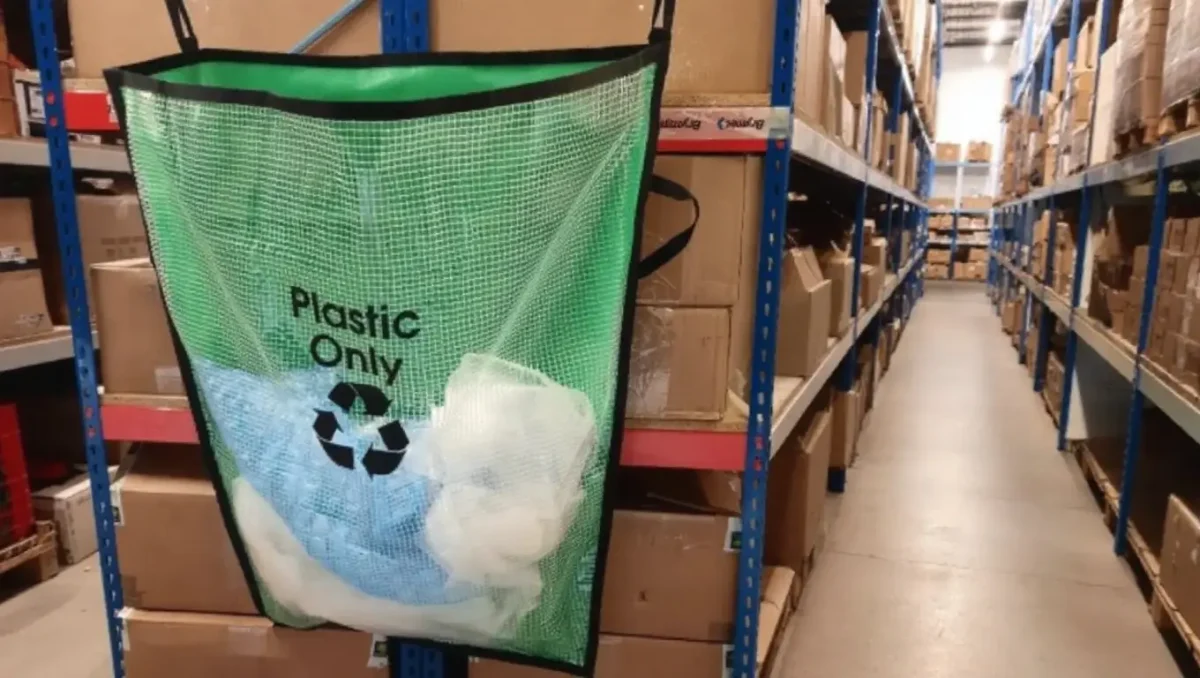
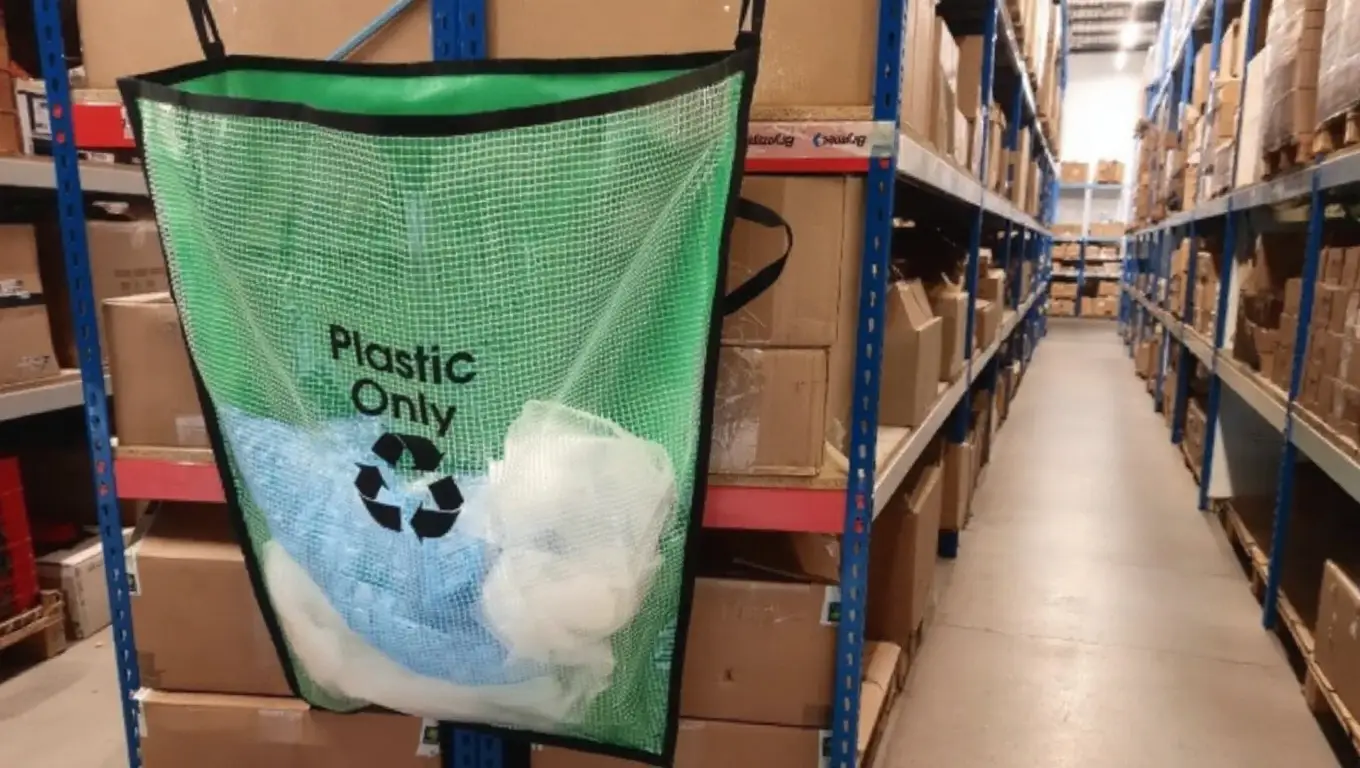
Rack end waste sacks are designed to attach directly to pallet racking structures, typically at the end of picking aisles. This placement allows warehouse staff to dispose of packaging immediately without leaving their work area.
Because the waste sacks are fixed directly to racking systems, they create clearly defined disposal points throughout the warehouse. Workers can quickly place cardboard, plastic film, and other packaging materials into the sacks while continuing their normal tasks.
This simple change improves housekeeping standards across the facility. Waste is captured consistently rather than accumulating around workstations or in picking aisles.
A practical example of this approach can be seen with rack end waste sacks designed for logistics environments. These reusable sacks provide a durable solution for managing packaging waste while keeping aisles clear and organised.
By integrating waste sacks directly into racking infrastructure, warehouses can significantly improve daily waste handling without introducing complicated new processes.
Choosing the right rack end waste sacks for your warehouse
Different warehouses generate different volumes of packaging waste, which means waste collection systems must match operational requirements.
Several types of rack end waste sacks are available to support different workflows.
Large rack end waste sack
Large sacks are suitable for busy picking aisles or packing areas where cardboard and plastic waste accumulates quickly. The increased capacity allows teams to collect higher volumes of material before emptying.
Medium rack end waste sack
Medium sacks provide a balanced option for general storage aisles and standard warehouse zones where waste volumes are moderate.
Small rack end waste sack
Smaller sacks are ideal for narrow aisles or facilities with limited racking space. They still provide convenient disposal points without taking up unnecessary room.
Trolley waste sack
Trolley waste sacks support mobile waste collection. Warehouse teams can move these between aisles to collect materials from multiple workstations or cleaning routes.
Using a combination of these solutions allows warehouses to build a structured system of racking waste sacks across the facility, ensuring waste can be disposed of quickly and consistently.
Improving warehouse safety through better waste control
Warehouse safety depends heavily on good housekeeping practices. Loose packaging materials are one of the most common causes of slip and trip hazards in logistics environments.
When waste is left on floors or stacked temporarily on pallets, it increases the risk of accidents and slows forklift operations.
Clearly positioned warehouse waste bags help eliminate these problems. When employees know exactly where waste should be placed, they are more likely to dispose of materials immediately rather than leaving them in temporary locations.
Consistent disposal points also help maintain clear forklift routes and unobstructed access to storage locations. This improves safety for both warehouse staff and vehicle operators.
Over time, organised waste systems contribute to a cleaner and more predictable warehouse environment, which supports both safety compliance and operational efficiency.
Supporting sustainability and recycling in warehouse environments
Sustainability is becoming a key focus for logistics and distribution operations. Many organisations are working to reduce landfill waste and improve recycling rates across their facilities.
Structured warehouse waste management helps support these goals by separating materials at the point where they are generated.
When cardboard, plastic film, and general waste are collected in dedicated containers, recycling becomes far easier to manage. Clear waste streams improve the value of recyclable materials and reduce contamination.
Reusable waste handling systems can also help reduce reliance on disposable plastic liners or single use waste bags. Durable solutions such as rack end waste sacks allow warehouses to manage packaging waste without introducing additional single use materials.
These improvements support broader environmental initiatives while maintaining efficient warehouse operations.
Simple steps to improve warehouse waste management today
Improving warehouse waste management does not always require major infrastructure changes. Small adjustments to waste handling processes can deliver immediate operational benefits.
Practical steps include:
- Positioning waste sacks at the ends of racking aisles
- Ensuring disposal points are clearly visible to staff
- Separating cardboard and plastic waste streams
- Training employees to dispose of packaging immediately
- Reviewing waste collection points as workflows change
Introducing warehouse waste sacks in strategic locations is often one of the simplest improvements warehouses can make. When disposal becomes part of normal workflow, clutter is reduced and waste handling becomes far more efficient.
Cleaner aisles, safer warehouses, better waste management
Packaging waste is unavoidable in modern logistics operations. However, how that waste is managed has a significant impact on warehouse safety, efficiency, and sustainability.
Effective warehouse waste management focuses on making disposal easy, consistent, and accessible across the facility. Rack end waste sacks support this goal by placing waste collection points directly where they are needed.
By keeping aisles clear, improving recycling workflows, and supporting better housekeeping standards, these simple solutions help create safer and more organised warehouse environments.
Why you can trust Palband
Palband works with logistics operators, warehouses, and distribution centres to develop practical reusable solutions that improve everyday operations. Our products are designed specifically for demanding environments where safety, efficiency, and durability matter.
From protective covers to waste handling systems, Palband focuses on solutions that help warehouses reduce single use materials, maintain organised workspaces, and support efficient workflows. Our experience working with logistics environments means our products are designed around real operational challenges, helping teams manage waste and materials more effectively.
If you would like to learn more about solutions such as rack end waste sacks or discuss ways to improve warehouse waste management in your facility, you can contact the Palband team.
Frequently Asked Questions
Yes. Insulated pallet covers can be used without refrigerated transport to slow temperature change during short or moderate journeys. They help reduce exposure to ambient conditions during loading, unloading, and transit, but they do not actively cool or heat goods and should be used as part of a wider temperature management process.
The duration depends on factors such as ambient temperature, starting product temperature, insulation thickness, pallet configuration, and handling time. Insulated pallet covers are designed to reduce temperature loss or gain rather than maintain a fixed temperature indefinitely.
An insulated pallet cover fits around the outside of a palletised load to protect it from ambient exposure. An insulated liner is installed inside a container, roll cage, or enclosed unit to create a buffered internal environment. The choice depends on handling methods, transport mode, and reuse requirements.
Yes. Insulated pallet covers are designed for repeated use in industrial and commercial logistics operations. Reusability depends on correct handling, storage, and cleaning between uses, as well as selecting materials suitable for the operating environment.
Insulated pallet covers help reduce the risk of temperature excursions by slowing heat transfer during vulnerable points such as loading bays, vehicle transfers, and short-haul transport. They support temperature stability but do not replace active cooling, monitoring, or validated cold chain processes.
Insulated pallet covers are commonly used in food, pharmaceutical, and healthcare logistics as a supporting control measure. They help protect goods from short-term exposure and temperature fluctuations but must be used alongside appropriate handling procedures, monitoring, and compliance requirements.
No. Insulated pallet covers are not a substitute for refrigerated transport where active temperature control is required. They are typically used to complement refrigeration, protect goods during handling, or provide thermal buffering where full refrigeration is not necessary.
Covers should be stored clean, dry, and protected from damage when not in use. Proper folding and storage helps maintain insulation performance and extends product lifespan, supporting long-term reuse.
What is the best way to start protecting high value goods in a warehouse?
Start by identifying where damage happens most often, then introduce protective transport packaging on one repeat route or one high-risk product group. Reusable covers and straps can improve protection quickly without changing pallets or racking.
Are custom covers worth it compared to standard packaging?
For high value goods, custom covers are often worth it because the fit is consistent. Consistent fit reduces handling variation, improves repeat use, and lowers damage risk compared to loosely matched one-size packaging.
What is protective transport packaging?
Protective transport packaging refers to packaging and load protection used to prevent damage during storage, handling, and transit. In warehouses this can include reusable pallet covers, padded covers, insulated liners, mesh guards, and load restraint straps.
Can reusable protection work in high volume operations?
Yes, if it is easy to apply and remove, fits the workflow, and has a clear reuse loop. Products like reusable pallet covers and straps and accessories are designed to support repeatable use in busy warehouse environments.