The Palband Blog
How reusable warehouse straps improve load stability and safety
What this article is about
Warehouse environments rely on safe and stable load handling. When goods move between storage locations, picking areas, and dispatch zones, poorly secured pallets can lead to damaged stock, inefficient workflows, and potential safety risks.
This article explains how warehouse straps improve load stability in logistics environments. It explores how reusable load restraint straps help secure palletised goods, reduce reliance on single use plastic wrap, and support safer warehouse operations. It also highlights where straps are most commonly used in distribution centres and how simple restraint systems can improve efficiency across everyday warehouse tasks.
The challenge of unstable loads in warehouse environments
Warehouses are fast moving environments where goods are constantly being received, picked, and dispatched. In these settings, pallets often carry mixed loads of boxes, cartons, or packaged goods that can easily shift during handling.
Without effective pallet restraint systems, items may move during internal transport, forklift handling, or while stored on racking. This creates several operational challenges.
First, unstable loads increase the risk of product damage. When cartons slide or collapse, goods can become dented, crushed, or unsellable. In high volume distribution centres, even small levels of damage can quickly lead to significant losses.
Second, unstable pallets create safety concerns for warehouse teams. Boxes that fall during handling can cause injury, obstruct walkways, or create hazards in busy picking aisles.
Finally, poorly secured loads often require additional packaging such as plastic wrap or disposable securing materials. While these methods can stabilise goods temporarily, they generate waste and add time to packing operations.
These challenges are why many warehouses now rely on warehouse safety straps and pallet restraint straps to stabilise loads during storage and transport.
How warehouse straps improve load stability
One of the most effective ways to stabilise palletised goods is by introducing reusable warehouse straps designed for logistics environments.
Unlike single use plastic wrap, straps provide adjustable tension that holds goods firmly in place without compressing or damaging packaging. By wrapping around a pallet and securing tightly, these warehouse securing straps prevent cartons from shifting during movement.
Many logistics operations now use reusable warehouse straps to stabilise goods across racking systems, packing stations, and internal transport routes. These systems allow teams to quickly secure loads before moving them across the warehouse floor.
A key advantage of this approach is efficiency. Workers can apply and remove straps quickly without needing cutting tools or additional packaging materials. This helps reduce handling time and keeps operations moving smoothly.
Businesses looking for reusable solutions can explore Palband’s range of warehouse straps designed specifically for logistics and distribution environments.
By replacing plastic wrap with durable restraint systems, warehouses can improve load stability while also reducing packaging waste.
Reducing plastic wrap with reusable load restraint straps
Plastic shrink wrap has long been used to stabilise pallet loads in warehouses. However, it is typically used once and then discarded, creating large volumes of plastic waste.
Reusable load restraint straps offer a more sustainable alternative. These systems allow goods to be secured repeatedly without relying on disposable packaging materials.
A practical example is Palstrap reusable hook and loop load restraint straps, which provide a durable and adjustable method of securing palletised goods. Designed for repeated use, these straps can replace large amounts of plastic wrap while still keeping loads stable during internal transport.
Because they can be used hundreds of times, reusable restraint systems reduce both packaging costs and environmental impact. Warehouses that switch to reusable systems often find they spend less time wrapping pallets while also generating significantly less waste.
Where warehouse straps are commonly used
Warehouse straps are used across a wide range of logistics operations where goods need to remain stable during storage or movement.
One common use is securing mixed pallets during internal transport. When pallets move between storage areas and packing stations, reusable straps prevent cartons from sliding or collapsing.
Another important application is securing goods inside roll cages. Retail distribution centres often move products through warehouses using roll cage trolleys, where items can easily shift during movement. Using roll cage trolley straps provides a simple way to keep goods contained and secure while cages are moved across busy warehouse floors.
Warehouse straps can also be used to stabilise loads on racking systems. By securing cartons together, straps reduce the risk of boxes slipping or falling when pallets are accessed.
These practical applications make reusable strapping systems valuable tools in warehouses handling high volumes of goods each day.
Supporting safer and more efficient warehouse operations
Beyond stabilising loads, warehouse straps contribute to safer and more organised working environments.
When goods are properly secured, warehouse teams can move pallets with greater confidence. This reduces the risk of falling boxes, damaged stock, and disrupted workflows.
Reusable restraint systems also help streamline operations. Instead of repeatedly wrapping pallets with plastic film, staff can quickly apply straps and remove them when goods reach their destination.
This approach reduces packaging waste while helping teams maintain consistent load stability throughout warehouse operations.
Over time, these improvements can contribute to safer workplaces, faster workflows, and more sustainable logistics processes.
Why you can trust Palband
Palband works with logistics operators, warehouses, and distribution centres to develop practical reusable solutions that improve everyday operations. Our products are designed specifically for demanding environments where safety, efficiency, and durability matter.
From protective covers to waste handling systems, Palband focuses on solutions that help warehouses reduce single use materials, maintain organised workspaces, and support efficient workflows. Our experience working with logistics environments means our products are designed around real operational challenges, helping teams manage waste and materials more effectively.
Businesses looking to improve load stability while reducing packaging waste can explore the full range of warehouse straps designed for logistics and distribution environments.
Improve load stability with reusable warehouse straps
Keeping palletised goods stable during storage and transport is essential for efficient warehouse operations. Reusable restraint systems allow logistics teams to secure loads quickly while reducing reliance on single use packaging materials.
If your warehouse is looking to improve load stability, reduce plastic wrap usage, or create safer internal transport processes, explore the full range of warehouse straps designed for demanding logistics environments.
Palband’s reusable strapping solutions help secure palletised goods, support safer workflows, and reduce packaging waste across distribution centres and warehouse operations.
Conclusion: improving warehouse safety with reusable strapping solutions
Maintaining stable pallet loads is essential for safe and efficient warehouse operations. When goods are properly secured, warehouses reduce the risk of product damage, improve workflow efficiency, and create safer working environments.
Reusable warehouse straps provide a practical alternative to disposable packaging materials, helping logistics teams stabilise loads while reducing plastic waste.
By adopting reusable restraint systems, warehouses can improve both operational efficiency and sustainability across everyday logistics processes.
Frequently Asked Questions
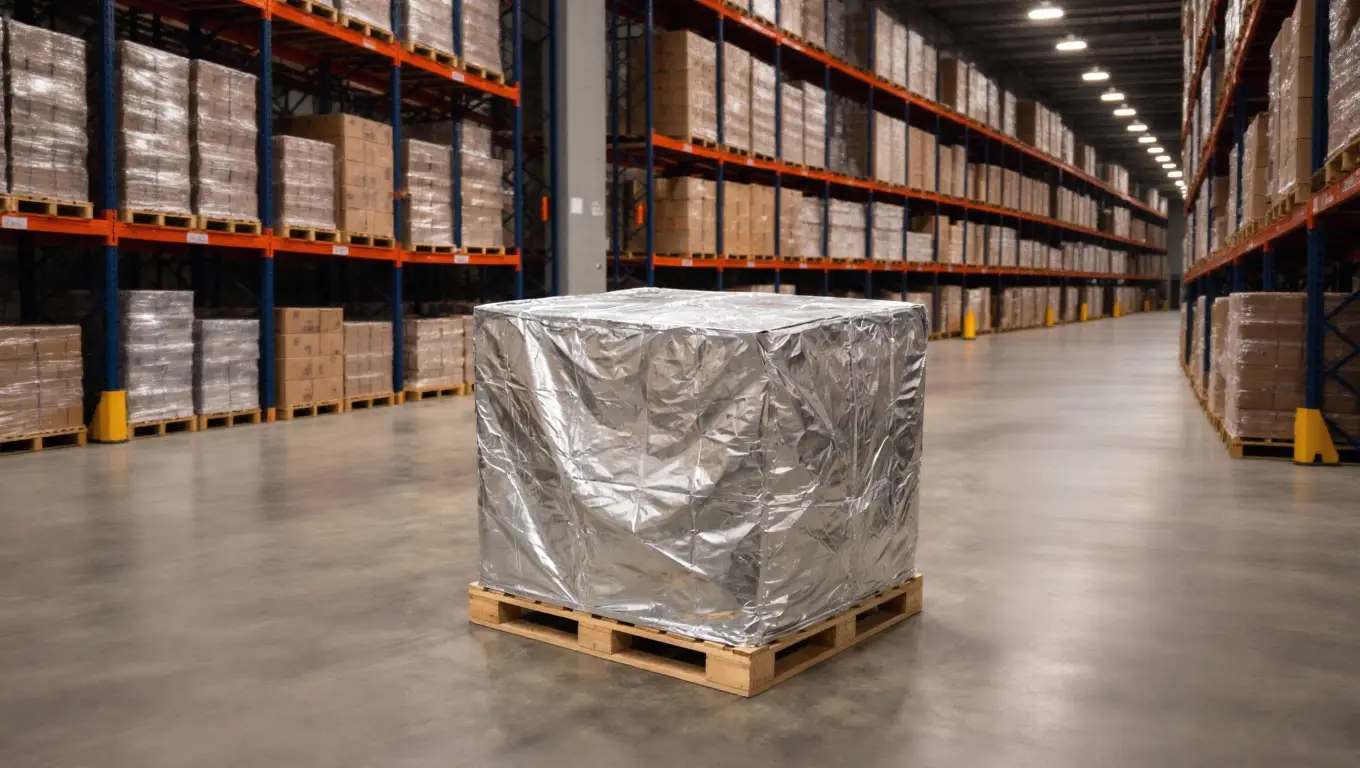
Yes. Insulated pallet covers can be used without refrigerated transport to slow temperature change during short or moderate journeys. They help reduce exposure to ambient conditions during loading, unloading, and transit, but they do not actively cool or heat goods and should be used as part of a wider temperature management process.
The duration depends on factors such as ambient temperature, starting product temperature, insulation thickness, pallet configuration, and handling time. Insulated pallet covers are designed to reduce temperature loss or gain rather than maintain a fixed temperature indefinitely.
An insulated pallet cover fits around the outside of a palletised load to protect it from ambient exposure. An insulated liner is installed inside a container, roll cage, or enclosed unit to create a buffered internal environment. The choice depends on handling methods, transport mode, and reuse requirements.
Yes. Insulated pallet covers are designed for repeated use in industrial and commercial logistics operations. Reusability depends on correct handling, storage, and cleaning between uses, as well as selecting materials suitable for the operating environment.
Insulated pallet covers help reduce the risk of temperature excursions by slowing heat transfer during vulnerable points such as loading bays, vehicle transfers, and short-haul transport. They support temperature stability but do not replace active cooling, monitoring, or validated cold chain processes.
Insulated pallet covers are commonly used in food, pharmaceutical, and healthcare logistics as a supporting control measure. They help protect goods from short-term exposure and temperature fluctuations but must be used alongside appropriate handling procedures, monitoring, and compliance requirements.
No. Insulated pallet covers are not a substitute for refrigerated transport where active temperature control is required. They are typically used to complement refrigeration, protect goods during handling, or provide thermal buffering where full refrigeration is not necessary.
Covers should be stored clean, dry, and protected from damage when not in use. Proper folding and storage helps maintain insulation performance and extends product lifespan, supporting long-term reuse.
What is the best way to start protecting high value goods in a warehouse?
Start by identifying where damage happens most often, then introduce protective transport packaging on one repeat route or one high-risk product group. Reusable covers and straps can improve protection quickly without changing pallets or racking.
Are custom covers worth it compared to standard packaging?
For high value goods, custom covers are often worth it because the fit is consistent. Consistent fit reduces handling variation, improves repeat use, and lowers damage risk compared to loosely matched one-size packaging.
What is protective transport packaging?
Protective transport packaging refers to packaging and load protection used to prevent damage during storage, handling, and transit. In warehouses this can include reusable pallet covers, padded covers, insulated liners, mesh guards, and load restraint straps.
Can reusable protection work in high volume operations?
Yes, if it is easy to apply and remove, fits the workflow, and has a clear reuse loop. Products like reusable pallet covers and straps and accessories are designed to support repeatable use in busy warehouse environments.