The Palband Blog
The complete guide to insulated pallet covers and liners
What insulated pallet covers and liners are and why they matter
Maintaining stable temperatures during storage and transport is a growing challenge across modern supply chains. Even where goods are not classified as chilled or frozen, exposure to heat, cold, wind, and rapid ambient changes can compromise product quality, safety, and shelf life. This is why insulated pallet covers and liners have become an increasingly important operational tool.
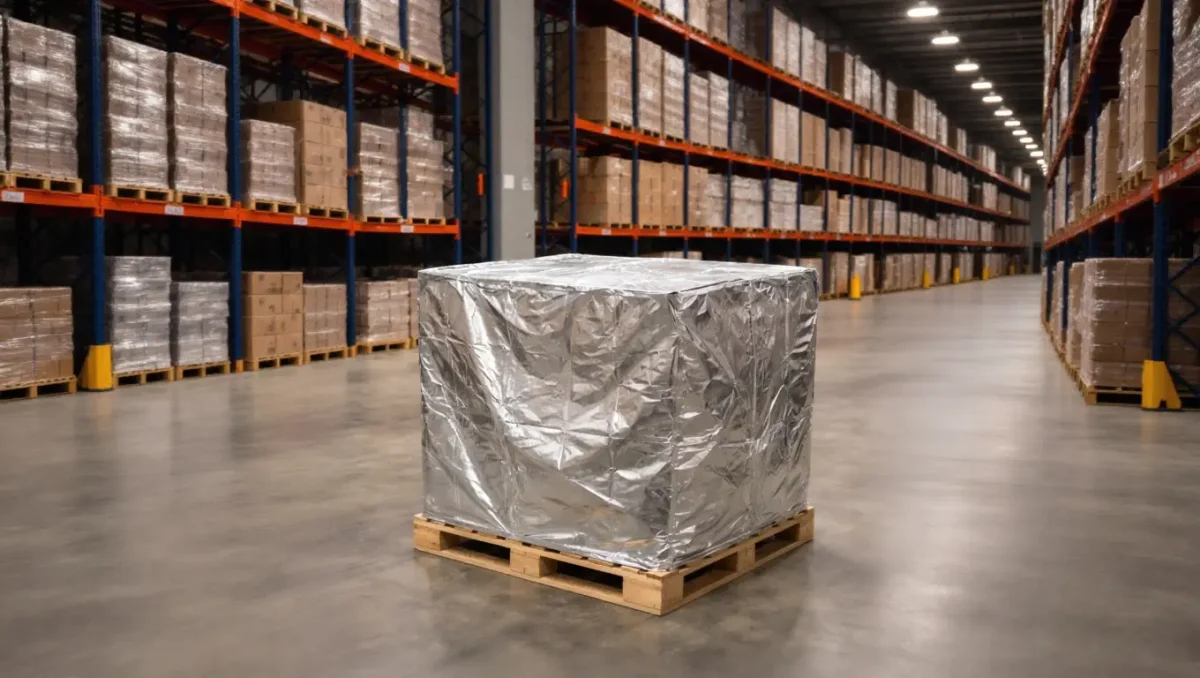
Insulated pallet covers and liners are reusable thermal protection solutions designed to help maintain temperature during transport by slowing heat transfer between goods and their surrounding environment. Rather than acting as packaging, they function as pallet-level and container-level protection that can be applied and removed as part of normal warehouse and distribution workflows.
Covers sit externally around palletised loads, shielding them from ambient exposure during loading, unloading, and transit. Liners are fitted inside containers, roll cages, or enclosed units to create a buffered internal space. Together, these solutions support temperature stability without relying solely on refrigerated vehicles or single-use materials.
Temperature control matters even over short journeys. Pallets can experience rapid temperature loss during handling delays, time spent on loading bays, or exposure while moving between vehicles and storage areas. These brief exposure points are often where temperature excursions occur.
Industries such as food and drink distribution, pharmaceutical logistics, retail and FMCG, and manufacturing are particularly affected. In each case, insulated pallet covers and liners support operational resilience by reducing risk without changing established transport infrastructure.
Short Summary
This guide explains how insulated pallet covers and liners work, why temperature loss occurs during transport, and how reusable thermal protection supports logistics operations. It explores when to use covers versus liners, common temperature risks, and how insulation helps maintain stability without replacing refrigeration or process controls.
Why you can trust Palband
Palband designs and supplies reusable transit protection solutions for industrial and commercial logistics environments. The focus is on durability, repeat use, and practical performance rather than disposable packaging. Experience across food, pharmaceutical, retail, and manufacturing supply chains informs how insulated covers and liners are developed to work in real operations, not just controlled test conditions.
How insulated pallet covers and liners work
Insulated pallet covers and liners work by slowing the movement of heat between a load and its external environment. They do not actively heat or cool goods. Instead, they reduce the speed at which temperature change occurs, helping products remain within acceptable limits for longer periods.
Heat transfer in logistics typically happens in three ways: conduction, convection, and radiation. Conduction occurs when goods come into contact with hot or cold surfaces such as vehicle floors or container walls. Convection happens when air moves around a pallet, particularly during outdoor handling or open-door loading. Radiation occurs when sunlight or nearby heat sources raise surface temperatures.
Insulated covers and liners are designed to address all three. Reflective layers reduce radiant heat gain, while insulation materials trap air to slow conductive and convective heat flow. Still air pockets within the structure are especially important, as they form an effective thermal barrier.
Covers and liners perform differently because of how they interact with the load. Covers provide external protection at pallet level, shielding goods from ambient exposure. Liners create a buffered internal environment, which can be more effective in enclosed transport units or containerised flows.
Insulation has limits. Without active cooling, internal temperatures will eventually move toward ambient conditions. For this reason, insulated solutions work best when used alongside correct starting temperatures, controlled handling practices, and appropriate monitoring rather than as standalone temperature control systems.
Insulated pallet covers vs insulated pallet liners
Insulated pallet covers and insulated pallet liners serve similar purposes, but they are designed for different handling environments and transport flows. Understanding the distinction helps logistics teams self-qualify the right solution without over-engineering temperature control.
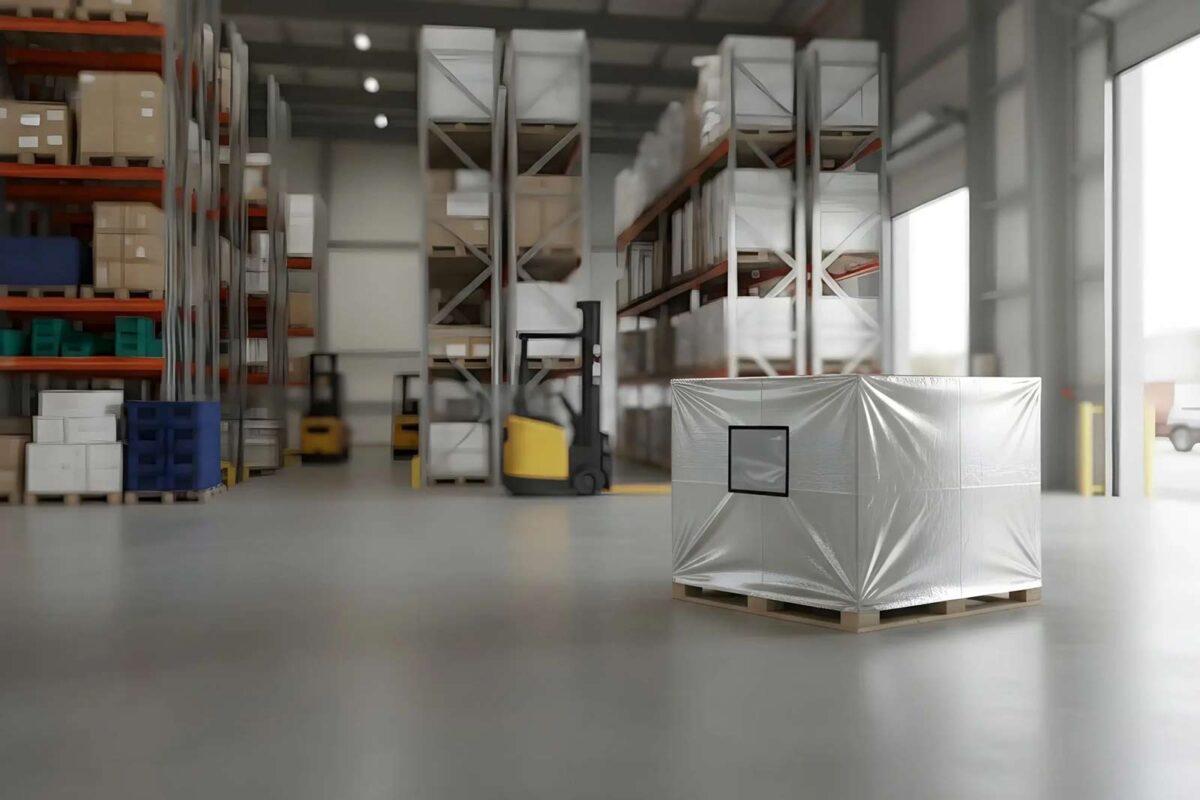
Insulated pallet covers fit around the outside of a palletised load. They are typically used where pallets are handled frequently, moved between vehicles, or exposed to ambient conditions during loading and unloading. Covers are quick to apply and remove, making them well suited to operations where speed and flexibility matter.
Insulated pallet liners are installed inside containers, roll cages, or enclosed units. They create a buffered internal environment around the load rather than wrapping it externally. Liners are often preferred in containerised transport, export movements, or situations where goods remain enclosed for longer periods.
From an operational perspective, covers are usually faster to deploy and easier to inspect between uses, while liners can offer more consistent internal insulation when loads remain sealed. Both approaches sit within Palband’s range of insulated covers and liners and are often used together across complex supply chains.
Common use cases across logistics and supply chains
Insulated pallet covers and liners are used across a wide range of sectors where temperature stability matters, even when goods are not actively refrigerated.
In food and drink distribution, thermal pallet covers help protect chilled and ambient products from short-term exposure during loading bays, cross-docking, and last-mile delivery. They are commonly used to reduce temperature fluctuations when pallets move between cold rooms and vehicles, supporting temperature controlled pallet covers as part of broader cold chain protection solutions.
Pharmaceutical and healthcare logistics rely on insulation to reduce risk during inspections, handovers, and dwell times where active cooling may be interrupted. In these environments, insulated solutions support compliance by limiting exposure rather than replacing validated systems.
Retail and FMCG operations use insulated pallet covers to protect temperature-sensitive goods during seasonal extremes. Maintaining temperature during transport is often about consistency across mixed loads rather than strict cold storage.
Manufacturing and industrial supply chains apply insulated covers to protect materials whose viscosity, stability, or performance is affected by temperature change, using thermal protection without introducing complex infrastructure.
Temperature control challenges in real world transport
Temperature loss during transport rarely stems from a single failure. It is usually the result of multiple short exposure points that compound over time.
Loading and unloading remain the most vulnerable stages. Pallets left on loading bays, vehicle doors held open, and delays during handovers expose goods to ambient conditions. Even brief exposure can cause internal temperatures to drift.
Short-haul transport presents its own risks. Because journeys are brief, temperature protection is sometimes deprioritised, yet repeated short trips can introduce cumulative temperature loss during transport. Wind exposure during vehicle transfers and inconsistent handling practices increase this risk.
Product starting temperature also plays a role. Loads that are not stabilised before dispatch place additional strain on insulation, making it harder to maintain temperature during transport even over short distances.
Insulated covers and liners vs alternative temperature control solutions
Insulated covers and liners sit within a broader range of temperature control methods used across logistics operations. Understanding where they fit helps avoid overuse, underuse, or unrealistic expectations.
Refrigerated vehicles provide active temperature control and are essential for long-distance or highly regulated transport. However, they do not eliminate exposure during loading, unloading, or vehicle downtime. In these moments, insulated covers and liners add an extra layer of protection by reducing temperature loss during transport at known risk points.
Single-use thermal packaging can offer short-term insulation, but it is typically designed for one journey and often generates significant waste. Reusable insulated covers provide a more consistent and repeatable solution for operations with regular transport cycles, supporting both cost control and waste reduction.
Insulated boxes and containers are effective for smaller consignments or parcel-level shipments, but they are less practical for palletised loads. Thermal pallet covers and liners are designed specifically for pallet and roll cage formats, allowing protection at scale without changing handling methods.
Rather than replacing other systems, insulated solutions work best as part of a layered approach. They help stabilise conditions, reduce spikes, and protect goods during unavoidable exposure, while active refrigeration and monitoring manage long-duration temperature control.
This complementary role is why reusable insulated covers are increasingly used to support, not substitute, wider cold chain strategies.
Supporting cold chain compliance without overclaiming
Insulated pallet covers support cold chain compliance by reducing exposure to temperature fluctuations during transport and handling. However, they are not a replacement for validated refrigeration, monitoring, or documented processes.
In regulated sectors such as food and pharmaceuticals, temperature controlled pallet covers are most effective when used as part of a layered control strategy. They help protect goods during known risk points such as loading bays, vehicle transfers, inspections, and dwell time, where temperature excursions are most likely to occur.
Compliance depends on process as much as product. Insulated solutions support best practice by stabilising conditions, but validation, monitoring, and documented handling procedures remain essential. This distinction is particularly important when dealing with regulated materials, including temperature-sensitive or hazardous goods, where guidance such as Palband’s lithium-ion and safety information provides context for responsible handling alongside insulation.
By positioning insulation as a supporting control rather than a standalone solution, businesses reduce risk while maintaining realistic, defensible compliance claims.
How to choose the right insulated pallet cover or liner
Selecting the right insulated pallet cover or liner starts with understanding how goods move through your operation rather than focusing solely on insulation thickness or material.
Pallet size and load configuration determine whether an external cover or an internal liner is more practical. Covers are often preferred where pallets are handled frequently or exposed during transfers, while liners suit enclosed or containerised transport.
The required duration of thermal protection is another key factor. Short-haul distribution may only require buffering against brief exposure, while longer journeys may benefit from higher-performance materials or the integration of cold packs.
Handling frequency, cleaning requirements, and available storage space also influence suitability. Reusable insulated pallet covers and liners should fit seamlessly into existing workflows without slowing operations or creating additional handling risk.
Exploring Palband’s range of insulated solutions, including insulated pallet covers and thermal liners, allows logistics teams to match protection levels to real-world transport conditions rather than theoretical performance claims.
Turning insight into practical temperature control
Understanding how insulated pallet covers and liners work is only part of maintaining temperature during transport. Real-world performance depends on matching the right insulation approach to your goods, handling methods, and exposure risks.
If you are reviewing your current temperature control strategy, Palband supports logistics teams with reusable insulated covers and liners designed for practical, repeatable use across industrial supply chains. By focusing on operational fit rather than theoretical performance, businesses can reduce temperature loss, improve consistency, and support cold chain protection without overcomplicating processes.
To discuss how insulated solutions could fit into your transport or storage environment, speak with the Palband team for practical guidance tailored to your operation.
Frequently Asked Questions
Yes. Insulated pallet covers can be used without refrigerated transport to slow temperature change during short or moderate journeys. They help reduce exposure to ambient conditions during loading, unloading, and transit, but they do not actively cool or heat goods and should be used as part of a wider temperature management process.
The duration depends on factors such as ambient temperature, starting product temperature, insulation thickness, pallet configuration, and handling time. Insulated pallet covers are designed to reduce temperature loss or gain rather than maintain a fixed temperature indefinitely.
An insulated pallet cover fits around the outside of a palletised load to protect it from ambient exposure. An insulated liner is installed inside a container, roll cage, or enclosed unit to create a buffered internal environment. The choice depends on handling methods, transport mode, and reuse requirements.
Yes. Insulated pallet covers are designed for repeated use in industrial and commercial logistics operations. Reusability depends on correct handling, storage, and cleaning between uses, as well as selecting materials suitable for the operating environment.
Insulated pallet covers help reduce the risk of temperature excursions by slowing heat transfer during vulnerable points such as loading bays, vehicle transfers, and short-haul transport. They support temperature stability but do not replace active cooling, monitoring, or validated cold chain processes.
Insulated pallet covers are commonly used in food, pharmaceutical, and healthcare logistics as a supporting control measure. They help protect goods from short-term exposure and temperature fluctuations but must be used alongside appropriate handling procedures, monitoring, and compliance requirements.
No. Insulated pallet covers are not a substitute for refrigerated transport where active temperature control is required. They are typically used to complement refrigeration, protect goods during handling, or provide thermal buffering where full refrigeration is not necessary.
Covers should be stored clean, dry, and protected from damage when not in use. Proper folding and storage helps maintain insulation performance and extends product lifespan, supporting long-term reuse.
What is the best way to start protecting high value goods in a warehouse?
Start by identifying where damage happens most often, then introduce protective transport packaging on one repeat route or one high-risk product group. Reusable covers and straps can improve protection quickly without changing pallets or racking.
Are custom covers worth it compared to standard packaging?
For high value goods, custom covers are often worth it because the fit is consistent. Consistent fit reduces handling variation, improves repeat use, and lowers damage risk compared to loosely matched one-size packaging.
What is protective transport packaging?
Protective transport packaging refers to packaging and load protection used to prevent damage during storage, handling, and transit. In warehouses this can include reusable pallet covers, padded covers, insulated liners, mesh guards, and load restraint straps.
Can reusable protection work in high volume operations?
Yes, if it is easy to apply and remove, fits the workflow, and has a clear reuse loop. Products like reusable pallet covers and straps and accessories are designed to support repeatable use in busy warehouse environments.