The Palband Blog
How Reusable Covers and Liners Support Circular Supply Chains
Introduction: Circular supply chains are now a logistics priority
Warehousing and distribution teams are under increasing pressure to reduce waste, improve sustainability performance, and demonstrate compliance, while still keeping goods moving safely and efficiently. Packaging decisions sit at the centre of that challenge.
Circular supply chains have therefore moved beyond high-level strategy and into day-to-day operational planning. At their core, circular supply chains aim to keep materials and assets in use for as long as possible, reduce dependence on single-use inputs, and design waste out of routine logistics activity. For logistics operations, this translates into practical decisions about how goods are protected, transported, returned, and reused at pallet level.
Single-use stretch wrap, shrink wrap and disposable transit materials remain common because they are familiar and easy to apply. However, they create repeat waste streams, inconsistent protection quality, and ongoing purchasing and disposal costs. Over time, these inefficiencies undermine both sustainability targets and operational resilience.
Reusable transit protection offers a more consistent and durable alternative. By replacing disposable materials with protection designed for repeat use, warehouses can take meaningful steps towards circular supply chains without disrupting established workflows.
Short Summary
This article explains how reusable covers, wraps and returnable packaging systems support circular supply chains in logistics. It explores why single-use transit protection creates waste and inefficiency, how reusable transport packaging fits into closed-loop operations, and how warehouses can reduce waste while maintaining protection, compliance and efficiency.
Why you can trust us
Palband supplies reusable logistics protection products for industrial and warehouse environments. Our experience is rooted in helping businesses reduce single-use packaging, protect goods in transit, and implement repeatable reuse systems that work in real logistics operations, not just in theory.
What circular supply chains look like in logistics operations
From linear packaging waste to closed-loop reuse
Traditional logistics models treat packaging as disposable. Protection is applied once, removed at destination, and discarded. Even when recycling routes exist, this still requires collection, sorting and reprocessing, all of which consume time, labour and energy.
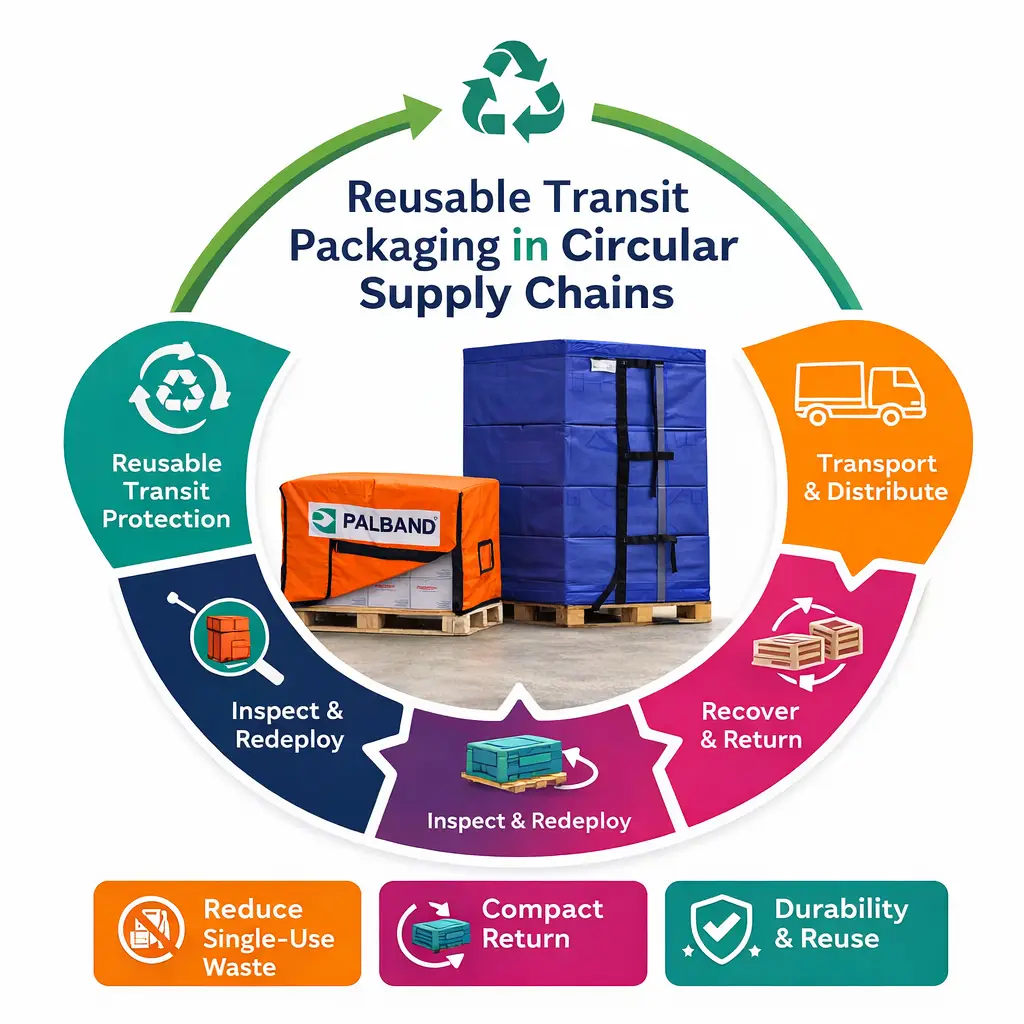
Circular supply chains take a different approach. Packaging and protection are treated as durable assets rather than consumables. These assets are designed to move through predictable loops, returning to the supply chain after each use rather than becoming waste.
In warehousing and distribution, this approach aligns naturally with existing return journeys such as depot-to-depot transfers, supplier returns, or internal stock movements.
Why physical packaging choices matter
While digital tools support traceability and reporting, physical packaging changes often deliver the fastest results. Reducing single-use materials at pallet level immediately lowers waste volumes, improves consistency, and removes friction from daily operations.
Why single-use transit protection holds circular supply chains back
Waste and disposal burdens
Single-use stretch wrap and disposable liners contribute significantly to packaging waste. Even where recycling is available, these materials still need to be handled, stored and processed, creating ongoing cost and administrative overhead.
Inconsistent protection and damage risk
Disposable packaging is often applied inconsistently. Over-wrapping wastes material, while under-wrapping increases the risk of load shift and product damage. This inconsistency undermines both product protection and safety.
Hidden operational costs
Beyond material costs, single-use packaging adds labour time for application and removal, storage space for consumables, and disposal management. Over time, these hidden costs erode the perceived savings of low-cost disposable materials.
Reusable wraps and covers as a practical circular upgrade
A low-disruption step towards reuse
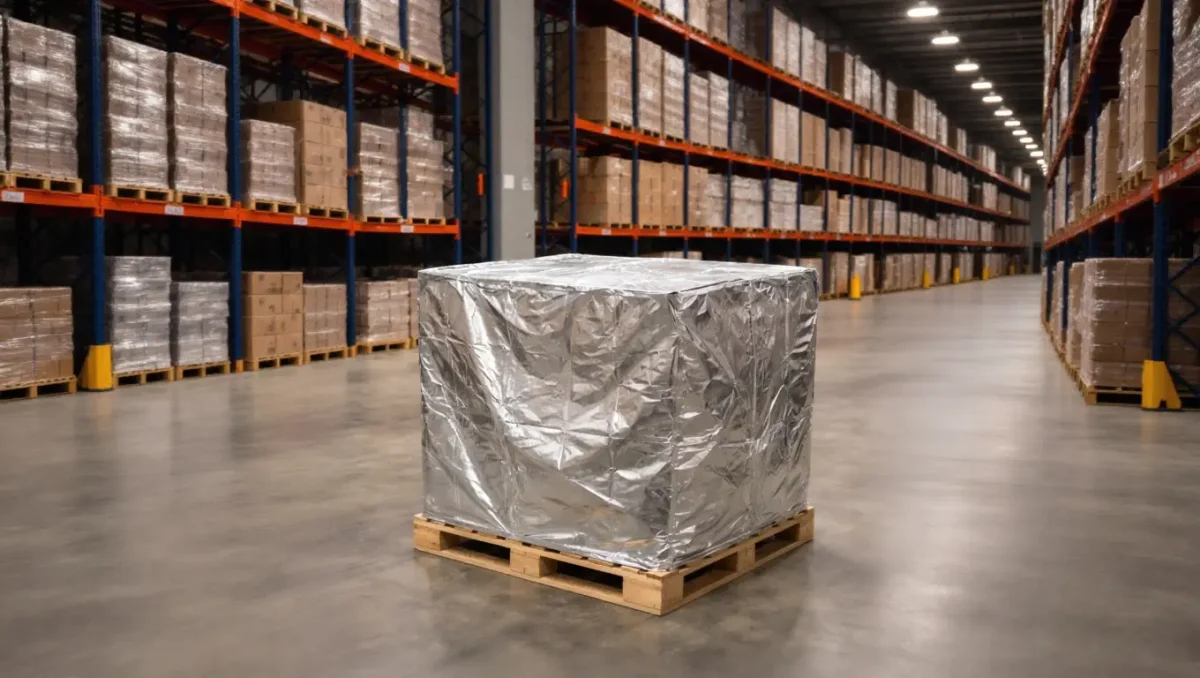
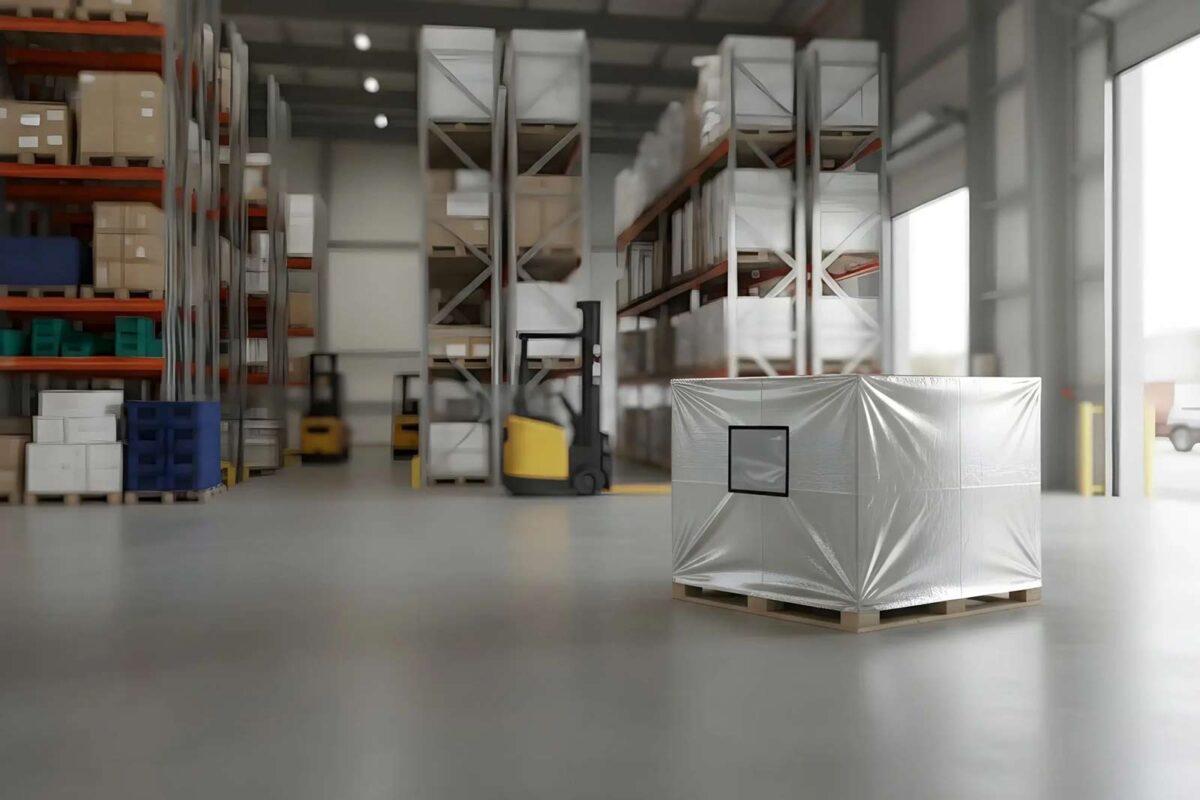
Reusable pallet and stillage wraps provide one of the most accessible entry points into circular supply chains. They replace stretch wrap and shrink wrap without requiring changes to pallets, racking or handling equipment, making them well suited to high-volume environments.
Designed for repeated use, reusable pallet and stillage wraps for industrial and commercial use support consistent load protection while significantly reducing reliance on disposable packaging. This allows warehouses to reduce waste without re-engineering their operations.
Standardising protection across repeat journeys
Because reusable wraps are engineered for durability, they help standardise load security across multiple journeys. This consistency improves handling safety, reduces damage risk, and supports predictable reuse across closed-loop routes such as depot-to-depot transfers and internal distribution movements.
Collapsible pallet boxes and return logistics
Reducing empty miles with collapsible returns
Return logistics are often cited as a barrier to reusable transport packaging. Collapsible pallet boxes address this challenge by folding down when empty, reducing volume on return journeys and improving vehicle utilisation.
Integrating collapsible pallet boxes designed for closed-loop transport systems into return flows allows logistics teams to reduce transport emissions, improve storage efficiency, and make reuse commercially viable across longer distances.
Asset life, storage efficiency and repeat use
By extending asset life and reducing space requirements when empty, collapsible pallet boxes support circular supply chains that are easier to manage across multiple sites while remaining robust enough for demanding warehouse environments.
Compliance, reporting and future-proofing supply chains
Reducing single-use packaging is increasingly linked to compliance and reporting requirements. Circular approaches that prioritise reuse help businesses demonstrate tangible progress rather than relying solely on downstream recycling.
UK evidence shows that reuse-led circular models are already delivering operational and economic benefits across multiple sectors. The Green Alliance report In the Loop: stories of businesses delivering the circular economy highlights how practical circular initiatives create resilience and value across entire supply chains.
Making the transition without operational disruption
Moving towards reusable transit packaging does not require a full system overhaul. Many businesses start by focusing on high-volume routes, setting simple inspection routines, and making reuse visible and repeatable for warehouse teams.
Reusable covers and returnable packaging integrate into existing flows, allowing operations to build circularity incrementally rather than all at once.
Frequently Asked Questions
Reusable transit packaging helps circular supply chains by replacing single-use materials with durable assets that can be used repeatedly. Instead of disposing of packaging after one journey, reusable covers, wraps and containers stay in circulation, reducing waste, lowering material consumption, and supporting closed-loop logistics operations.
Yes. Reusable transport packaging is designed for high-volume environments where consistency and durability matter. When introduced on repeat routes or internal transfers, reusable covers and pallet boxes can be integrated without slowing down operations or increasing handling complexity.
Reusable covers provide more consistent protection than stretch wrap because they are engineered for repeat use and standardised fit. This reduces variation in application, lowers damage risk, and removes the need for continuous consumption of disposable materials.
No. Many businesses start building circular supply chains by targeting specific problem areas such as single-use transit protection. Introducing reusable packaging on high-volume routes allows organisations to reduce waste and improve resilience without reconfiguring their entire supply chain.
What is the best way to start protecting high value goods in a warehouse?
Start by identifying where damage happens most often, then introduce protective transport packaging on one repeat route or one high-risk product group. Reusable covers and straps can improve protection quickly without changing pallets or racking.
Are custom covers worth it compared to standard packaging?
For high value goods, custom covers are often worth it because the fit is consistent. Consistent fit reduces handling variation, improves repeat use, and lowers damage risk compared to loosely matched one-size packaging.
What is protective transport packaging?
Protective transport packaging refers to packaging and load protection used to prevent damage during storage, handling, and transit. In warehouses this can include reusable pallet covers, padded covers, insulated liners, mesh guards, and load restraint straps.
Can reusable protection work in high volume operations?
Yes, if it is easy to apply and remove, fits the workflow, and has a clear reuse loop. Products like reusable pallet covers and straps and accessories are designed to support repeatable use in busy warehouse environments.
Moving from intent to action
Circular supply chains succeed when sustainability goals align with operational reality. Reusable covers, wraps and pallet boxes provide a practical way to reduce waste, protect goods, and build repeatable reuse into everyday logistics activity.
If you want to explore how reusable transit protection could support your circular supply chain objectives, speak to Palband about reusable logistics solutions. For tailored advice based on your handling environment and return flows, contact the Palband team to discuss practical next steps.