The Palband Blog
How insulated covers maintain temperature during transport
Introduction: Why maintaining temperature during transport is challenging
Maintaining temperature during transport is one of the most persistent challenges in modern logistics. Even short journeys can expose goods to temperature loss during transport, particularly when products move between controlled environments and ambient conditions. Loading bays, vehicle doors, yard waiting times and last-mile delivery all create moments where temperature stability is tested.
For palletised goods, exposure happens faster than many teams expect. A chilled or temperature-sensitive load can begin absorbing external heat within minutes once it leaves a controlled space. In colder conditions, the reverse applies, with heat escaping rapidly from the load surface. These fluctuations are rarely uniform, which means some parts of a pallet can be affected long before others.
Temperature stability matters for more than compliance. Variations can shorten shelf life, compromise product quality, increase waste and create costly disputes further down the supply chain. In sectors such as food, pharmaceuticals, retail and manufacturing, even minor temperature drift can undermine product integrity or customer confidence.
As supply chains become faster and more fragmented, maintaining consistent conditions during transport has become a practical operational challenge rather than a theoretical one. Understanding where temperature loss occurs is the first step towards managing it effectively.
Short Summary
Maintaining temperature during transport is difficult due to exposure during loading, transit and unloading. This article explains how temperature loss occurs, why palletised goods are particularly vulnerable, and how insulated covers help reduce temperature fluctuations by slowing heat transfer and supporting more stable conditions across real logistics operations.
Why you can trust us
Palband designs and supplies reusable insulated covers and liners for palletised, containerised and unit loads across industrial and logistics environments. Our experience comes from supporting temperature-sensitive supply chains with practical, reusable solutions that reduce temperature loss during transport and perform reliably in real operational conditions.
The science behind temperature loss in transport
Temperature loss during transport is driven by basic heat transfer processes that affect every palletised load, regardless of industry or product type. Understanding these mechanisms helps explain why maintaining stable conditions is so difficult once goods leave controlled storage.
Heat moves in three main ways. Conduction occurs when heat passes directly through materials. In logistics, this happens when pallets sit on cold or warm surfaces, or when packaging comes into contact with vehicle floors, walls or metal restraints. Convection involves the movement of air. Open vehicle doors, draughts in loading bays and airflow during transit can rapidly carry heat away from or towards a load. Radiation transfers heat through electromagnetic waves, meaning goods can absorb heat from sun-warmed vehicle panels or lose heat to cooler surroundings even without direct contact.
Pallets and packaging can amplify exposure. Large surface areas, gaps between cartons and uneven stacking increase the pathways for heat transfer. Loads that are well insulated at box level may still experience temperature loss if the pallet as a whole is exposed.
Loading bays and dwell time are critical risk points. Even a short delay during loading or unloading can allow significant temperature exchange, especially when ambient conditions differ sharply from internal storage. These moments are often underestimated, yet they account for a large proportion of temperature deviations seen during transport.
By understanding how heat moves through palletised goods, logistics teams can better assess where protection is needed and why pallet-level thermal protection plays such an important role.
What insulated covers do differently
Insulated covers work by addressing temperature loss at pallet level rather than relying solely on vehicle control or individual box insulation. Instead of attempting to actively heat or cool a load, insulated covers focus on slowing the rate at which heat enters or escapes. This distinction is important in real logistics environments where temperature exposure is often intermittent rather than constant.
By surrounding the pallet or unit load, insulated covers create a barrier between the goods and external conditions. Layers of insulating material reduce heat transfer through conduction, while reflective surfaces limit radiant heat gain or loss. Trapped air within the insulation further slows thermal movement, helping stabilise conditions during unavoidable exposure periods such as loading, unloading and vehicle stops.
This pallet-level approach is particularly effective where goods are already within specification at dispatch. Rather than fighting ambient conditions, insulated covers help preserve the starting temperature for longer, reducing the speed and severity of temperature change. This makes them well suited to short and medium-distance transport, cross-docking, and last-mile delivery.
Unlike single-use thermal packaging, reusable solutions such as insulated covers and liners designed for pallets, roll cages and containers are built for repeated handling in operational settings. This allows temperature protection to be matched to pallet size, load type and handling method without introducing unnecessary complexity into existing workflows.
It is also important to be clear about limitations. Insulated covers do not generate cooling or heating and are not a replacement for refrigeration where active temperature control is required. Their role is to slow temperature change, not eliminate it entirely. Being clear about this function builds trust and supports realistic expectations.
How insulated pallet covers maintain temperature during transport
Insulated pallet covers maintain temperature during transport by reducing the rate of heat transfer at each stage of the journey. Their impact is cumulative, helping to minimise temperature drift rather than attempting to lock a load at a fixed temperature.
At the loading stage, insulated pallet covers reduce immediate exposure when goods move out of controlled storage. This is often the point where temperature loss during transport begins, particularly in busy loading bays where pallets may wait before vehicle doors are closed. By shielding the load, covers limit rapid heat exchange during this vulnerable window.
During transit, insulated pallet covers continue to buffer against external conditions. Vehicle interiors can fluctuate due to weather, door openings and air movement. Insulation slows the effect of these changes, reducing temperature spikes and dips that would otherwise reach the product surface.
On arrival and unloading, insulated pallet covers again provide protection during door openings and handling delays. These repeated short exposures are a common cause of cumulative temperature deviation, especially on multi-drop routes or last-mile delivery.
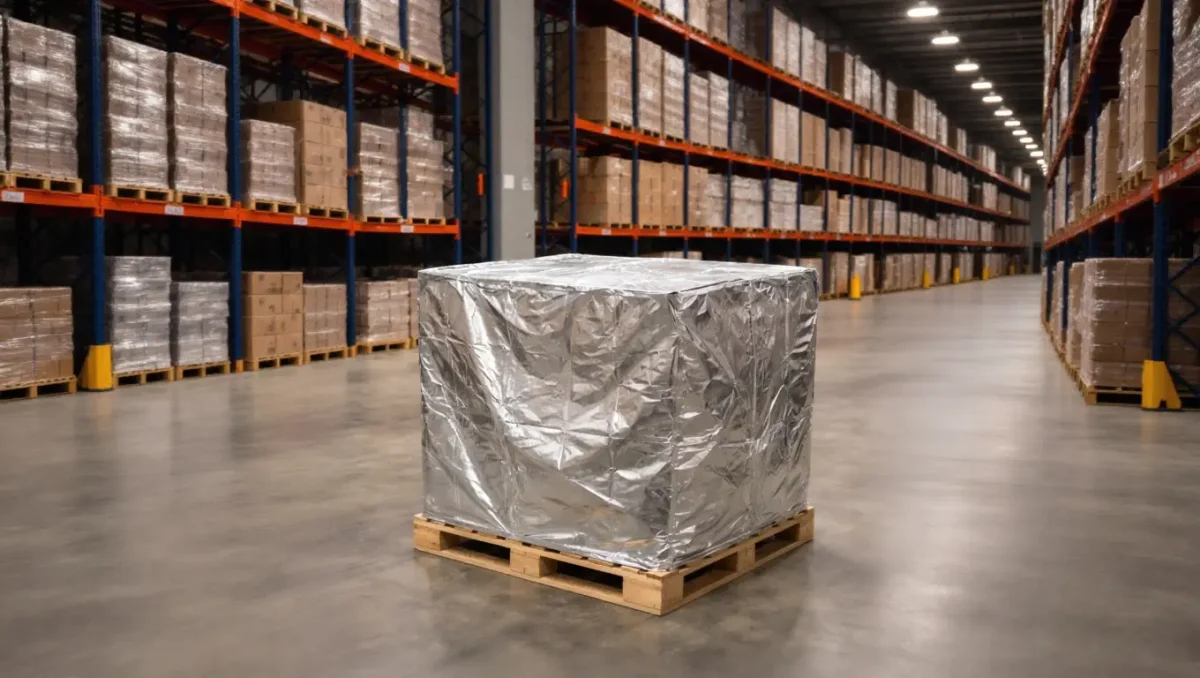
Heavy-duty solutions such as thermal foil pallet covers engineered for cold chain and temperature-sensitive transport enhance this effect by combining reflective layers with insulating cores that create thermal lag. Rather than preventing change entirely, they reduce the speed at which temperature moves towards ambient conditions.
Because insulated pallet covers operate at pallet scale, they also help protect unevenly stacked loads. Areas that would otherwise be more exposed, such as corners and upper layers, receive the same level of thermal protection as the rest of the pallet. This consistency supports more predictable outcomes across repeat journeys and handling scenarios.
Insulated covers vs liners in temperature control
Insulated covers and liners both play important roles in temperature control, but they are designed for different operational needs. Understanding where each excels helps reduce confusion and ensures the right solution is applied.
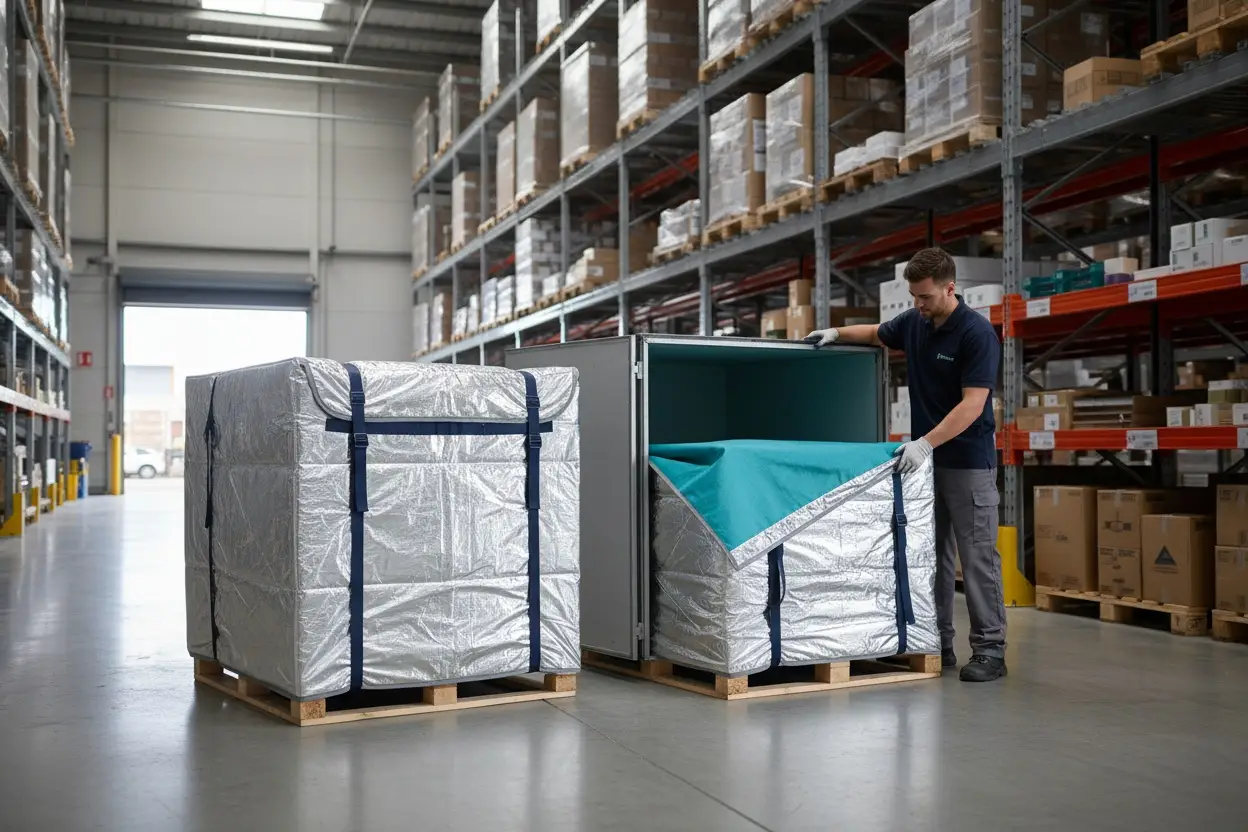
Insulated covers are fitted around the outside of pallets, roll cages or unit loads. They are quick to apply and remove, making them well suited to fast-moving logistics operations where goods are frequently handled. Covers provide external thermal protection, shielding loads from ambient air, wind and radiant heat during loading and transit.
Liners, by contrast, are installed inside containers or enclosed spaces. Thermal foil liners for shipping containers are designed to protect cargo from temperature and moisture fluctuations by creating a more stable internal environment. They are particularly effective for longer journeys, containerised freight and scenarios where external covers are impractical.
Operationally, covers offer flexibility and speed, while liners focus on internal containment and longer-duration protection. Covers are often reused across multiple routes and handling cycles, whereas liners are typically fitted for specific shipments or container moves.
In terms of temperature protection duration, liners generally support longer exposure periods due to their enclosed nature, while insulated covers are most effective at managing short to medium-term exposure and repeated handling events. In many supply chains, the two approaches are complementary rather than competing.
Choosing between insulated covers and liners depends on journey length, handling frequency and the level of exposure expected. Clarifying these differences helps logistics teams apply thermal protection where it delivers the most practical benefit.
Operational factors that affect thermal performance
Thermal performance in real logistics operations is shaped by a combination of environmental and handling factors, many of which sit outside direct control. Understanding these variables helps explain why maintaining stable conditions is rarely straightforward, even when insulated covers are used correctly.
Ambient temperature is the most obvious influence. Large differences between storage conditions and outdoor air accelerate temperature loss during transport, particularly during seasonal extremes. Wind exposure during loading and unloading can intensify this effect by increasing convective heat transfer, especially around pallet edges and upper layers.
Duration of exposure also matters. Short stops with repeated door openings can be more damaging than a single longer journey, as each exposure compounds temperature change. Dwell time in yards or loading bays is a common but underestimated contributor to temperature drift.
The starting temperature of the product plays a critical role. Goods dispatched outside their target range will continue to deviate regardless of insulation, as insulated covers slow heat transfer but do not correct temperature. Pallet configuration further affects outcomes. Loose stacking, uneven loads and exposed corners increase surface area and create pathways for heat movement.
Taken together, these factors explain why thermal protection must be considered alongside handling processes, not as a standalone fix.
Preventing temperature excursions with insulated covers
Temperature excursions often occur at predictable points in the supply chain. Loading delays, multiple delivery drops, vehicle door openings and exposure to extreme weather all increase the risk of goods moving outside acceptable limits. Insulated covers help mitigate these risks by reducing the speed and scale of temperature change during these vulnerable moments.
Rather than preventing excursions entirely, insulated covers act as a buffer. They smooth out short-term spikes and dips, giving operations more tolerance for unavoidable exposure. This is particularly valuable where temperature stability is required across repeated handling events rather than continuous refrigeration.
For last-mile delivery and multi-drop routes, insulated solutions such as thermal foil roll cage covers designed for demanding cold chain conditions provide added protection during frequent door openings and outdoor exposure. By shielding goods at unit level, they help reduce the cumulative impact of small deviations.
It is important to recognise that insulation supports, rather than replaces, process controls. Good route planning, minimised dwell time and temperature monitoring remain essential. Used together, insulated covers and disciplined handling practices significantly reduce the likelihood and severity of temperature excursions across real-world logistics operations.
Insulated covers compared to other temperature control methods
Insulated covers sit alongside, rather than replace, other temperature control methods used in logistics. Understanding how they compare helps businesses apply thermal protection more effectively and avoid unrealistic expectations.
Refrigerated vehicles provide active temperature control and are essential for long-distance transport or highly sensitive goods. However, they are energy intensive and less effective during door openings, loading delays and short handling events. Insulated covers complement refrigeration by protecting goods during these high-risk moments, reducing temperature loss when active systems are briefly compromised.
Single-use thermal packaging, such as liners or insulated boxes, can offer short-term protection but generates waste and recurring costs. In contrast, insulated covers are designed for repeated use, making them more suitable for closed-loop operations and regular distribution routes where sustainability and cost control matter.
Insulated containers provide strong temperature stability but often lack flexibility. They can be heavy, expensive and impractical for mixed loads or high-volume pallet movements. Insulated covers offer a more adaptable form of thermal protection that fits existing pallets, roll cages and handling processes.
Market analysis shows that logistics operators are increasingly looking for solutions that balance protection, efficiency and sustainability. Industry research into protective and transit packaging trends highlights growing demand for reusable systems that reduce waste while supporting temperature stability across complex supply chains. This context reinforces the role of insulated covers as a practical, complementary layer of thermal protection rather than a standalone solution.
Need reliable temperature protection in real-world logistics?
If maintaining temperature during transport is critical to your operation, reusable insulated covers can reduce risk where refrigeration alone falls short. Explore Palband’s insulated covers and liners to find a solution designed around your goods, routes and handling processes.
Frequently Asked Questions
Insulated covers do not maintain a fixed temperature but slow the rate of temperature change. Performance depends on factors such as ambient conditions, starting temperature, exposure time and cover specification.
Yes. Insulated covers reduce heat transfer in both directions, helping limit heat gain in hot conditions and heat loss in cold environments.
They can be used on their own for short journeys or controlled environments, but they are most effective when combined with good handling practices and, where required, refrigerated transport.
Yes. Insulated pallet covers are designed for repeated use in industrial and logistics environments, supporting sustainable and cost-effective operations.
Insulated covers support cold chain integrity by reducing temperature excursions, but they should be used as part of a wider temperature management strategy that includes monitoring and process controls.
What is the best way to start protecting high value goods in a warehouse?
Start by identifying where damage happens most often, then introduce protective transport packaging on one repeat route or one high-risk product group. Reusable covers and straps can improve protection quickly without changing pallets or racking.
Are custom covers worth it compared to standard packaging?
For high value goods, custom covers are often worth it because the fit is consistent. Consistent fit reduces handling variation, improves repeat use, and lowers damage risk compared to loosely matched one-size packaging.
What is protective transport packaging?
Protective transport packaging refers to packaging and load protection used to prevent damage during storage, handling, and transit. In warehouses this can include reusable pallet covers, padded covers, insulated liners, mesh guards, and load restraint straps.
Can reusable protection work in high volume operations?
Yes, if it is easy to apply and remove, fits the workflow, and has a clear reuse loop. Products like reusable pallet covers and straps and accessories are designed to support repeatable use in busy warehouse environments.