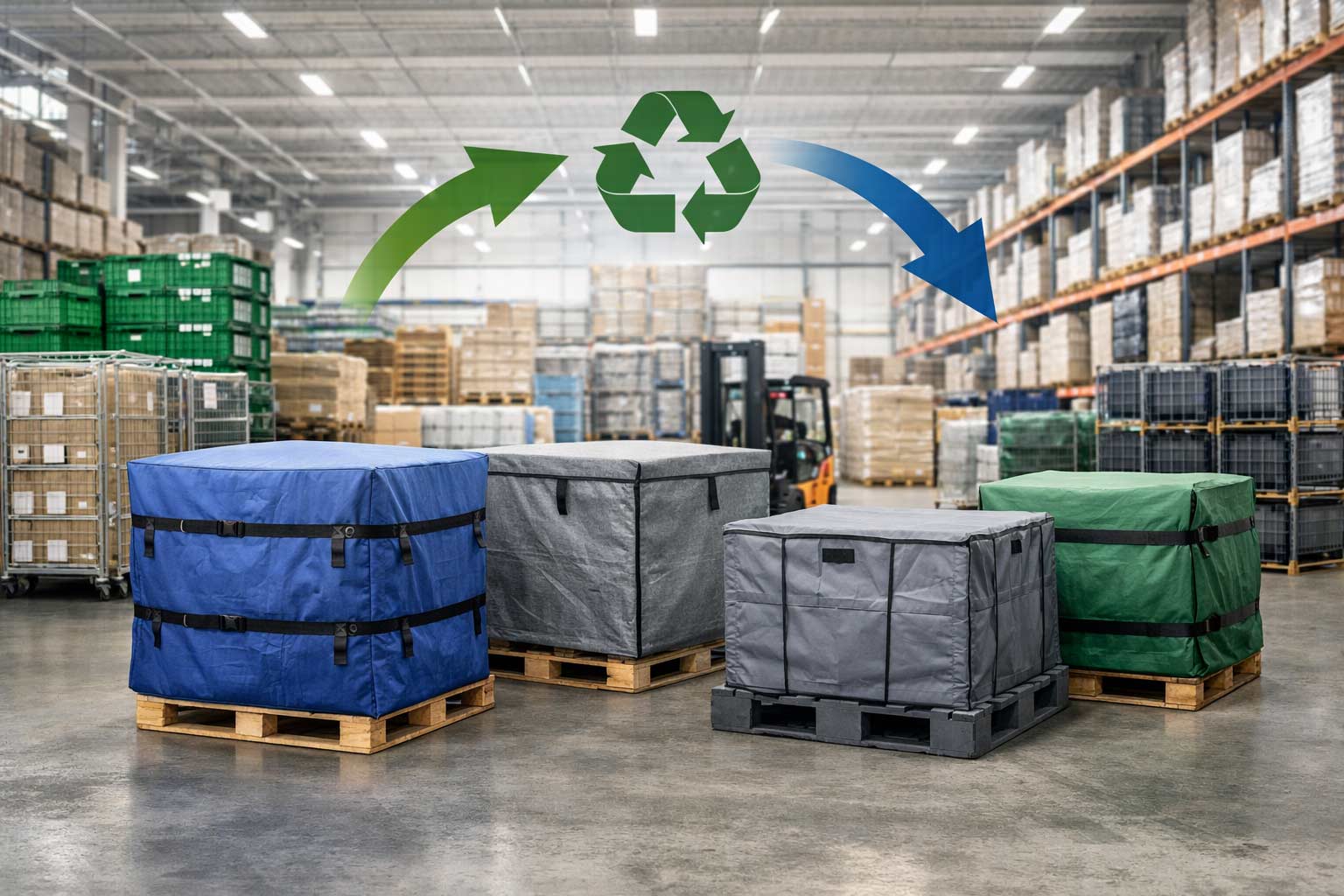
Palband Showcases Paltherm Thermal Covers at IntraLogisteX 2026

Case Study: Furniture Manufacturer Reduces Plastic Waste with Reusable Stillage Wraps
Client: Mike Napthine
Region: UK, Europe, USA
Solution by: Palband – Reusable Solutions for Reliable Logistics

Overview
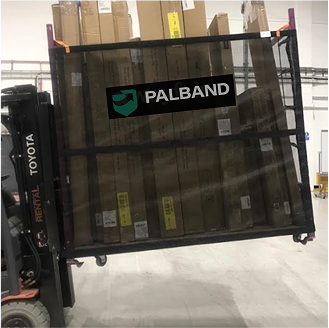
Palband to showcase sustainable logistics solutions at IntraLogisteX 2026

Palband will be exhibiting at IntraLogisteX 2026, the UK’s largest intralogistics event, where the company will present its range of reusable logistics products designed to improve efficiency, reduce plastic waste and protect goods during transport and storage.

The exhibition brings together more than 350 exhibitors and over 11,000 visitors, providing access to a highly engaged audience of logistics, warehousing and supply chain professionals. With visitors holding an average purchasing power of £2.3 million and 80 percent having buying influence, IntraLogisteX offers a valuable opportunity for businesses to explore new operational solutions and innovations within the intralogistics sector. The event also maintains a strong reputation among exhibitors and attendees, with 96 percent of exhibitors reporting it as a good investment and 88 percent of visitors recommending it to their peers.

At the show, Palband will be showcasing products from across its full range, demonstrating how reusable transport packaging and protective solutions can help modern logistics operations reduce waste, improve safety and protect goods more effectively.

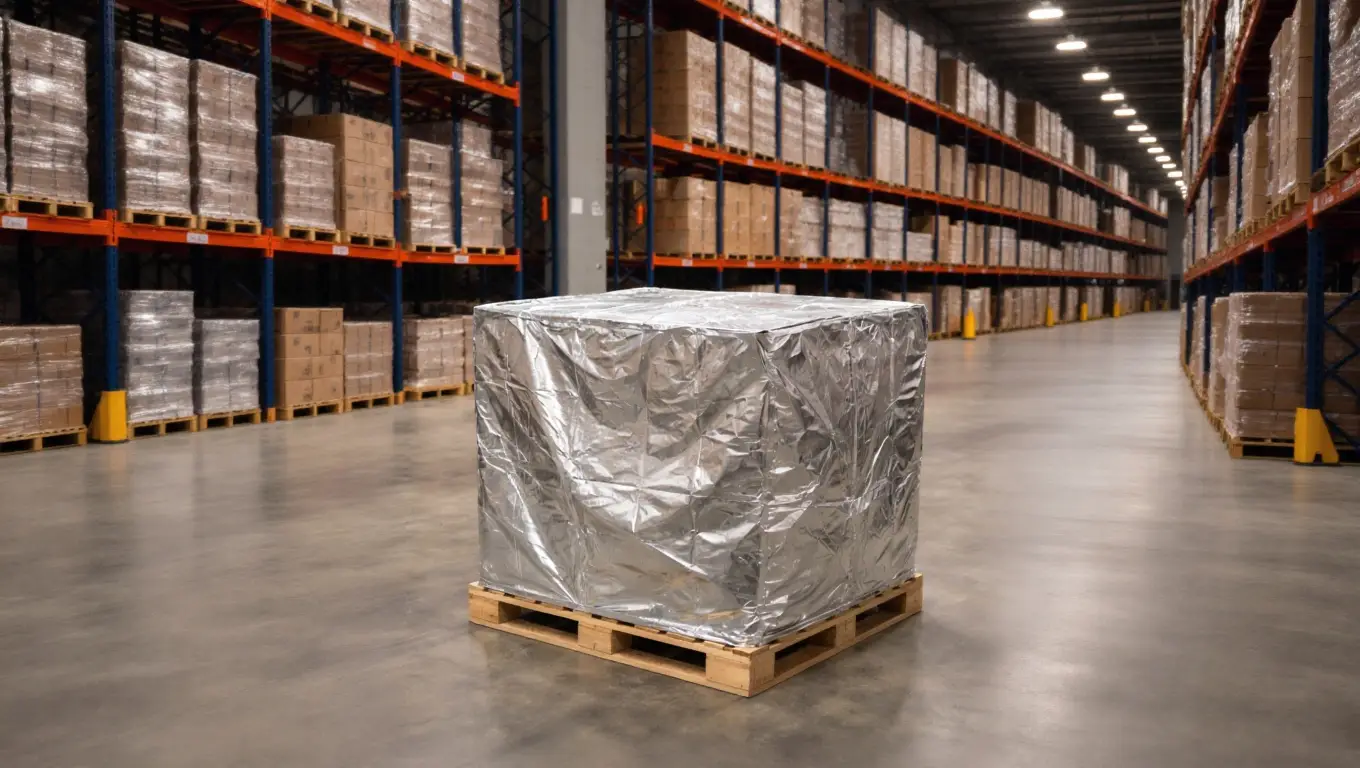
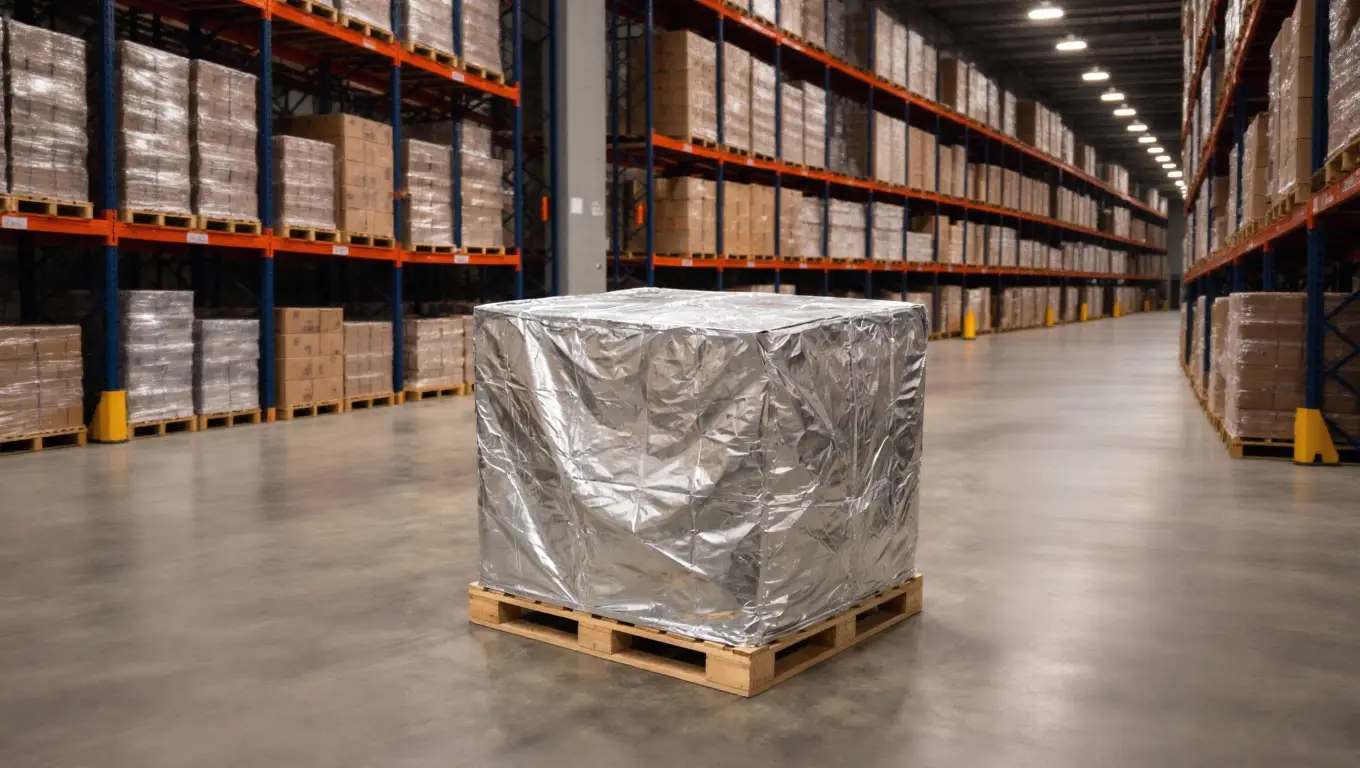
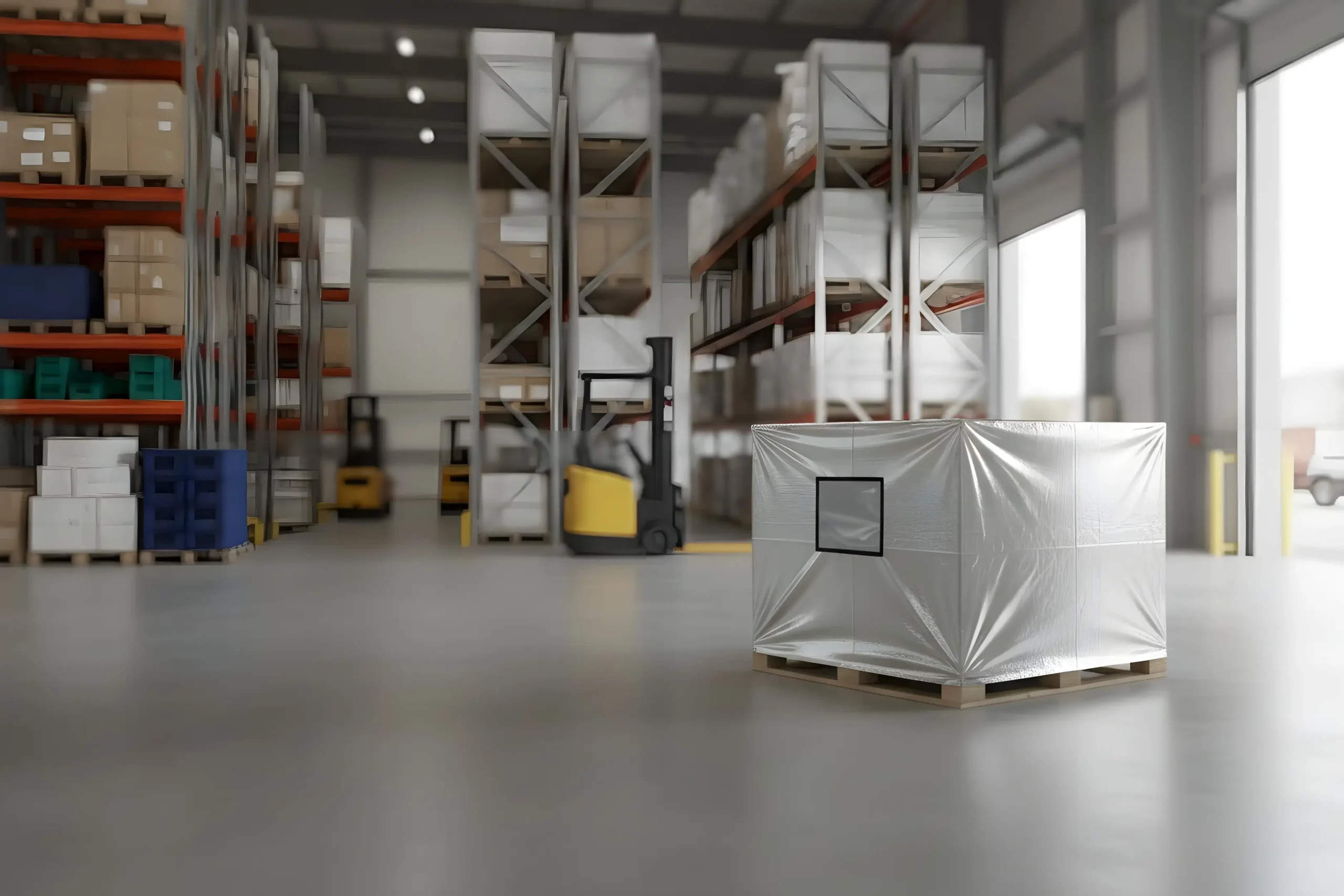
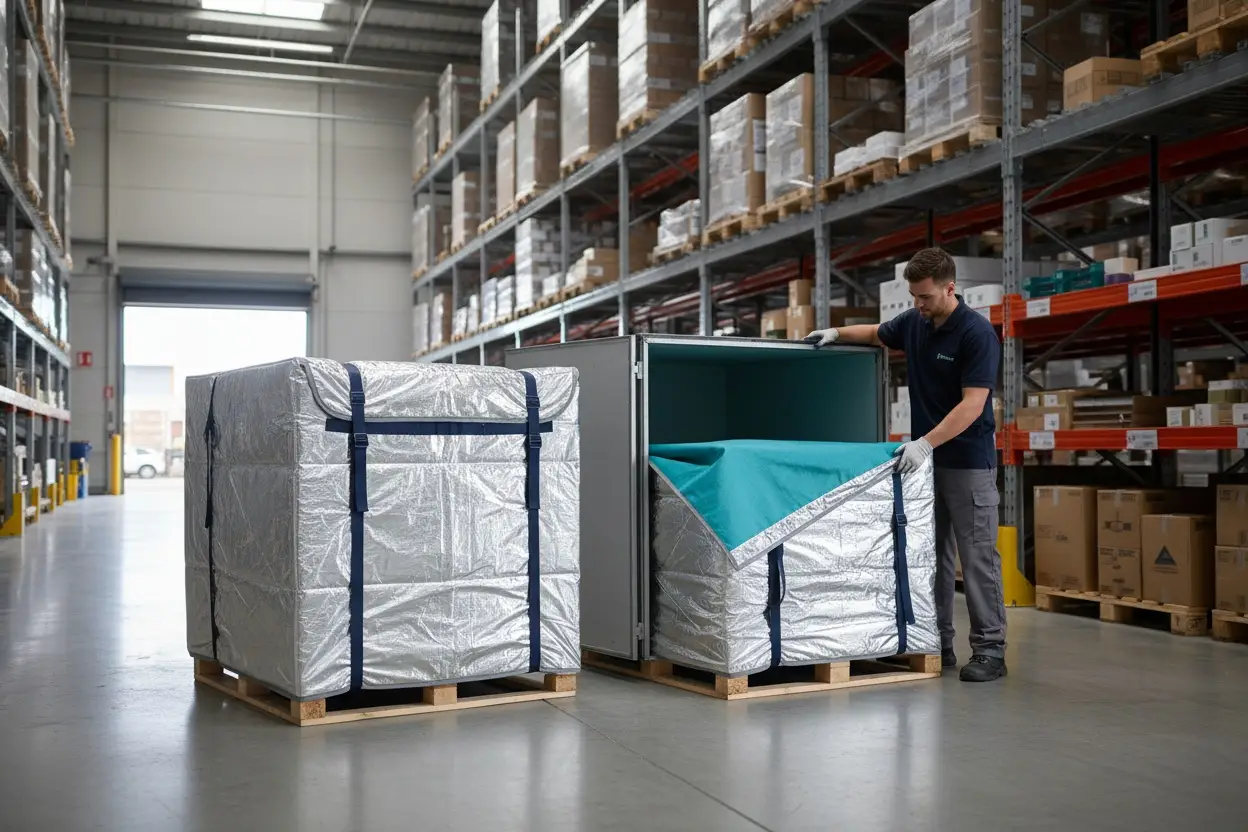
A particular focus will be placed on the company’s thermally insulated product range, Paltherm, which has been developed to support temperature sensitive logistics and chill chain distribution. These thermally efficient covers, liners and insulated bags help maintain product stability during storage and transit, making them suitable for industries such as food distribution, pharmaceuticals and temperature controlled supply chains.

Alongside Paltherm, Palband will also present its wider product portfolio, including several reusable and protective logistics solutions designed for warehouses and distribution environments.

  • PALWRAP reusable pallet wraps provide a durable alternative to single use plastic stretch film, helping businesses reduce plastic consumption while maintaining load stability during transport.
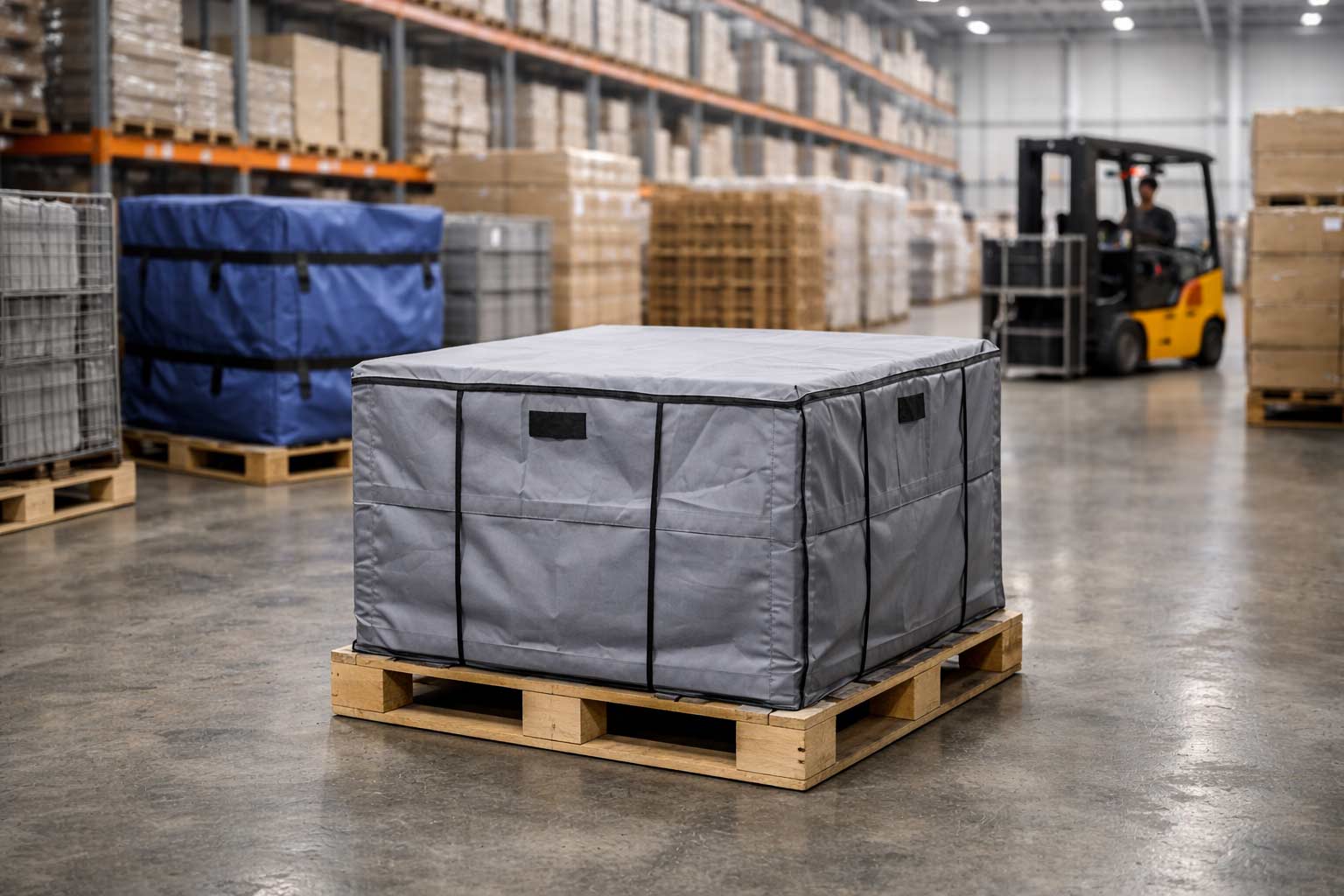
  • PALCOVER protective covers offer flexible protection for a wide range of goods, from palletised products to large machinery, helping prevent damage from dust, moisture and general warehouse handling.
  • PALSTRAP reusable pallet straps provide a practical and sustainable alternative to traditional plastic wrapping, offering a fast and secure method for stabilising pallet loads.
  • PALBOXX pallet boxes and containers support evolving logistics requirements by offering durable storage and transport solutions that improve organisation and product protection across supply chains.

By bringing these product ranges together at IntraLogisteX, Palband aims to demonstrate how reusable packaging and protective systems can help logistics operations reduce environmental impact while maintaining high standards of operational performance.

Visitors attending the event will have the opportunity to learn more about how Palband’s solutions support more efficient warehouse operations, reduce single use plastics and help businesses meet increasing sustainability expectations across modern supply chains.

Further information about the event can be found on the IntraLogisteX website.

To learn more about Palband’s reusable logistics products and protective packaging solutions, visit the Palband website.

Details of the Paltherm insulated covers and liners range are available on the Paltherm product page.

“Our customer’s response has been outstanding,” said Mike Napthine, Client Solutions Lead at Palband. “This project shows what can be achieved when sustainability targets are matched with practical design. The wraps not only helped remove single-use plastic completely but also improved efficiency and presentation across every delivery.”

Mike Napthine, Client Solutions Lead, Palband.

This partnership between Palband and the client proves that smart design and sustainable thinking can solve practical logistics challenges without compromising on performance.

If your business relies on reliable transport and wants to reduce waste without increasing risk, get in touch with Palband today.

Related Articles to read...

Fill Out The Form Below And Find Out How Palband Can Help You Dramatically Reduce The Plastic Packaging Tax

Speak to the Team

Let us help you transition to a reusable solution that works harder for your business. Contact Palband today to explore standard sizes or request a bespoke quote. We’ll help you reduce waste, cut costs and protect your loads with confidence.

  • The Palband Blog

    Warehouse waste management: how rack end waste sacks improve safety and efficiency

    What this article is about

    Warehouse waste builds up quickly in busy distribution centres. Cardboard packaging, plastic wrap, and other materials appear throughout picking aisles and packing areas as goods move through the facility.

    This article explains why structured warehouse waste management is important for both safety and operational efficiency. It explores common waste handling challenges in logistics environments and shows how simple solutions such as rack end waste sacks can help keep aisles clear, support recycling, and improve everyday warehouse workflows.

    Why waste quickly builds up in warehouse environments

    Warehouses generate large volumes of waste every day. Cardboard packaging, plastic wrap, pallet materials, and damaged goods move through distribution centres alongside the products they support. Without clear systems for handling this material, waste can quickly accumulate across picking aisles, racking areas, and packing stations.

    Effective warehouse waste management is essential for maintaining safe working environments and efficient operations. When packaging waste builds up on floors or work surfaces, it slows workflows, creates hazards, and makes recycling more difficult.

    Many warehouses improve their waste handling by introducing dedicated warehouse waste sacks positioned where waste is generated. By placing disposal points directly at the end of racking aisles, teams can dispose of packaging quickly and safely without interrupting their workflow.

    Simple operational improvements such as rack end waste sacks help warehouses maintain cleaner aisles, support recycling efforts, and keep busy logistics environments running efficiently.

    Why warehouse waste management matters in modern distribution centres

    Distribution centres handle thousands of packages each day. Every inbound delivery and outbound shipment introduces packaging materials that must be removed, sorted, and disposed of correctly.

    Without organised warehouse waste collection systems, this material can spread throughout the facility. Loose cardboard or shrink wrap left in picking aisles becomes a safety risk and disrupts workflow.

    Effective warehouse waste management delivers several operational benefits:

    • Safer warehouse floors with fewer trip hazards
    • Faster picking and packing workflows
    • Improved recycling and waste segregation
    • Better housekeeping standards across the facility
    • Reduced operational downtime caused by clutter

    Large logistics organisations are also prioritising waste reduction as part of wider sustainability initiatives. Major fulfilment networks such as Amazon report landfill diversion rates of more than 80 percent through improved recycling programmes and operational waste handling practices. These types of initiatives highlight how structured waste processes support both operational efficiency and environmental goals.

    Common warehouse waste challenges that affect safety and productivity

    Most warehouses experience similar waste challenges. Packaging materials appear throughout the facility as products move through receiving, storage, picking, and dispatch stages.

    When convenient disposal points are not available, packaging waste is often placed temporarily on pallets, shelving, or the warehouse floor. Over time these small habits create clutter that affects both safety and productivity.

    Common warehouse waste problems include:

    • Waste accumulating at the ends of racking aisles
    • Cardboard and plastic wrap left on warehouse floors
    • Workers walking long distances to reach disposal points
    • Overflowing bins near packing stations
    • Poor segregation between recyclable and general waste

    When warehouse waste bags are not positioned close to where packaging is removed, waste handling becomes inefficient. Workers may delay disposal or leave materials in temporary piles, which creates unnecessary hazards in busy logistics environments.

    How rack end waste sacks improve warehouse waste management

    One of the most effective ways to improve warehouse waste management is to position waste collection points exactly where waste is produced.

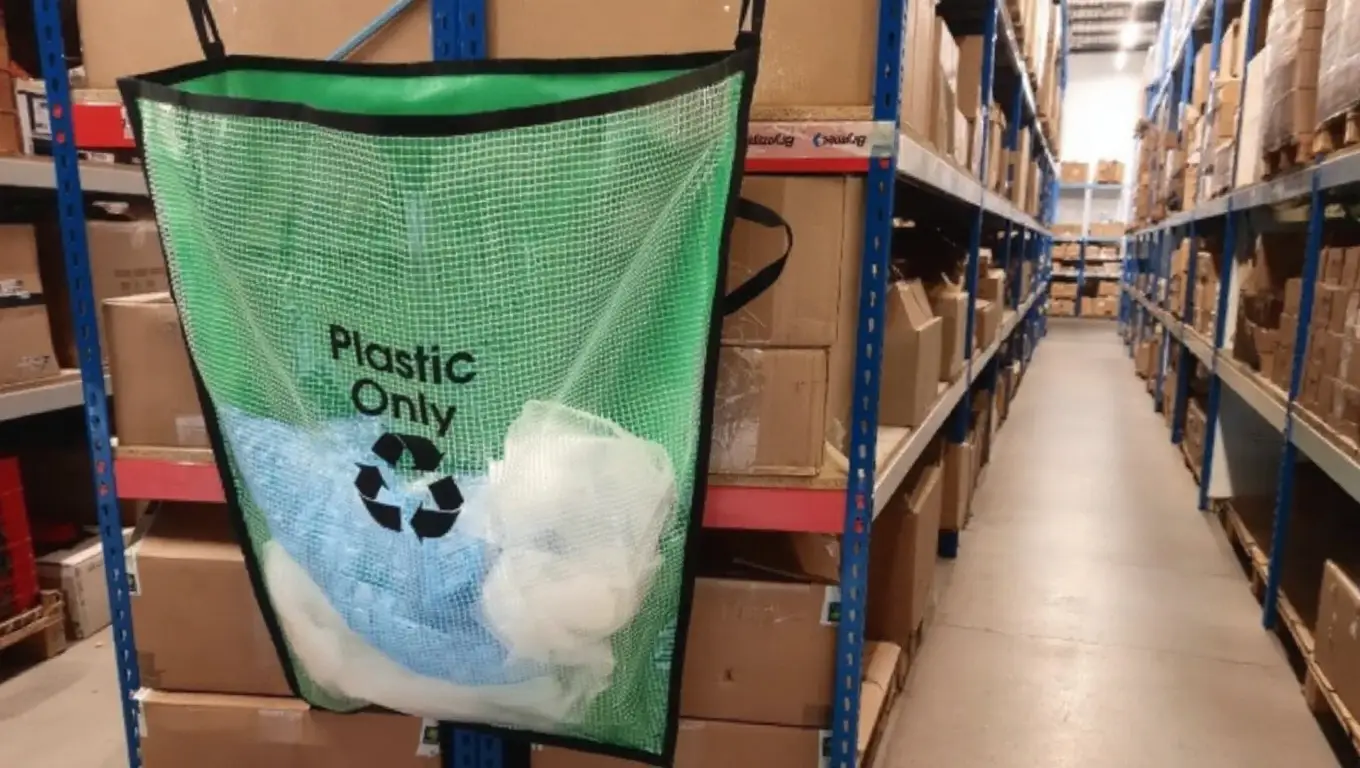
    Rack end waste sacks are designed to attach directly to pallet racking structures, typically at the end of picking aisles. This placement allows warehouse staff to dispose of packaging immediately without leaving their work area.

    Because the waste sacks are fixed directly to racking systems, they create clearly defined disposal points throughout the warehouse. Workers can quickly place cardboard, plastic film, and other packaging materials into the sacks while continuing their normal tasks.

    This simple change improves housekeeping standards across the facility. Waste is captured consistently rather than accumulating around workstations or in picking aisles.

    A practical example of this approach can be seen with rack end waste sacks designed for logistics environments. These reusable sacks provide a durable solution for managing packaging waste while keeping aisles clear and organised.

    By integrating waste sacks directly into racking infrastructure, warehouses can significantly improve daily waste handling without introducing complicated new processes.

    Choosing the right rack end waste sacks for your warehouse

    Different warehouses generate different volumes of packaging waste, which means waste collection systems must match operational requirements.

    Several types of rack end waste sacks are available to support different workflows.

    Large rack end waste sack
    Large sacks are suitable for busy picking aisles or packing areas where cardboard and plastic waste accumulates quickly. The increased capacity allows teams to collect higher volumes of material before emptying.

    Medium rack end waste sack
    Medium sacks provide a balanced option for general storage aisles and standard warehouse zones where waste volumes are moderate.

    Small rack end waste sack
    Smaller sacks are ideal for narrow aisles or facilities with limited racking space. They still provide convenient disposal points without taking up unnecessary room.

    Trolley waste sack
    Trolley waste sacks support mobile waste collection. Warehouse teams can move these between aisles to collect materials from multiple workstations or cleaning routes.

    Using a combination of these solutions allows warehouses to build a structured system of racking waste sacks across the facility, ensuring waste can be disposed of quickly and consistently.

    Improving warehouse safety through better waste control

    Warehouse safety depends heavily on good housekeeping practices. Loose packaging materials are one of the most common causes of slip and trip hazards in logistics environments.

    When waste is left on floors or stacked temporarily on pallets, it increases the risk of accidents and slows forklift operations.

    Clearly positioned warehouse waste bags help eliminate these problems. When employees know exactly where waste should be placed, they are more likely to dispose of materials immediately rather than leaving them in temporary locations.

    Consistent disposal points also help maintain clear forklift routes and unobstructed access to storage locations. This improves safety for both warehouse staff and vehicle operators.

    Over time, organised waste systems contribute to a cleaner and more predictable warehouse environment, which supports both safety compliance and operational efficiency.

    Supporting sustainability and recycling in warehouse environments

    Sustainability is becoming a key focus for logistics and distribution operations. Many organisations are working to reduce landfill waste and improve recycling rates across their facilities.

    Structured warehouse waste management helps support these goals by separating materials at the point where they are generated.

    When cardboard, plastic film, and general waste are collected in dedicated containers, recycling becomes far easier to manage. Clear waste streams improve the value of recyclable materials and reduce contamination.

    Reusable waste handling systems can also help reduce reliance on disposable plastic liners or single use waste bags. Durable solutions such as rack end waste sacks allow warehouses to manage packaging waste without introducing additional single use materials.

    These improvements support broader environmental initiatives while maintaining efficient warehouse operations.

    Simple steps to improve warehouse waste management today

    Improving warehouse waste management does not always require major infrastructure changes. Small adjustments to waste handling processes can deliver immediate operational benefits.

    Practical steps include:

    • Positioning waste sacks at the ends of racking aisles
    • Ensuring disposal points are clearly visible to staff
    • Separating cardboard and plastic waste streams
    • Training employees to dispose of packaging immediately
    • Reviewing waste collection points as workflows change

    Introducing warehouse waste sacks in strategic locations is often one of the simplest improvements warehouses can make. When disposal becomes part of normal workflow, clutter is reduced and waste handling becomes far more efficient.

    Cleaner aisles, safer warehouses, better waste management

    Packaging waste is unavoidable in modern logistics operations. However, how that waste is managed has a significant impact on warehouse safety, efficiency, and sustainability.

    Effective warehouse waste management focuses on making disposal easy, consistent, and accessible across the facility. Rack end waste sacks support this goal by placing waste collection points directly where they are needed.

    By keeping aisles clear, improving recycling workflows, and supporting better housekeeping standards, these simple solutions help create safer and more organised warehouse environments.

    Why you can trust Palband

    Palband works with logistics operators, warehouses, and distribution centres to develop practical reusable solutions that improve everyday operations. Our products are designed specifically for demanding environments where safety, efficiency, and durability matter.

    From protective covers to waste handling systems, Palband focuses on solutions that help warehouses reduce single use materials, maintain organised workspaces, and support efficient workflows. Our experience working with logistics environments means our products are designed around real operational challenges, helping teams manage waste and materials more effectively.

    If you would like to learn more about solutions such as rack end waste sacks or discuss ways to improve warehouse waste management in your facility, you can contact the Palband team.

    Frequently Asked Questions

    Yes. Insulated pallet covers can be used without refrigerated transport to slow temperature change during short or moderate journeys. They help reduce exposure to ambient conditions during loading, unloading, and transit, but they do not actively cool or heat goods and should be used as part of a wider temperature management process.

    The duration depends on factors such as ambient temperature, starting product temperature, insulation thickness, pallet configuration, and handling time. Insulated pallet covers are designed to reduce temperature loss or gain rather than maintain a fixed temperature indefinitely.

    An insulated pallet cover fits around the outside of a palletised load to protect it from ambient exposure. An insulated liner is installed inside a container, roll cage, or enclosed unit to create a buffered internal environment. The choice depends on handling methods, transport mode, and reuse requirements.

    Yes. Insulated pallet covers are designed for repeated use in industrial and commercial logistics operations. Reusability depends on correct handling, storage, and cleaning between uses, as well as selecting materials suitable for the operating environment.

    Insulated pallet covers help reduce the risk of temperature excursions by slowing heat transfer during vulnerable points such as loading bays, vehicle transfers, and short-haul transport. They support temperature stability but do not replace active cooling, monitoring, or validated cold chain processes.

    Insulated pallet covers are commonly used in food, pharmaceutical, and healthcare logistics as a supporting control measure. They help protect goods from short-term exposure and temperature fluctuations but must be used alongside appropriate handling procedures, monitoring, and compliance requirements.

    No. Insulated pallet covers are not a substitute for refrigerated transport where active temperature control is required. They are typically used to complement refrigeration, protect goods during handling, or provide thermal buffering where full refrigeration is not necessary.

    Covers should be stored clean, dry, and protected from damage when not in use. Proper folding and storage helps maintain insulation performance and extends product lifespan, supporting long-term reuse.

    What is the best way to start protecting high value goods in a warehouse?

    Start by identifying where damage happens most often, then introduce protective transport packaging on one repeat route or one high-risk product group. Reusable covers and straps can improve protection quickly without changing pallets or racking.

    For high value goods, custom covers are often worth it because the fit is consistent. Consistent fit reduces handling variation, improves repeat use, and lowers damage risk compared to loosely matched one-size packaging.

    Protective transport packaging refers to packaging and load protection used to prevent damage during storage, handling, and transit. In warehouses this can include reusable pallet covers, padded covers, insulated liners, mesh guards, and load restraint straps.

    Yes, if it is easy to apply and remove, fits the workflow, and has a clear reuse loop. Products like reusable pallet covers and straps and accessories are designed to support repeatable use in busy warehouse environments.

    Related Articles to read...

    Fill Out The Form Below And Find Out How Palband Can Help You Dramatically Reduce The Plastic Packaging Tax

    Speak to the Team

    Let us help you transition to a reusable solution that works harder for your business. Contact Palband today to explore standard sizes or request a bespoke quote. We’ll help you reduce waste, cut costs and protect your loads with confidence.

  • The Palband Blog

    How reusable warehouse straps improve load stability and safety

    What this article is about

    Warehouse environments rely on safe and stable load handling. When goods move between storage locations, picking areas, and dispatch zones, poorly secured pallets can lead to damaged stock, inefficient workflows, and potential safety risks.

    This article explains how warehouse straps improve load stability in logistics environments. It explores how reusable load restraint straps help secure palletised goods, reduce reliance on single use plastic wrap, and support safer warehouse operations. It also highlights where straps are most commonly used in distribution centres and how simple restraint systems can improve efficiency across everyday warehouse tasks.

    The challenge of unstable loads in warehouse environments

    Warehouses are fast moving environments where goods are constantly being received, picked, and dispatched. In these settings, pallets often carry mixed loads of boxes, cartons, or packaged goods that can easily shift during handling.

    Without effective pallet restraint systems, items may move during internal transport, forklift handling, or while stored on racking. This creates several operational challenges.

    First, unstable loads increase the risk of product damage. When cartons slide or collapse, goods can become dented, crushed, or unsellable. In high volume distribution centres, even small levels of damage can quickly lead to significant losses.

    Second, unstable pallets create safety concerns for warehouse teams. Boxes that fall during handling can cause injury, obstruct walkways, or create hazards in busy picking aisles.

    Finally, poorly secured loads often require additional packaging such as plastic wrap or disposable securing materials. While these methods can stabilise goods temporarily, they generate waste and add time to packing operations.

    These challenges are why many warehouses now rely on warehouse safety straps and pallet restraint straps to stabilise loads during storage and transport.

    How warehouse straps improve load stability

    One of the most effective ways to stabilise palletised goods is by introducing reusable warehouse straps designed for logistics environments.

    Unlike single use plastic wrap, straps provide adjustable tension that holds goods firmly in place without compressing or damaging packaging. By wrapping around a pallet and securing tightly, these warehouse securing straps prevent cartons from shifting during movement.

    Many logistics operations now use reusable warehouse straps to stabilise goods across racking systems, packing stations, and internal transport routes. These systems allow teams to quickly secure loads before moving them across the warehouse floor.

    A key advantage of this approach is efficiency. Workers can apply and remove straps quickly without needing cutting tools or additional packaging materials. This helps reduce handling time and keeps operations moving smoothly.

    Businesses looking for reusable solutions can explore Palband’s range of warehouse straps designed specifically for logistics and distribution environments.

    By replacing plastic wrap with durable restraint systems, warehouses can improve load stability while also reducing packaging waste.

    Reducing plastic wrap with reusable load restraint straps

    Plastic shrink wrap has long been used to stabilise pallet loads in warehouses. However, it is typically used once and then discarded, creating large volumes of plastic waste.

    Reusable load restraint straps offer a more sustainable alternative. These systems allow goods to be secured repeatedly without relying on disposable packaging materials.

    A practical example is Palstrap reusable hook and loop load restraint straps, which provide a durable and adjustable method of securing palletised goods. Designed for repeated use, these straps can replace large amounts of plastic wrap while still keeping loads stable during internal transport.

    Because they can be used hundreds of times, reusable restraint systems reduce both packaging costs and environmental impact. Warehouses that switch to reusable systems often find they spend less time wrapping pallets while also generating significantly less waste.

    Where warehouse straps are commonly used

    Warehouse straps are used across a wide range of logistics operations where goods need to remain stable during storage or movement.

    One common use is securing mixed pallets during internal transport. When pallets move between storage areas and packing stations, reusable straps prevent cartons from sliding or collapsing.

    Another important application is securing goods inside roll cages. Retail distribution centres often move products through warehouses using roll cage trolleys, where items can easily shift during movement. Using roll cage trolley straps provides a simple way to keep goods contained and secure while cages are moved across busy warehouse floors.

    Warehouse straps can also be used to stabilise loads on racking systems. By securing cartons together, straps reduce the risk of boxes slipping or falling when pallets are accessed.

    These practical applications make reusable strapping systems valuable tools in warehouses handling high volumes of goods each day.

    Supporting safer and more efficient warehouse operations

    Beyond stabilising loads, warehouse straps contribute to safer and more organised working environments.

    When goods are properly secured, warehouse teams can move pallets with greater confidence. This reduces the risk of falling boxes, damaged stock, and disrupted workflows.

    Reusable restraint systems also help streamline operations. Instead of repeatedly wrapping pallets with plastic film, staff can quickly apply straps and remove them when goods reach their destination.

    This approach reduces packaging waste while helping teams maintain consistent load stability throughout warehouse operations.

    Over time, these improvements can contribute to safer workplaces, faster workflows, and more sustainable logistics processes.

    Why you can trust Palband

    Palband works with logistics operators, warehouses, and distribution centres to develop practical reusable solutions that improve everyday operations. Our products are designed specifically for demanding environments where safety, efficiency, and durability matter.

    From protective covers to waste handling systems, Palband focuses on solutions that help warehouses reduce single use materials, maintain organised workspaces, and support efficient workflows. Our experience working with logistics environments means our products are designed around real operational challenges, helping teams manage waste and materials more effectively.

    Businesses looking to improve load stability while reducing packaging waste can explore the full range of warehouse straps designed for logistics and distribution environments.

    Improve load stability with reusable warehouse straps

    Keeping palletised goods stable during storage and transport is essential for efficient warehouse operations. Reusable restraint systems allow logistics teams to secure loads quickly while reducing reliance on single use packaging materials.

    If your warehouse is looking to improve load stability, reduce plastic wrap usage, or create safer internal transport processes, explore the full range of warehouse straps designed for demanding logistics environments.

    Palband’s reusable strapping solutions help secure palletised goods, support safer workflows, and reduce packaging waste across distribution centres and warehouse operations.

    Conclusion: improving warehouse safety with reusable strapping solutions

    Maintaining stable pallet loads is essential for safe and efficient warehouse operations. When goods are properly secured, warehouses reduce the risk of product damage, improve workflow efficiency, and create safer working environments.

    Reusable warehouse straps provide a practical alternative to disposable packaging materials, helping logistics teams stabilise loads while reducing plastic waste.

    By adopting reusable restraint systems, warehouses can improve both operational efficiency and sustainability across everyday logistics processes.

    Frequently Asked Questions

    Yes. Insulated pallet covers can be used without refrigerated transport to slow temperature change during short or moderate journeys. They help reduce exposure to ambient conditions during loading, unloading, and transit, but they do not actively cool or heat goods and should be used as part of a wider temperature management process.

    The duration depends on factors such as ambient temperature, starting product temperature, insulation thickness, pallet configuration, and handling time. Insulated pallet covers are designed to reduce temperature loss or gain rather than maintain a fixed temperature indefinitely.

    An insulated pallet cover fits around the outside of a palletised load to protect it from ambient exposure. An insulated liner is installed inside a container, roll cage, or enclosed unit to create a buffered internal environment. The choice depends on handling methods, transport mode, and reuse requirements.

    Yes. Insulated pallet covers are designed for repeated use in industrial and commercial logistics operations. Reusability depends on correct handling, storage, and cleaning between uses, as well as selecting materials suitable for the operating environment.

    Insulated pallet covers help reduce the risk of temperature excursions by slowing heat transfer during vulnerable points such as loading bays, vehicle transfers, and short-haul transport. They support temperature stability but do not replace active cooling, monitoring, or validated cold chain processes.

    Insulated pallet covers are commonly used in food, pharmaceutical, and healthcare logistics as a supporting control measure. They help protect goods from short-term exposure and temperature fluctuations but must be used alongside appropriate handling procedures, monitoring, and compliance requirements.

    No. Insulated pallet covers are not a substitute for refrigerated transport where active temperature control is required. They are typically used to complement refrigeration, protect goods during handling, or provide thermal buffering where full refrigeration is not necessary.

    Covers should be stored clean, dry, and protected from damage when not in use. Proper folding and storage helps maintain insulation performance and extends product lifespan, supporting long-term reuse.

    What is the best way to start protecting high value goods in a warehouse?

    Start by identifying where damage happens most often, then introduce protective transport packaging on one repeat route or one high-risk product group. Reusable covers and straps can improve protection quickly without changing pallets or racking.

    For high value goods, custom covers are often worth it because the fit is consistent. Consistent fit reduces handling variation, improves repeat use, and lowers damage risk compared to loosely matched one-size packaging.

    Protective transport packaging refers to packaging and load protection used to prevent damage during storage, handling, and transit. In warehouses this can include reusable pallet covers, padded covers, insulated liners, mesh guards, and load restraint straps.

    Yes, if it is easy to apply and remove, fits the workflow, and has a clear reuse loop. Products like reusable pallet covers and straps and accessories are designed to support repeatable use in busy warehouse environments.

    Related Articles to read...

    Fill Out The Form Below And Find Out How Palband Can Help You Dramatically Reduce The Plastic Packaging Tax

    Speak to the Team

    Let us help you transition to a reusable solution that works harder for your business. Contact Palband today to explore standard sizes or request a bespoke quote. We’ll help you reduce waste, cut costs and protect your loads with confidence.

  • The Palband Blog

    The complete guide to insulated pallet covers and liners

    What insulated pallet covers and liners are and why they matter

    Maintaining stable temperatures during storage and transport is a growing challenge across modern supply chains. Even where goods are not classified as chilled or frozen, exposure to heat, cold, wind, and rapid ambient changes can compromise product quality, safety, and shelf life. This is why insulated pallet covers and liners have become an increasingly important operational tool.

    Insulated pallet covers and liners are reusable thermal protection solutions designed to help maintain temperature during transport by slowing heat transfer between goods and their surrounding environment. Rather than acting as packaging, they function as pallet-level and container-level protection that can be applied and removed as part of normal warehouse and distribution workflows.

    Covers sit externally around palletised loads, shielding them from ambient exposure during loading, unloading, and transit. Liners are fitted inside containers, roll cages, or enclosed units to create a buffered internal space. Together, these solutions support temperature stability without relying solely on refrigerated vehicles or single-use materials.

    Temperature control matters even over short journeys. Pallets can experience rapid temperature loss during handling delays, time spent on loading bays, or exposure while moving between vehicles and storage areas. These brief exposure points are often where temperature excursions occur.

    Industries such as food and drink distribution, pharmaceutical logistics, retail and FMCG, and manufacturing are particularly affected. In each case, insulated pallet covers and liners support operational resilience by reducing risk without changing established transport infrastructure.

    Short Summary

    This guide explains how insulated pallet covers and liners work, why temperature loss occurs during transport, and how reusable thermal protection supports logistics operations. It explores when to use covers versus liners, common temperature risks, and how insulation helps maintain stability without replacing refrigeration or process controls.

    Why you can trust Palband

    Palband designs and supplies reusable transit protection solutions for industrial and commercial logistics environments. The focus is on durability, repeat use, and practical performance rather than disposable packaging. Experience across food, pharmaceutical, retail, and manufacturing supply chains informs how insulated covers and liners are developed to work in real operations, not just controlled test conditions.

    How insulated pallet covers and liners work

    Insulated pallet covers and liners work by slowing the movement of heat between a load and its external environment. They do not actively heat or cool goods. Instead, they reduce the speed at which temperature change occurs, helping products remain within acceptable limits for longer periods.

    Heat transfer in logistics typically happens in three ways: conduction, convection, and radiation. Conduction occurs when goods come into contact with hot or cold surfaces such as vehicle floors or container walls. Convection happens when air moves around a pallet, particularly during outdoor handling or open-door loading. Radiation occurs when sunlight or nearby heat sources raise surface temperatures.

    Insulated covers and liners are designed to address all three. Reflective layers reduce radiant heat gain, while insulation materials trap air to slow conductive and convective heat flow. Still air pockets within the structure are especially important, as they form an effective thermal barrier.

    Covers and liners perform differently because of how they interact with the load. Covers provide external protection at pallet level, shielding goods from ambient exposure. Liners create a buffered internal environment, which can be more effective in enclosed transport units or containerised flows.

    Insulation has limits. Without active cooling, internal temperatures will eventually move toward ambient conditions. For this reason, insulated solutions work best when used alongside correct starting temperatures, controlled handling practices, and appropriate monitoring rather than as standalone temperature control systems.

    Insulated pallet covers vs insulated pallet liners

    Insulated pallet covers and insulated pallet liners serve similar purposes, but they are designed for different handling environments and transport flows. Understanding the distinction helps logistics teams self-qualify the right solution without over-engineering temperature control.

    Insulated pallet covers fit around the outside of a palletised load. They are typically used where pallets are handled frequently, moved between vehicles, or exposed to ambient conditions during loading and unloading. Covers are quick to apply and remove, making them well suited to operations where speed and flexibility matter.

    Insulated pallet liners are installed inside containers, roll cages, or enclosed units. They create a buffered internal environment around the load rather than wrapping it externally. Liners are often preferred in containerised transport, export movements, or situations where goods remain enclosed for longer periods.

    From an operational perspective, covers are usually faster to deploy and easier to inspect between uses, while liners can offer more consistent internal insulation when loads remain sealed. Both approaches sit within Palband’s range of insulated covers and liners and are often used together across complex supply chains.

    Common use cases across logistics and supply chains

    Insulated pallet covers and liners are used across a wide range of sectors where temperature stability matters, even when goods are not actively refrigerated.

    In food and drink distribution, thermal pallet covers help protect chilled and ambient products from short-term exposure during loading bays, cross-docking, and last-mile delivery. They are commonly used to reduce temperature fluctuations when pallets move between cold rooms and vehicles, supporting temperature controlled pallet covers as part of broader cold chain protection solutions.

    Pharmaceutical and healthcare logistics rely on insulation to reduce risk during inspections, handovers, and dwell times where active cooling may be interrupted. In these environments, insulated solutions support compliance by limiting exposure rather than replacing validated systems.

    Retail and FMCG operations use insulated pallet covers to protect temperature-sensitive goods during seasonal extremes. Maintaining temperature during transport is often about consistency across mixed loads rather than strict cold storage.

    Manufacturing and industrial supply chains apply insulated covers to protect materials whose viscosity, stability, or performance is affected by temperature change, using thermal protection without introducing complex infrastructure.

    Temperature control challenges in real world transport

    Temperature loss during transport rarely stems from a single failure. It is usually the result of multiple short exposure points that compound over time.

    Loading and unloading remain the most vulnerable stages. Pallets left on loading bays, vehicle doors held open, and delays during handovers expose goods to ambient conditions. Even brief exposure can cause internal temperatures to drift.

    Short-haul transport presents its own risks. Because journeys are brief, temperature protection is sometimes deprioritised, yet repeated short trips can introduce cumulative temperature loss during transport. Wind exposure during vehicle transfers and inconsistent handling practices increase this risk.

    Product starting temperature also plays a role. Loads that are not stabilised before dispatch place additional strain on insulation, making it harder to maintain temperature during transport even over short distances.

    Insulated covers and liners vs alternative temperature control solutions

    Insulated covers and liners sit within a broader range of temperature control methods used across logistics operations. Understanding where they fit helps avoid overuse, underuse, or unrealistic expectations.

    Refrigerated vehicles provide active temperature control and are essential for long-distance or highly regulated transport. However, they do not eliminate exposure during loading, unloading, or vehicle downtime. In these moments, insulated covers and liners add an extra layer of protection by reducing temperature loss during transport at known risk points.

    Single-use thermal packaging can offer short-term insulation, but it is typically designed for one journey and often generates significant waste. Reusable insulated covers provide a more consistent and repeatable solution for operations with regular transport cycles, supporting both cost control and waste reduction.

    Insulated boxes and containers are effective for smaller consignments or parcel-level shipments, but they are less practical for palletised loads. Thermal pallet covers and liners are designed specifically for pallet and roll cage formats, allowing protection at scale without changing handling methods.

    Rather than replacing other systems, insulated solutions work best as part of a layered approach. They help stabilise conditions, reduce spikes, and protect goods during unavoidable exposure, while active refrigeration and monitoring manage long-duration temperature control.

    This complementary role is why reusable insulated covers are increasingly used to support, not substitute, wider cold chain strategies.

    Supporting cold chain compliance without overclaiming

    Insulated pallet covers support cold chain compliance by reducing exposure to temperature fluctuations during transport and handling. However, they are not a replacement for validated refrigeration, monitoring, or documented processes.

    In regulated sectors such as food and pharmaceuticals, temperature controlled pallet covers are most effective when used as part of a layered control strategy. They help protect goods during known risk points such as loading bays, vehicle transfers, inspections, and dwell time, where temperature excursions are most likely to occur.

    Compliance depends on process as much as product. Insulated solutions support best practice by stabilising conditions, but validation, monitoring, and documented handling procedures remain essential. This distinction is particularly important when dealing with regulated materials, including temperature-sensitive or hazardous goods, where guidance such as Palband’s lithium-ion and safety information provides context for responsible handling alongside insulation.

    By positioning insulation as a supporting control rather than a standalone solution, businesses reduce risk while maintaining realistic, defensible compliance claims.

    How to choose the right insulated pallet cover or liner

    Selecting the right insulated pallet cover or liner starts with understanding how goods move through your operation rather than focusing solely on insulation thickness or material.

    Pallet size and load configuration determine whether an external cover or an internal liner is more practical. Covers are often preferred where pallets are handled frequently or exposed during transfers, while liners suit enclosed or containerised transport.

    The required duration of thermal protection is another key factor. Short-haul distribution may only require buffering against brief exposure, while longer journeys may benefit from higher-performance materials or the integration of cold packs.

    Handling frequency, cleaning requirements, and available storage space also influence suitability. Reusable insulated pallet covers and liners should fit seamlessly into existing workflows without slowing operations or creating additional handling risk.

    Exploring Palband’s range of insulated solutions, including insulated pallet covers and thermal liners, allows logistics teams to match protection levels to real-world transport conditions rather than theoretical performance claims.

    Turning insight into practical temperature control

    Understanding how insulated pallet covers and liners work is only part of maintaining temperature during transport. Real-world performance depends on matching the right insulation approach to your goods, handling methods, and exposure risks.

    If you are reviewing your current temperature control strategy, Palband supports logistics teams with reusable insulated covers and liners designed for practical, repeatable use across industrial supply chains. By focusing on operational fit rather than theoretical performance, businesses can reduce temperature loss, improve consistency, and support cold chain protection without overcomplicating processes.

    To discuss how insulated solutions could fit into your transport or storage environment, speak with the Palband team for practical guidance tailored to your operation.

    Frequently Asked Questions

    Yes. Insulated pallet covers can be used without refrigerated transport to slow temperature change during short or moderate journeys. They help reduce exposure to ambient conditions during loading, unloading, and transit, but they do not actively cool or heat goods and should be used as part of a wider temperature management process.

    The duration depends on factors such as ambient temperature, starting product temperature, insulation thickness, pallet configuration, and handling time. Insulated pallet covers are designed to reduce temperature loss or gain rather than maintain a fixed temperature indefinitely.

    An insulated pallet cover fits around the outside of a palletised load to protect it from ambient exposure. An insulated liner is installed inside a container, roll cage, or enclosed unit to create a buffered internal environment. The choice depends on handling methods, transport mode, and reuse requirements.

    Yes. Insulated pallet covers are designed for repeated use in industrial and commercial logistics operations. Reusability depends on correct handling, storage, and cleaning between uses, as well as selecting materials suitable for the operating environment.

    Insulated pallet covers help reduce the risk of temperature excursions by slowing heat transfer during vulnerable points such as loading bays, vehicle transfers, and short-haul transport. They support temperature stability but do not replace active cooling, monitoring, or validated cold chain processes.

    Insulated pallet covers are commonly used in food, pharmaceutical, and healthcare logistics as a supporting control measure. They help protect goods from short-term exposure and temperature fluctuations but must be used alongside appropriate handling procedures, monitoring, and compliance requirements.

    No. Insulated pallet covers are not a substitute for refrigerated transport where active temperature control is required. They are typically used to complement refrigeration, protect goods during handling, or provide thermal buffering where full refrigeration is not necessary.

    Covers should be stored clean, dry, and protected from damage when not in use. Proper folding and storage helps maintain insulation performance and extends product lifespan, supporting long-term reuse.

    What is the best way to start protecting high value goods in a warehouse?

    Start by identifying where damage happens most often, then introduce protective transport packaging on one repeat route or one high-risk product group. Reusable covers and straps can improve protection quickly without changing pallets or racking.

    For high value goods, custom covers are often worth it because the fit is consistent. Consistent fit reduces handling variation, improves repeat use, and lowers damage risk compared to loosely matched one-size packaging.

    Protective transport packaging refers to packaging and load protection used to prevent damage during storage, handling, and transit. In warehouses this can include reusable pallet covers, padded covers, insulated liners, mesh guards, and load restraint straps.

    Yes, if it is easy to apply and remove, fits the workflow, and has a clear reuse loop. Products like reusable pallet covers and straps and accessories are designed to support repeatable use in busy warehouse environments.

    Related Articles to read...

    Fill Out The Form Below And Find Out How Palband Can Help You Dramatically Reduce The Plastic Packaging Tax

    Speak to the Team

    Let us help you transition to a reusable solution that works harder for your business. Contact Palband today to explore standard sizes or request a bespoke quote. We’ll help you reduce waste, cut costs and protect your loads with confidence.

  • The Palband Blog

    How insulated covers maintain temperature during transport

    Introduction: Why maintaining temperature during transport is challenging

    Maintaining temperature during transport is one of the most persistent challenges in modern logistics. Even short journeys can expose goods to temperature loss during transport, particularly when products move between controlled environments and ambient conditions. Loading bays, vehicle doors, yard waiting times and last-mile delivery all create moments where temperature stability is tested.

    For palletised goods, exposure happens faster than many teams expect. A chilled or temperature-sensitive load can begin absorbing external heat within minutes once it leaves a controlled space. In colder conditions, the reverse applies, with heat escaping rapidly from the load surface. These fluctuations are rarely uniform, which means some parts of a pallet can be affected long before others.

    Temperature stability matters for more than compliance. Variations can shorten shelf life, compromise product quality, increase waste and create costly disputes further down the supply chain. In sectors such as food, pharmaceuticals, retail and manufacturing, even minor temperature drift can undermine product integrity or customer confidence.

    As supply chains become faster and more fragmented, maintaining consistent conditions during transport has become a practical operational challenge rather than a theoretical one. Understanding where temperature loss occurs is the first step towards managing it effectively.

    Short Summary

    Maintaining temperature during transport is difficult due to exposure during loading, transit and unloading. This article explains how temperature loss occurs, why palletised goods are particularly vulnerable, and how insulated covers help reduce temperature fluctuations by slowing heat transfer and supporting more stable conditions across real logistics operations.

    Why you can trust us

    Palband designs and supplies reusable insulated covers and liners for palletised, containerised and unit loads across industrial and logistics environments. Our experience comes from supporting temperature-sensitive supply chains with practical, reusable solutions that reduce temperature loss during transport and perform reliably in real operational conditions.

    The science behind temperature loss in transport

    Temperature loss during transport is driven by basic heat transfer processes that affect every palletised load, regardless of industry or product type. Understanding these mechanisms helps explain why maintaining stable conditions is so difficult once goods leave controlled storage.

    Heat moves in three main ways. Conduction occurs when heat passes directly through materials. In logistics, this happens when pallets sit on cold or warm surfaces, or when packaging comes into contact with vehicle floors, walls or metal restraints. Convection involves the movement of air. Open vehicle doors, draughts in loading bays and airflow during transit can rapidly carry heat away from or towards a load. Radiation transfers heat through electromagnetic waves, meaning goods can absorb heat from sun-warmed vehicle panels or lose heat to cooler surroundings even without direct contact.

    Pallets and packaging can amplify exposure. Large surface areas, gaps between cartons and uneven stacking increase the pathways for heat transfer. Loads that are well insulated at box level may still experience temperature loss if the pallet as a whole is exposed.

    Loading bays and dwell time are critical risk points. Even a short delay during loading or unloading can allow significant temperature exchange, especially when ambient conditions differ sharply from internal storage. These moments are often underestimated, yet they account for a large proportion of temperature deviations seen during transport.

    By understanding how heat moves through palletised goods, logistics teams can better assess where protection is needed and why pallet-level thermal protection plays such an important role.

    What insulated covers do differently

    Insulated covers work by addressing temperature loss at pallet level rather than relying solely on vehicle control or individual box insulation. Instead of attempting to actively heat or cool a load, insulated covers focus on slowing the rate at which heat enters or escapes. This distinction is important in real logistics environments where temperature exposure is often intermittent rather than constant.

    By surrounding the pallet or unit load, insulated covers create a barrier between the goods and external conditions. Layers of insulating material reduce heat transfer through conduction, while reflective surfaces limit radiant heat gain or loss. Trapped air within the insulation further slows thermal movement, helping stabilise conditions during unavoidable exposure periods such as loading, unloading and vehicle stops.

    This pallet-level approach is particularly effective where goods are already within specification at dispatch. Rather than fighting ambient conditions, insulated covers help preserve the starting temperature for longer, reducing the speed and severity of temperature change. This makes them well suited to short and medium-distance transport, cross-docking, and last-mile delivery.

    Unlike single-use thermal packaging, reusable solutions such as insulated covers and liners designed for pallets, roll cages and containers are built for repeated handling in operational settings. This allows temperature protection to be matched to pallet size, load type and handling method without introducing unnecessary complexity into existing workflows.

    It is also important to be clear about limitations. Insulated covers do not generate cooling or heating and are not a replacement for refrigeration where active temperature control is required. Their role is to slow temperature change, not eliminate it entirely. Being clear about this function builds trust and supports realistic expectations.

    How insulated pallet covers maintain temperature during transport

    Insulated pallet covers maintain temperature during transport by reducing the rate of heat transfer at each stage of the journey. Their impact is cumulative, helping to minimise temperature drift rather than attempting to lock a load at a fixed temperature.

    At the loading stage, insulated pallet covers reduce immediate exposure when goods move out of controlled storage. This is often the point where temperature loss during transport begins, particularly in busy loading bays where pallets may wait before vehicle doors are closed. By shielding the load, covers limit rapid heat exchange during this vulnerable window.

    During transit, insulated pallet covers continue to buffer against external conditions. Vehicle interiors can fluctuate due to weather, door openings and air movement. Insulation slows the effect of these changes, reducing temperature spikes and dips that would otherwise reach the product surface.

    On arrival and unloading, insulated pallet covers again provide protection during door openings and handling delays. These repeated short exposures are a common cause of cumulative temperature deviation, especially on multi-drop routes or last-mile delivery.

    Heavy-duty solutions such as thermal foil pallet covers engineered for cold chain and temperature-sensitive transport enhance this effect by combining reflective layers with insulating cores that create thermal lag. Rather than preventing change entirely, they reduce the speed at which temperature moves towards ambient conditions.

    Because insulated pallet covers operate at pallet scale, they also help protect unevenly stacked loads. Areas that would otherwise be more exposed, such as corners and upper layers, receive the same level of thermal protection as the rest of the pallet. This consistency supports more predictable outcomes across repeat journeys and handling scenarios.

    Insulated covers vs liners in temperature control

    Insulated covers and liners both play important roles in temperature control, but they are designed for different operational needs. Understanding where each excels helps reduce confusion and ensures the right solution is applied.

    Insulated covers are fitted around the outside of pallets, roll cages or unit loads. They are quick to apply and remove, making them well suited to fast-moving logistics operations where goods are frequently handled. Covers provide external thermal protection, shielding loads from ambient air, wind and radiant heat during loading and transit.

    Liners, by contrast, are installed inside containers or enclosed spaces. Thermal foil liners for shipping containers are designed to protect cargo from temperature and moisture fluctuations by creating a more stable internal environment. They are particularly effective for longer journeys, containerised freight and scenarios where external covers are impractical.

    Operationally, covers offer flexibility and speed, while liners focus on internal containment and longer-duration protection. Covers are often reused across multiple routes and handling cycles, whereas liners are typically fitted for specific shipments or container moves.

    In terms of temperature protection duration, liners generally support longer exposure periods due to their enclosed nature, while insulated covers are most effective at managing short to medium-term exposure and repeated handling events. In many supply chains, the two approaches are complementary rather than competing.

    Choosing between insulated covers and liners depends on journey length, handling frequency and the level of exposure expected. Clarifying these differences helps logistics teams apply thermal protection where it delivers the most practical benefit.

    Operational factors that affect thermal performance

    Thermal performance in real logistics operations is shaped by a combination of environmental and handling factors, many of which sit outside direct control. Understanding these variables helps explain why maintaining stable conditions is rarely straightforward, even when insulated covers are used correctly.

    Ambient temperature is the most obvious influence. Large differences between storage conditions and outdoor air accelerate temperature loss during transport, particularly during seasonal extremes. Wind exposure during loading and unloading can intensify this effect by increasing convective heat transfer, especially around pallet edges and upper layers.

    Duration of exposure also matters. Short stops with repeated door openings can be more damaging than a single longer journey, as each exposure compounds temperature change. Dwell time in yards or loading bays is a common but underestimated contributor to temperature drift.

    The starting temperature of the product plays a critical role. Goods dispatched outside their target range will continue to deviate regardless of insulation, as insulated covers slow heat transfer but do not correct temperature. Pallet configuration further affects outcomes. Loose stacking, uneven loads and exposed corners increase surface area and create pathways for heat movement.

    Taken together, these factors explain why thermal protection must be considered alongside handling processes, not as a standalone fix.

    Preventing temperature excursions with insulated covers

    Temperature excursions often occur at predictable points in the supply chain. Loading delays, multiple delivery drops, vehicle door openings and exposure to extreme weather all increase the risk of goods moving outside acceptable limits. Insulated covers help mitigate these risks by reducing the speed and scale of temperature change during these vulnerable moments.

    Rather than preventing excursions entirely, insulated covers act as a buffer. They smooth out short-term spikes and dips, giving operations more tolerance for unavoidable exposure. This is particularly valuable where temperature stability is required across repeated handling events rather than continuous refrigeration.

    For last-mile delivery and multi-drop routes, insulated solutions such as thermal foil roll cage covers designed for demanding cold chain conditions provide added protection during frequent door openings and outdoor exposure. By shielding goods at unit level, they help reduce the cumulative impact of small deviations.

    It is important to recognise that insulation supports, rather than replaces, process controls. Good route planning, minimised dwell time and temperature monitoring remain essential. Used together, insulated covers and disciplined handling practices significantly reduce the likelihood and severity of temperature excursions across real-world logistics operations.

    Insulated covers compared to other temperature control methods

    Insulated covers sit alongside, rather than replace, other temperature control methods used in logistics. Understanding how they compare helps businesses apply thermal protection more effectively and avoid unrealistic expectations.

    Refrigerated vehicles provide active temperature control and are essential for long-distance transport or highly sensitive goods. However, they are energy intensive and less effective during door openings, loading delays and short handling events. Insulated covers complement refrigeration by protecting goods during these high-risk moments, reducing temperature loss when active systems are briefly compromised.

    Single-use thermal packaging, such as liners or insulated boxes, can offer short-term protection but generates waste and recurring costs. In contrast, insulated covers are designed for repeated use, making them more suitable for closed-loop operations and regular distribution routes where sustainability and cost control matter.

    Insulated containers provide strong temperature stability but often lack flexibility. They can be heavy, expensive and impractical for mixed loads or high-volume pallet movements. Insulated covers offer a more adaptable form of thermal protection that fits existing pallets, roll cages and handling processes.

    Market analysis shows that logistics operators are increasingly looking for solutions that balance protection, efficiency and sustainability. Industry research into protective and transit packaging trends highlights growing demand for reusable systems that reduce waste while supporting temperature stability across complex supply chains. This context reinforces the role of insulated covers as a practical, complementary layer of thermal protection rather than a standalone solution.

    Need reliable temperature protection in real-world logistics?

    If maintaining temperature during transport is critical to your operation, reusable insulated covers can reduce risk where refrigeration alone falls short. Explore Palband’s insulated covers and liners to find a solution designed around your goods, routes and handling processes.

    Frequently Asked Questions

    Insulated covers do not maintain a fixed temperature but slow the rate of temperature change. Performance depends on factors such as ambient conditions, starting temperature, exposure time and cover specification.

    Yes. Insulated covers reduce heat transfer in both directions, helping limit heat gain in hot conditions and heat loss in cold environments.

    They can be used on their own for short journeys or controlled environments, but they are most effective when combined with good handling practices and, where required, refrigerated transport.

    Yes. Insulated pallet covers are designed for repeated use in industrial and logistics environments, supporting sustainable and cost-effective operations.

    Insulated covers support cold chain integrity by reducing temperature excursions, but they should be used as part of a wider temperature management strategy that includes monitoring and process controls.

    What is the best way to start protecting high value goods in a warehouse?

    Start by identifying where damage happens most often, then introduce protective transport packaging on one repeat route or one high-risk product group. Reusable covers and straps can improve protection quickly without changing pallets or racking.

    For high value goods, custom covers are often worth it because the fit is consistent. Consistent fit reduces handling variation, improves repeat use, and lowers damage risk compared to loosely matched one-size packaging.

    Protective transport packaging refers to packaging and load protection used to prevent damage during storage, handling, and transit. In warehouses this can include reusable pallet covers, padded covers, insulated liners, mesh guards, and load restraint straps.

    Yes, if it is easy to apply and remove, fits the workflow, and has a clear reuse loop. Products like reusable pallet covers and straps and accessories are designed to support repeatable use in busy warehouse environments.

    Related Articles to read...

    Fill Out The Form Below And Find Out How Palband Can Help You Dramatically Reduce The Plastic Packaging Tax

    Speak to the Team

    Let us help you transition to a reusable solution that works harder for your business. Contact Palband today to explore standard sizes or request a bespoke quote. We’ll help you reduce waste, cut costs and protect your loads with confidence.

  • The Palband Blog

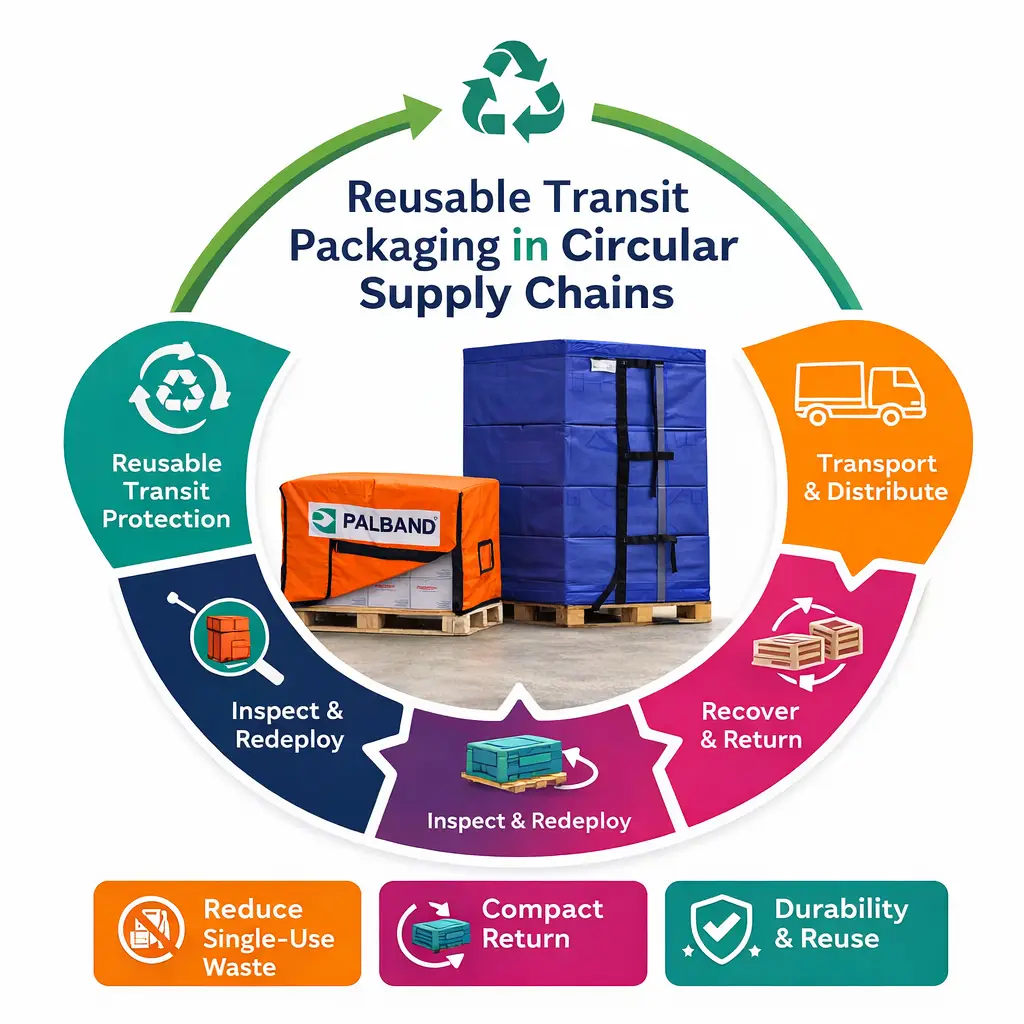
    How Reusable Covers and Liners Support Circular Supply Chains

    Introduction: Circular supply chains are now a logistics priority

    Warehousing and distribution teams are under increasing pressure to reduce waste, improve sustainability performance, and demonstrate compliance, while still keeping goods moving safely and efficiently. Packaging decisions sit at the centre of that challenge.

    Circular supply chains have therefore moved beyond high-level strategy and into day-to-day operational planning. At their core, circular supply chains aim to keep materials and assets in use for as long as possible, reduce dependence on single-use inputs, and design waste out of routine logistics activity. For logistics operations, this translates into practical decisions about how goods are protected, transported, returned, and reused at pallet level.

    Single-use stretch wrap, shrink wrap and disposable transit materials remain common because they are familiar and easy to apply. However, they create repeat waste streams, inconsistent protection quality, and ongoing purchasing and disposal costs. Over time, these inefficiencies undermine both sustainability targets and operational resilience.

    Reusable transit protection offers a more consistent and durable alternative. By replacing disposable materials with protection designed for repeat use, warehouses can take meaningful steps towards circular supply chains without disrupting established workflows.

    Short Summary

    This article explains how reusable covers, wraps and returnable packaging systems support circular supply chains in logistics. It explores why single-use transit protection creates waste and inefficiency, how reusable transport packaging fits into closed-loop operations, and how warehouses can reduce waste while maintaining protection, compliance and efficiency.

    Why you can trust us

    Palband supplies reusable logistics protection products for industrial and warehouse environments. Our experience is rooted in helping businesses reduce single-use packaging, protect goods in transit, and implement repeatable reuse systems that work in real logistics operations, not just in theory.

    What circular supply chains look like in logistics operations

    From linear packaging waste to closed-loop reuse

    Traditional logistics models treat packaging as disposable. Protection is applied once, removed at destination, and discarded. Even when recycling routes exist, this still requires collection, sorting and reprocessing, all of which consume time, labour and energy.

    Circular supply chains take a different approach. Packaging and protection are treated as durable assets rather than consumables. These assets are designed to move through predictable loops, returning to the supply chain after each use rather than becoming waste.

    In warehousing and distribution, this approach aligns naturally with existing return journeys such as depot-to-depot transfers, supplier returns, or internal stock movements.

    Why physical packaging choices matter

    While digital tools support traceability and reporting, physical packaging changes often deliver the fastest results. Reducing single-use materials at pallet level immediately lowers waste volumes, improves consistency, and removes friction from daily operations.

    Why single-use transit protection holds circular supply chains back

    Waste and disposal burdens

    Single-use stretch wrap and disposable liners contribute significantly to packaging waste. Even where recycling is available, these materials still need to be handled, stored and processed, creating ongoing cost and administrative overhead.

    Inconsistent protection and damage risk

    Disposable packaging is often applied inconsistently. Over-wrapping wastes material, while under-wrapping increases the risk of load shift and product damage. This inconsistency undermines both product protection and safety.

    Hidden operational costs

    Beyond material costs, single-use packaging adds labour time for application and removal, storage space for consumables, and disposal management. Over time, these hidden costs erode the perceived savings of low-cost disposable materials.

    Reusable wraps and covers as a practical circular upgrade

    A low-disruption step towards reuse

    Reusable pallet and stillage wraps provide one of the most accessible entry points into circular supply chains. They replace stretch wrap and shrink wrap without requiring changes to pallets, racking or handling equipment, making them well suited to high-volume environments.

    “Most businesses don’t need to overhaul their entire supply chain to move towards circularity. In our experience, switching from single-use transit protection to reusable covers and liners is one of the simplest ways to cut waste, improve compliance, and protect goods without adding operational complexity.”
    Mike Napthine
    Client Solutions Lead

    Designed for repeated use, reusable pallet and stillage wraps for industrial and commercial use support consistent load protection while significantly reducing reliance on disposable packaging. This allows warehouses to reduce waste without re-engineering their operations.

    Standardising protection across repeat journeys

    Because reusable wraps are engineered for durability, they help standardise load security across multiple journeys. This consistency improves handling safety, reduces damage risk, and supports predictable reuse across closed-loop routes such as depot-to-depot transfers and internal distribution movements.

    Collapsible pallet boxes and return logistics

    Reducing empty miles with collapsible returns

    Return logistics are often cited as a barrier to reusable transport packaging. Collapsible pallet boxes address this challenge by folding down when empty, reducing volume on return journeys and improving vehicle utilisation.

    Integrating collapsible pallet boxes designed for closed-loop transport systems into return flows allows logistics teams to reduce transport emissions, improve storage efficiency, and make reuse commercially viable across longer distances.

    Asset life, storage efficiency and repeat use

    By extending asset life and reducing space requirements when empty, collapsible pallet boxes support circular supply chains that are easier to manage across multiple sites while remaining robust enough for demanding warehouse environments.

    Compliance, reporting and future-proofing supply chains

    Reducing single-use packaging is increasingly linked to compliance and reporting requirements. Circular approaches that prioritise reuse help businesses demonstrate tangible progress rather than relying solely on downstream recycling.

    UK evidence shows that reuse-led circular models are already delivering operational and economic benefits across multiple sectors. The Green Alliance report In the Loop: stories of businesses delivering the circular economy highlights how practical circular initiatives create resilience and value across entire supply chains.

    Making the transition without operational disruption

    Moving towards reusable transit packaging does not require a full system overhaul. Many businesses start by focusing on high-volume routes, setting simple inspection routines, and making reuse visible and repeatable for warehouse teams.

    Reusable covers and returnable packaging integrate into existing flows, allowing operations to build circularity incrementally rather than all at once.

    Frequently Asked Questions

    Reusable transit packaging helps circular supply chains by replacing single-use materials with durable assets that can be used repeatedly. Instead of disposing of packaging after one journey, reusable covers, wraps and containers stay in circulation, reducing waste, lowering material consumption, and supporting closed-loop logistics operations.

    Yes. Reusable transport packaging is designed for high-volume environments where consistency and durability matter. When introduced on repeat routes or internal transfers, reusable covers and pallet boxes can be integrated without slowing down operations or increasing handling complexity.

    Reusable covers provide more consistent protection than stretch wrap because they are engineered for repeat use and standardised fit. This reduces variation in application, lowers damage risk, and removes the need for continuous consumption of disposable materials.

    No. Many businesses start building circular supply chains by targeting specific problem areas such as single-use transit protection. Introducing reusable packaging on high-volume routes allows organisations to reduce waste and improve resilience without reconfiguring their entire supply chain.

    What is the best way to start protecting high value goods in a warehouse?

    Start by identifying where damage happens most often, then introduce protective transport packaging on one repeat route or one high-risk product group. Reusable covers and straps can improve protection quickly without changing pallets or racking.

    For high value goods, custom covers are often worth it because the fit is consistent. Consistent fit reduces handling variation, improves repeat use, and lowers damage risk compared to loosely matched one-size packaging.

    Protective transport packaging refers to packaging and load protection used to prevent damage during storage, handling, and transit. In warehouses this can include reusable pallet covers, padded covers, insulated liners, mesh guards, and load restraint straps.

    Yes, if it is easy to apply and remove, fits the workflow, and has a clear reuse loop. Products like reusable pallet covers and straps and accessories are designed to support repeatable use in busy warehouse environments.

    Moving from intent to action

    Circular supply chains succeed when sustainability goals align with operational reality. Reusable covers, wraps and pallet boxes provide a practical way to reduce waste, protect goods, and build repeatable reuse into everyday logistics activity.

    If you want to explore how reusable transit protection could support your circular supply chain objectives, speak to Palband about reusable logistics solutions. For tailored advice based on your handling environment and return flows, contact the Palband team to discuss practical next steps.

    Related Articles to read...

    Fill Out The Form Below And Find Out How Palband Can Help You Dramatically Reduce The Plastic Packaging Tax

    Speak to the Team

    Let us help you transition to a reusable solution that works harder for your business. Contact Palband today to explore standard sizes or request a bespoke quote. We’ll help you reduce waste, cut costs and protect your loads with confidence.

  • The Palband Blog

    Warehouse Protection Strategies for Premium Goods

    High value goods are rarely damaged by one major incident. More often, losses come from repeated handling, small impacts, load shift, contamination, condensation, or a corner snag during a tight turn. For warehousing and distribution teams, that creates a familiar tension. You need protective transport packaging that stands up to day-to-day pressure without slowing pick, pack, or despatch.

    Generic packaging can look acceptable at the start of a journey, then fail under real warehouse conditions. It might be too loose for the load, too tight in the wrong places, or impractical for fast repeat use. That is why more operations are moving towards reusable covers, liners, and restraint systems that are designed around the goods, the handling method, and the route.

    In practice, protection starts before anything leaves the facility. The goal is to reduce movement in transit, protect exposed faces and corners, and make the protection repeatable shift after shift. Covers and liners that fit the load properly help standardise outcomes, especially when multiple teams handle the same stock across different sites.

    Short Summary

    Protecting high value goods in warehouse and distribution environments requires more than generic packaging. This article explains how protective transport packaging, including custom covers, liners, mesh guards and reusable restraints, helps reduce damage, improve consistency, and protect valuable products through handling, storage and transit.

    What “high value” means in a warehouse

    High value is not only about price. It can also mean goods that are costly to replace, hard to source quickly, or damaging to lose from a service and reputation perspective.

    Common high value categories include:

    • electronics and components sensitive to impact and moisture
    • white goods and finished products prone to scuffs, dents, and corner damage
    • medical and pharmaceutical products requiring stability and temperature control
    • specialist materials, prototypes, or client-specific builds where rework is expensive
    • branded retail goods where presentation matters as much as the item itself

    When these move through busy cross-dock lanes, mixed loads, or multi-drop routes, protection is a control measure, not a nice to have.

    Why You Can Trust Us

    Palband designs and supplies reusable protective solutions for warehouses, logistics operators and manufacturers across the UK. Our experience comes from working directly with operational teams to reduce damage, improve load security, and replace single-use packaging with durable systems that perform reliably in real-world handling environments.

    Why standard packaging often fails high value loads

    Protective transport packaging needs to cope with changing pressures such as e-commerce handling intensity, higher sustainability expectations, and a growing need for standardisation. Smithers highlights industry pressures that shape the protective and transit packaging market, including e-commerce growth, environmental impact, and automation demands, which all influence how packaging is selected and used in modern supply chains: three key issues facing the protective and transit packaging market.

    In warehouses, the usual failure points look like this:

    • inconsistent application of stretch wrap and one-way materials
    • limited protection on vulnerable corners and faces
    • moisture and condensation affecting surfaces or cartons
    • contamination risk in open handling areas or mixed storage
    • poor fit where packaging is not designed for the load footprint
    • load shift when restraint is not repeatable or measurable

    With high value goods, the cost is not only write-offs. It is investigation time, claims handling, returns, rework, and erosion of customer trust.

    The practical upgrade: custom covers and liners

    Custom covers and liners solve a simple problem. If protection fits the load and the workflow, it gets used properly every time. That consistency is what reduces damage risk.

    Customisation makes the biggest difference when:

    • pallet footprints or product dimensions are non-standard
    • outer finishes mark easily and presentation matters
    • mixed loads include protrusions that snag or rub
    • repeat routes support a reuse loop
    • loads need access points for checks, scans, or documentation


    For impact and abrasion protection, padded protective covers provide a reusable barrier that helps prevent scuffs, dents, and handling marks without relying on disposable bubble wrap or film.

    For temperature-sensitive or contamination-sensitive products, insulated covers and liners add a controlled layer designed to reduce heat gain or loss, manage moisture exposure, and protect goods through storage and transport.

    "When you are protecting high value goods, the goal is not just ‘more packaging’. The goal is consistent protection that fits the load, fits the workflow, and can be repeated across every journey. That is where custom covers and liners make the difference."
    Mike Napthine
    Client Solutions Lead, Palband

    Build a protection system around the journey, not the one-off trip

    A warehouse-friendly protection system should work across multiple stages of handling.

    Internal handling and staging

    Damage often happens before despatch. Short moves still include congestion, tight turns, and contact with racking, cages, or adjacent pallets.

    Where palletised goods are staged, moved internally, or held in marshalling lanes, reusable pallet covers help protect finished loads from dust, splashes, snagging, and surface contact.

    To reduce variation in how loads are secured, straps and accessories offer a repeatable restraint method that does not depend on how tightly someone pulls film on the day.

    Vehicle loading and transit

    This is where load shift, vibration, and mixed-load interference typically show up. In these conditions, a physical barrier can help reduce product-to-product contact and support safer handling, which is where Loadmaster mesh guards are commonly used as pallet load protectors.

    Mesh guards work particularly well alongside straps, creating a more controlled and consistent load profile on pallets that travel frequently.

    Why reusable protection improves operations, not just sustainability

    Reusable protection is often adopted for waste reduction, but operational benefits usually drive long-term use.

    Lower damage costs and fewer claims

    High value loads do not tolerate “good enough”. Better fit and stronger surfaces reduce scuffing, impact damage, and compression losses.

    Faster packing and despatch

    Reusable covers and straps reduce time spent applying, cutting, removing, and disposing of single-use materials.

    Cleaner sites and safer handling

    Reducing loose film and discarded packaging improves housekeeping, limits clutter, and supports safer movement in tight warehouse spaces.

    Better standardisation for modern workflows

    As warehouse processes become more standardised, consistent protection supports smoother flows through scanning points, storage, and loading.

    How to choose the right protective transport packaging for high value goods

    Start with a simple risk map

    • where impact occurs most often
    • where load shift happens
    • where moisture or contamination is a risk
    • where corners and edges are exposed
    • what one damage event costs in time, money, and trust

    Match product type to risk

    If the goal is to reduce surface marks and impact damage, padded protective covers support repeatable protection for high-touch goods.


    If the goal is to maintain more stable temperature and reduce moisture exposure, insulated covers and liners are designed for cold chain and temperature-sensitive environments.

    If the goal is fast pallet-level coverage during storage and despatch, reusable pallet covers provide straightforward protection without changing pallets or racking.

    If the goal is to reduce interference and improve pallet stability on vehicles, Loadmaster mesh guards help protect loads in transit.

    If the goal is repeatable restraint without ongoing consumable waste, straps and accessories provide controlled load securing across short moves and long hauls.

    Decide what needs customisation

    Custom sizing and fastening options matter most when the load is non-standard, access points are needed, or the same goods move on repeat routes.

    A rollout plan that does not disrupt the warehouse

    1. choose one high-frequency route or one high-damage SKU group
    2. trial one protection setup for a defined period
    3. set a simple inspection and reissue routine
    4. track damage rates and handling time before and after
    5. expand to the next route based on results

    If you need a practical starting point, begin with a product group where damage is visible and costly. Results are easier to measure, and staff adoption is usually faster.

    Frequently Asked Questions

    Start by identifying where damage happens most often, then introduce protective transport packaging on one repeat route or one high-risk product group. Reusable covers and straps can improve protection quickly without changing pallets or racking.

    For high value goods, custom covers are often worth it because the fit is consistent. Consistent fit reduces handling variation, improves repeat use, and lowers damage risk compared to loosely matched one-size packaging.

    Protective transport packaging refers to packaging and load protection used to prevent damage during storage, handling, and transit. In warehouses this can include reusable pallet covers, padded covers, insulated liners, mesh guards, and load restraint straps.

    Yes, if it is easy to apply and remove, fits the workflow, and has a clear reuse loop. Products like reusable pallet covers and straps and accessories are designed to support repeatable use in busy warehouse environments.

    What is the best way to start protecting high value goods in a warehouse?

    Start by identifying where damage happens most often, then introduce protective transport packaging on one repeat route or one high-risk product group. Reusable covers and straps can improve protection quickly without changing pallets or racking.

    For high value goods, custom covers are often worth it because the fit is consistent. Consistent fit reduces handling variation, improves repeat use, and lowers damage risk compared to loosely matched one-size packaging.

    Protective transport packaging refers to packaging and load protection used to prevent damage during storage, handling, and transit. In warehouses this can include reusable pallet covers, padded covers, insulated liners, mesh guards, and load restraint straps.

    Yes, if it is easy to apply and remove, fits the workflow, and has a clear reuse loop. Products like reusable pallet covers and straps and accessories are designed to support repeatable use in busy warehouse environments.

    Next step: build a protection system that matches your operation

    Protecting high value goods is not about adding more packaging. It is about using protective transport packaging that is consistent, repeatable, and suited to the realities of warehouse handling.

    To explore options, start with padded protective covers for impact and surface protection, add insulated covers and liners where temperature or moisture risk matters, and support stable pallet loads using Loadmaster mesh guards plus straps and accessories. For fast, everyday pallet coverage, use reusable pallet covers across staging, storage, and despatch.

    Related Articles to read...

    Fill Out The Form Below And Find Out How Palband Can Help You Dramatically Reduce The Plastic Packaging Tax

    Speak to the Team

    Let us help you transition to a reusable solution that works harder for your business. Contact Palband today to explore standard sizes or request a bespoke quote. We’ll help you reduce waste, cut costs and protect your loads with confidence.

  • The Palband Blog

    Protecting High-Value Goods: Why Every Warehouse Needs Custom Covers and Liners

    Warehouses handle a wide range of products, but when high-value goods are involved, the margin for error narrows significantly. Electronics, pharmaceutical products, precision components and premium retail items all carry higher financial and reputational risk if damaged, contaminated or lost. Yet, in spite of all of these factors, many warehouses still rely on generic, disposable packaging solutions that were never designed for repeated handling or long-term protection.

    Protecting high value goods requires a more considered approach to transit and storage packaging. Custom covers and liners are increasingly recognised as a practical way to reduce damage, improve handling consistency and protect assets throughout the supply chain. Rather than being an optional extra, they are becoming a core part of modern warehouse risk management.

    This article explains why custom covers and liners are essential for protecting high-value goods and how they support safer, more efficient warehouse operations.

    Short Summary

    High-value goods face greater risk from damage, contamination and handling errors. This article explains how custom covers and liners help warehouses protect valuable products, reduce losses and support consistent, repeatable protection across storage and distribution operations.

    Why You Can Trust Us

    Palband supplies reusable transit protection solutions to warehouses and distribution centres handling sensitive and high-value goods. With extensive experience across logistics, retail and manufacturing environments, Palband understands how custom covers and liners perform under real operational conditions. For tailored advice on custom covers and liners designed for your specific handling environment, click here to get in touch.

    Why High-Value Goods Need Different Protection

    Not all products face the same risks. High-value goods often combine financial value with fragility, sensitivity or strict compliance requirements. A single damaged pallet can represent thousands of pounds in losses, not to mention delays, returns and customer dissatisfaction.

    Standard packaging solutions are designed for convenience and low upfront cost rather than long-term protection. Thin shrink wrap or disposable covers provide minimal resistance to impact, abrasion or moisture. Over multiple handling points, this leaves goods exposed.

    Custom covers and liners address this gap by providing protection that is tailored to the product, the load configuration and the handling environment. This targeted approach significantly reduces risk throughout storage and transport.

    Common Threats to High-Value Goods in Warehouses

    Understanding the risks is the first step in protecting high value goods effectively.

    Physical damage remains the most obvious threat. Forklift contact, pallet movement, stacking pressure and vibration during transport can all cause damage that is not immediately visible.

    Environmental exposure is another major factor. Dust, moisture and temperature fluctuations can degrade sensitive goods or packaging, especially during longer storage periods.

    There is also an increased risk of loss or interference. High-value goods are more attractive targets for theft or tampering, particularly when packaging does not clearly signal controlled handling.

    Custom covers and liners help mitigate each of these risks by providing a consistent protective barrier.

    Custom covers are designed around the specific dimensions, weight and handling requirements of the load. Unlike generic solutions, they fit securely without excess material that can snag or tear.


    A tailored fit improves load stability, reducing movement during handling. It also ensures that vulnerable edges and surfaces are properly protected rather than partially exposed.


    Material choice is equally important. Custom covers can be specified for abrasion resistance, impact absorption, moisture protection or insulation depending on the application. This ensures protection matches the real risks faced by the goods.


    Palband’s reusable pallet covers are designed to be specified for different load types and operational environments, supporting consistent protection across warehouse and transport stages.

    While covers protect the outside of the load, liners play a critical role inside containers, cages and pallet boxes. For high-value goods, internal damage can occur even when external packaging appears intact.


    Reusable liners prevent product-to-product contact, reduce abrasion and contain loose items. They also protect against dust and debris within shared containers or returnable packaging.


    Custom liners can be specified to match container dimensions precisely, ensuring full coverage without bunching or folding. This improves protection while maintaining efficient packing and unpacking.


    In regulated sectors, liners also support hygiene and contamination control by providing a removable, cleanable barrier between goods and containers.

    Damage to high-value goods has a direct financial impact, but it also affects insurance costs and claims history. Repeated claims can lead to higher premiums or stricter policy conditions.


    By reducing damage incidents, custom covers and liners help lower overall risk exposure. Insurers increasingly recognise the value of robust protective measures, particularly in high-risk environments.


    Guidance from organisations such as Health and Safety Executive highlights the importance of risk control measures that prevent damage and incidents rather than responding after the fact.


    For warehouse operators, investing in better protection can deliver long-term savings beyond immediate damage reduction.

    Custom covers and liners also influence behaviour. Clearly specified protective equipment signals that goods require careful handling. This helps reinforce correct processes among warehouse staff and transport partners.


    Reusable protection is more likely to be inspected, maintained and valued than disposable packaging. This creates accountability and reduces casual misuse.


    Standardising protection across high-value product lines also simplifies training and reduces variability in handling outcomes.

    Many high-value goods are subject to strict quality and compliance requirements. Pharmaceutical, electronics and automotive components often have zero-tolerance thresholds for contamination or damage.


    Custom covers and liners help warehouses demonstrate due diligence in protecting goods throughout storage and distribution. This is increasingly important during audits and customer assessments.


    Standards bodies such as ISO emphasise controlled processes and risk mitigation within quality management systems. Reusable, specified protection supports these principles in a practical way.

    While custom covers involve higher upfront investment than disposable alternatives, they deliver long-term operational efficiency.


    Reusable protection reduces the ongoing cost of consumables, waste handling and replacement packaging. It also reduces downtime associated with repacking damaged goods or managing returns.


    Custom solutions are designed to integrate into existing workflows without slowing operations. Once introduced, they often improve handling speed by reducing the need for excessive wrapping or secondary packaging.


    Palband’s reusable pallet and stillage wraps are designed for repeated use in demanding warehouse environments, supporting both protection and efficiency

    Enhancing Security for High-Value Loads

    High-value goods often require additional security measures. Custom covers can be specified with features such as tamper-evident fastenings or distinctive markings that make interference more visible.

    Reusable protection also reduces reliance on opaque shrink wrap, which can conceal damage or tampering until delivery. Clear inspection points improve visibility and accountability.

    In combination with tracking and access controls, custom covers form part of a layered security approach within warehouses and distribution networks.

    Where Custom Covers Deliver the Greatest Value

    Custom covers and liners are particularly valuable where goods are handled multiple times, stored for extended periods or shipped across complex routes.

    Warehouses serving retail distribution centres, spare parts networks and high-value manufacturing supply chains benefit from consistent protection across inbound and outbound flows.

    They are also effective in shared-user environments where containers and handling equipment are reused across different customers.

    Moving Beyond One-Size-Fits-All Protection

    Protecting high value goods requires recognising that generic solutions rarely address specific risks. Custom covers and liners allow warehouses to move away from one-size-fits-all packaging towards targeted, risk-based protection.

    This shift supports better outcomes across damage reduction, compliance, cost control and customer satisfaction.

    Rather than reacting to losses, warehouses can take proactive steps to protect their most valuable assets.

    Next Steps for Your Warehouse

    If your operation handles high-value goods, reviewing your current packaging and protection strategy is a sensible starting point. Identify where damage, contamination or handling risk still exists and assess whether generic packaging is part of the problem.

    Custom covers and liners offer a practical, proven way to reduce these risks without disrupting operations.

    To discuss how Palband can support protecting high value goods in your warehouse, contact the team here

    Related Articles to read...

    Fill Out The Form Below And Find Out How Palband Can Help You Dramatically Reduce The Plastic Packaging Tax

    Speak to the Team

    Let us help you transition to a reusable solution that works harder for your business. Contact Palband today to explore standard sizes or request a bespoke quote. We’ll help you reduce waste, cut costs and protect your loads with confidence.

  • The Palband Blog

    The Role of Reusable Covers and Liners in Circular Supply Chains

    Circular supply chains are becoming a practical necessity rather than a long-term aspiration. Rising material costs, tightening environmental regulation and increasing customer scrutiny are pushing logistics operators to rethink how goods are protected, moved and returned. One of the most overlooked opportunities sits in an everyday operational detail: transit packaging.

    Reusable covers and liners are playing an increasingly important role in reducing single-use waste, improving load security and supporting circular supply chain models. Rather than being consumed and discarded, these products are designed to stay in use, cycle after cycle, across distribution networks. When deployed correctly, reusable covers contribute directly to lower operating costs, improved sustainability reporting and more resilient logistics systems.

    This article explores how reusable covers and liners support circular supply chains, where they deliver the most value, and why they are becoming standard equipment for forward-thinking operators.

    Short Summary

    Reusable covers and liners help logistics operations move away from single-use packaging by protecting goods across multiple transport cycles. This article explains how they support circular supply chains, reduce waste, improve load security and help businesses meet sustainability and compliance objectives without compromising operational efficiency.

    Why You Can Trust Us

    Palband works closely with logistics, retail and manufacturing businesses across the UK and Europe to reduce packaging waste and improve load protection. With decades of hands-on experience supplying reusable transit solutions, Palband understands how circular principles translate into real-world warehouse and transport operations. For tailored advice on reducing packaging waste and improving load protection, click here to speak to us today.

    What Circular Supply Chains Really Mean in Practice

    A circular supply chain is designed to minimise waste and keep materials in use for as long as possible. Instead of relying on disposable packaging that flows one way from supplier to landfill, circular systems prioritise reuse, repair and recovery.

    In logistics environments, this means rethinking items that are traditionally treated as consumables. Stretch wrap, shrink film and disposable pallet covers are often used once and discarded, even though they represent a significant source of plastic waste. Reusable covers and liners challenge this model by offering long-life alternatives that can be integrated into closed-loop or semi-closed distribution networks.

    The shift is not theoretical. Many large retailers and manufacturers are now under pressure to report on packaging waste, plastic usage and carbon impact. Reusable covers provide a measurable and visible improvement in these areas.

    Packaging sits at the intersection of protection, efficiency and sustainability. While its primary role is to protect goods in transit, the type of packaging used can have a disproportionate environmental impact.


    Single-use plastics are lightweight and cheap upfront, but they generate ongoing costs through waste handling, purchasing repetition and regulatory exposure. By contrast, reusable covers are designed to deliver protection across hundreds of journeys.


    From a circular economy perspective, the goal is to maximise utilisation while minimising replacement. Reusable covers and liners achieve this by being durable, repairable and compatible with return logistics.


    High-authority organisations such as Ellen MacArthur Foundation consistently highlight packaging reuse as one of the fastest ways to reduce material consumption within supply chains.

    Reusable covers contribute to circular supply chains in several practical ways.


    First, they reduce material throughput. A single reusable cover can replace dozens or even hundreds of single-use alternatives over its lifespan. This immediately reduces plastic consumption and waste generation.


    Second, they extend asset life. By protecting palletised goods from impact, abrasion and contamination, reusable covers help reduce product damage and associated returns. Fewer damaged goods means fewer replacement shipments and less wasted inventory.


    Third, they enable closed-loop systems. Many distribution networks already involve return journeys for pallets, roll cages or stillages. Adding reusable covers to these loops requires minimal operational change while delivering measurable sustainability gains.


    For a deeper look at reusable transit protection options, Palband’s reusable pallet covers are designed specifically for repeated use in demanding logistics environments.

    While covers protect goods externally, liners play an equally important role inside containers, cages and pallet boxes. Reusable liners prevent abrasion, dust ingress and moisture damage, especially for boxed or loose items.


    In circular supply chains, liners are particularly valuable because they can be removed, cleaned and redeployed without compromising hygiene or protection standards. This makes them suitable for sectors such as food distribution, pharmaceuticals and automotive components.


    Reusable liners also reduce the need for disposable inner packaging such as plastic bags or cardboard inserts. Over time, this significantly lowers material use and waste handling costs.


    When combined with rigid or collapsible containers, liners support modular systems that can be adapted to different product types without introducing new single-use materials.

    One of the common misconceptions around circular packaging is that it is more expensive. While reusable covers have a higher upfront cost than disposable film, their total cost of ownership is typically far lower.


    Costs associated with single-use packaging include repeated purchasing, storage, waste disposal and labour time for application and removal. Reusable covers reduce or eliminate many of these recurring expenses.


    In addition, damage reduction has a direct financial impact. Fewer damaged loads mean fewer customer complaints, fewer rejected deliveries and less rework in the warehouse. Over time, this improves customer relationships and operational reliability.


    Reusable covers also offer predictability. Unlike consumables that fluctuate in price and availability, reusable assets provide stable long-term cost planning.

    Regulatory pressure around packaging waste is increasing across the UK and EU. Extended Producer Responsibility schemes and plastic taxes are forcing businesses to account for the environmental impact of packaging choices.


    Reusable covers and liners help organisations demonstrate proactive waste reduction and compliance. Because they are used repeatedly, they contribute positively to sustainability metrics and reporting frameworks.


    Guidance from the UK Government on packaging waste reduction increasingly emphasises reuse over recycling, recognising that preventing waste in the first place delivers the greatest environmental benefit.


    For businesses with ESG targets or sustainability reporting obligations, reusable covers provide tangible evidence of progress rather than aspirational commitments.

    Introducing reusable covers into a supply chain requires some planning, but the barriers are often lower than expected.


    Key considerations include selecting the correct size and specification, training staff on correct use, and establishing inspection and cleaning routines. In most cases, reusable covers integrate seamlessly into existing workflows.


    Return logistics are often already in place for pallets or containers, making it straightforward to bring covers back into circulation. Even in open-loop systems, loss rates are typically low when covers are clearly identifiable and valued as assets.


    Palband’s reusable pallet and stillage wraps are designed with durability and ease of handling in mind, supporting long-term use across multiple handling environments. 

    Supporting Resilience in Supply Chains

    Circular supply chains are not only about sustainability. They also improve resilience. Reusable covers reduce reliance on external supply of consumables, which can be disrupted by price volatility or shortages.

    During periods of supply chain disruption, businesses with reusable transit packaging are less exposed to delays caused by lack of materials. This operational independence can be a competitive advantage.

    Reusable covers also standardise protection levels across shipments, reducing variability and improving predictability in transport outcomes.

    Where Reusable Covers Deliver the Most Impact

    Reusable covers are particularly effective in sectors with high shipment volumes and regular return flows. Retail distribution, manufacturing, automotive supply chains and food logistics all benefit from consistent load protection and reuse.

    They are also valuable in environments where damage risk is high, such as multi-drop delivery routes or long-distance transport. By maintaining protection throughout the journey, reusable covers reduce the cumulative risk of handling damage.

    In cold chain or temperature-sensitive operations, insulated variants can further enhance performance without introducing disposable materials.

    Moving From Linear to Circular Thinking

    Transitioning to a circular supply chain does not require a complete operational overhaul. In many cases, meaningful progress starts with small, targeted changes. Replacing single-use packaging with reusable covers and liners is one of the most accessible steps businesses can take.

    These products deliver immediate environmental benefits while also supporting cost reduction, compliance and customer satisfaction. Over time, they help build systems that are less wasteful, more efficient and more resilient.

    Circularity is not about doing more work. It is about doing the same work with fewer resources.

    Next Steps for Your Operation

    If your organisation is reviewing packaging waste, load protection or sustainability performance, reusable covers and liners are a logical place to start. Assess where single-use materials are still being consumed and consider where reuse could be introduced without disrupting operations.

    Palband works with logistics teams to identify practical opportunities for reuse and specify solutions that fit real-world handling conditions.

    To discuss how reusable covers could support your circular supply chain goals, contact the Palband team here: https://palband.com/contact

    Related Articles to read...

    Fill Out The Form Below And Find Out How Palband Can Help You Dramatically Reduce The Plastic Packaging Tax

    Speak to the Team

    Let us help you transition to a reusable solution that works harder for your business. Contact Palband today to explore standard sizes or request a bespoke quote. We’ll help you reduce waste, cut costs and protect your loads with confidence.

  • The Palband Blog

    Understanding Fire Suppression Granules: A Safer Way to Manage Battery Risks

    Lithium-ion battery fires have become one of the most difficult risks for warehouses, fulfilment centres, and logistics operators to control. As storage volumes rise and transporting batteries becomes routine, many businesses are now looking for safer, faster and more predictable ways to contain thermal runaway incidents. One of the most effective tools available today is the use of fire suppression granules, which provide an immediate barrier against heat, flame and re-ignition.

    Summary

    Fire suppression granules smother heat, restrict oxygen and help contain lithium-ion battery fires before they escalate. They are designed for warehouses, logistics teams and any operators storing or transporting batteries. Their lightweight, fast-acting nature makes them a practical addition to modern fire response plans.

    Why You Can Trust Us

    Palband works closely with logistics teams managing high-risk storage and movement of battery-powered goods. Our advice draws from real operational challenges, HSE guidance and practical product knowledge. We provide solutions designed to improve fire readiness without slowing warehouse workflows.

    What Are Fire Suppression Granules?

    Many operators ask the same question: what are fire suppression granules? At their simplest, they are specially engineered mineral granules that rapidly cool, smother and isolate a lithium-ion battery fire. Unlike water or traditional extinguishers, granules remain stable under extreme heat and can be poured directly over burning or overheating batteries without creating additional hazards.

    Granules are used to contain thermal runaway, a chain reaction that occurs when a cell overheats and releases flammable vapours. The granules absorb heat, restrict oxygen and prevent the spread of flames to neighbouring cells. 

    This makes them invaluable for facilities storing mixed consumer electronics, mobility batteries, power tool packs or equipment awaiting recycling.

    For warehouse teams managing diverse inventory and rapid turnaround times, granules offer a reliable way to isolate battery failures before the fire spreads to racking, packaging or surrounding stock.

    Discover how fire suppression granules can support a safer response strategy for your team.

    Lithium-ion battery fires do not behave like standard combustibles. Once thermal runaway begins, the battery creates its own oxygen and releases toxic vapours, which makes the fire extremely difficult to extinguish with traditional methods.


    Key characteristics include:


    • Rapid temperature escalation

    • Repeated re-ignition

    • Explosive ejection of burning material

    • Release of flammable gases

    • The potential for nearby cells to ignite in sequence

    This is why regulatory bodies such as the Health and Safety Executive emphasise the importance of understanding fire behaviour and implementing suitable control measures. Operators can review the HSE’s guidance on workplace fire safety at the official HSE resource, which outlines the responsibilities of those managing hazardous materials.


    Fire suppression granules are engineered specifically to tackle this unique fire profile by cooling the battery rapidly and insulating surrounding items from heat transfer.

    Fire suppression granules are poured over the overheating or burning battery to create a protective thermal barrier. Their performance comes from three main effects:


    1. Heat Absorption


    Granules draw heat away from the failing cell, slowing the thermal reaction.


    2. Oxygen Restriction


    By coating the battery, they reduce the oxygen available to feed the fire.


    3. Physical Isolation


    The granules contain debris, sparks and ejected material that might otherwise ignite nearby goods.

    This combination makes granules particularly effective in enclosed or high-density storage environments where sparks or debris can travel quickly.

    Because they do not conduct electricity, granules can be applied safely even when the battery remains energised. This is an advantage over metal powders or water extinguishers, which may create secondary risks.

    UK workplaces managing lithium-ion batteries must follow a clear regulatory framework. Those responsible for storage, handling and transporting batteries must ensure fire precautions are suitable, tested and proportionate to the risks.

    To support compliance, operators should also familiarise themselves with official guidance on fire safety duties from the UK Government’s collection of fire safety legislation resources available here.

    As guidance evolves, one trend is clear: businesses must maintain tools and procedures that allow immediate, safe containment of battery incidents. Fire suppression granules help fulfil this requirement by offering a practical first-response option.

    Warehouses remain one of the highest-risk environments for battery fires because failures often occur unnoticed until heat, vapour or smoke is detected. Fire suppression granules support multiple stages of warehouse operation:

    • Emergency response in picking and packing areas

    • Isolation of overheating returns

    • Safer handling at cross-docking points

    • Protection in high-density racking

    • Support for overnight storage when staff presence is minimal

    For sites handling large volumes of battery-powered goods, granules also reduce the risk of an entire aisle or pallet run becoming compromised.

    Safer Use During Transport and Mobile Operations

    Transporting batteries introduces a different set of challenges. Vehicles cannot rely on fixed fire systems, and drivers often cannot evacuate large loads quickly. Fire suppression granules offer several advantages during transit:

    • They are lightweight and easy to store in cabs or containers
    • They require no special activation or equipment
    • They can be applied instantly on the roadside
    • They help prevent a vehicle fire from escalating
    • They are safe for mixed freight environments

    They are already used by last-mile couriers, pallet networks, mobile engineering teams and recycling contractors.

    Choosing the Right Fire Suppression Granules

    Granules vary in composition and performance, and operators should review:

    • Heat tolerance
    • Expansion behaviour
    • Suitability for live electrical environments
    • Containment performance
    • Ease of deployment

    Palband’s solution is designed specifically for lithium-ion battery risks, offering rapid smothering and cooling performance suitable for warehouses, transport and storage. More information is available on the Fyashield homepage.

    Building Fire Suppression Granules Into Your Emergency Plan

    A strong emergency response plan combines equipment, training and clear decision-making. When including granules in your plan, consider:

    • Where they will be stored
    • Who is trained to use them
    • How to identify early-stage battery failure
    • Communication steps during an incident
    • Safe containment and post-incident procedures

    Fire suppression granules should be accessible at key points such as loading bays, marshalling areas, vehicle fleets and return-goods inspection stations.

    Common Misconceptions About Battery Fire Suppression

    Because lithium-ion fires behave differently, some common misconceptions still circulate:

    Water is the best first response

    Water cools but does not reliably smother a lithium-ion fire. Re-ignition is common.

    Small batteries pose minimal risk

    Even small consumer devices can release high temperatures and ignite surrounding packaging.

    Thermal runaway stops when the flames reduce

    Cells can reignite minutes or hours later if they remain unstable.

    Fire suppression granules help break this cycle by isolating the failed cell entirely.

    Strengthen Your Battery Fire Preparedness

    If you want to improve your readiness for lithium-ion battery incidents, explore Palband’s advanced fire suppression solutions. Our fire suppression granules provide rapid containment and thermal control, making them ideal for warehouses, transport fleets and high-risk storage environments.

    Got a question? Click here to drop us a line.

    Related Articles to read...

    Fill Out The Form Below And Find Out How Palband Can Help You Dramatically Reduce The Plastic Packaging Tax

    Speak to the Team

    Let us help you transition to a reusable solution that works harder for your business. Contact Palband today to explore standard sizes or request a bespoke quote. We’ll help you reduce waste, cut costs and protect your loads with confidence.